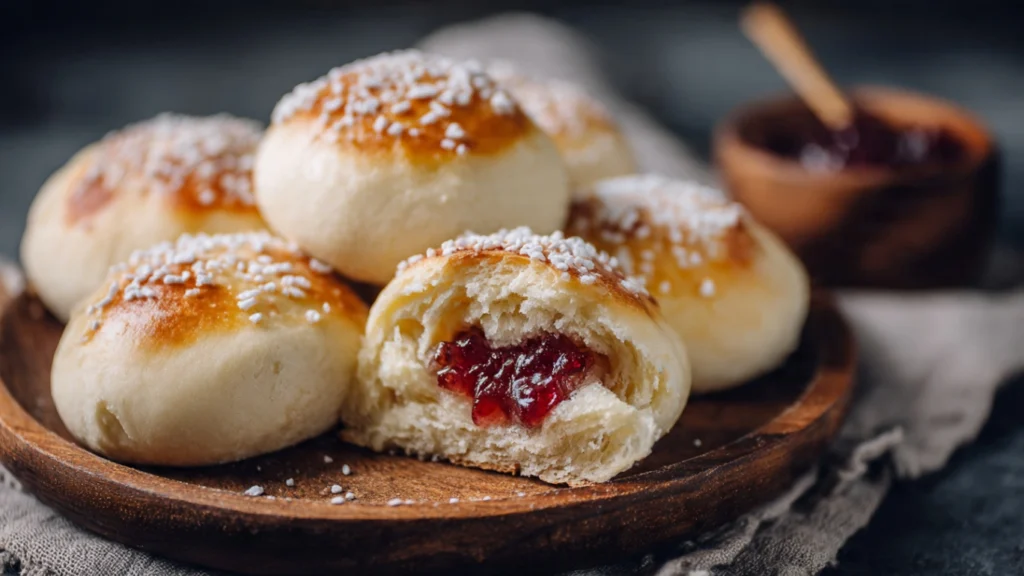

My first kolache came from a tiny bakery in Texas during a road trip, and I was instantly hooked. The pillowy soft dough cradling a pocket of sweet fruit filling was unlike anything I’d had before. When I mentioned wanting to recreate them at home, the baker smiled and said her grandmother brought the recipe from Czechoslovakia generations ago. She insisted the secret was patience with the dough and not skimping on butter. After several attempts following her advice, I finally mastered this kolache recipe, and now my kitchen fills with that same wonderful yeast and butter aroma every weekend.
Why You’ll Love This Kolache Recipe
This kolache recipe creates authentic Czech pastries with incredibly soft, buttery dough that stays fresh for days. The enriched yeast dough is tender and slightly sweet, providing the perfect base for traditional fruit fillings like apricot, prune, or poppy seed. Unlike quick breakfast pastries, kolaches have a satisfying, bread-like quality that makes them feel substantial without being heavy. The recipe is surprisingly forgiving once you understand yeast dough basics, and the results look professionally made with their characteristic thumbprint indentations filled with jewel-toned preserves. You can make both sweet and savory versions, though this recipe focuses on the traditional sweet style. These pastries freeze beautifully, so you can always have homemade kolaches ready for breakfast or snacks. Best of all, making a batch fills your home with the most incredible aroma that brings people running to the kitchen.
What Are Kolaches?
Kolaches are traditional Czech pastries featuring soft, slightly sweet yeast dough formed into rounds with an indentation in the center filled with fruit, poppy seed, or cream cheese filling. This kolache recipe produces the authentic sweet version that Czech immigrants brought to America, particularly popular in Texas and the Midwest. The word “kolache” comes from the Czech word “kolo,” meaning wheel or circle, referring to their round shape. Traditional fillings include prune, apricot, poppy seed, and sweet cheese, though modern variations use everything from blueberry to cream cheese. The dough itself is enriched with eggs, butter, and milk, creating a tender, brioche-like texture that’s neither too sweet nor too plain. In Texas, savory versions filled with sausage or ham are popular but are technically called klobasniky, not kolaches. Authentic kolaches are always sweet breakfast or dessert pastries, often enjoyed with coffee.
Common Mistakes to Avoid
The biggest mistake with this kolache recipe is using water that’s too hot when activating the yeast. Water above 115°F kills yeast, preventing the dough from rising. Use a thermometer or test with your wrist—it should feel warm but not hot.
Not letting the dough rise adequately is another common error. The dough needs to double in size during both rises. Rushing this process creates dense, heavy kolaches instead of light, fluffy ones.
Adding too much flour while kneading makes the dough tough and dry. The dough should be slightly sticky to the touch. Resist the urge to add more flour than necessary.
Making the indentations too shallow means the filling spills over during baking. Press firmly with your thumb or fingers to create a deep well that will hold the filling securely.
Overfilling the indentations causes the same problem. Use just 1-2 teaspoons of filling per kolache—it seems like too little, but it’s the right amount.
Baking at too high a temperature browns the bottoms before the tops are done. These pastries need moderate heat to bake through evenly without burning.
Finally, not brushing with butter after baking means you miss that signature glossy, rich finish that makes kolaches so appealing.
How to Know When Your Kolaches Are Done
Properly baked kolaches should be golden brown on top with slightly darker edges. The color should be uniform across the top surface, indicating even baking throughout.
The bottoms should be golden brown but not dark or burned. Lift one gently with a spatula to check—if the bottom is pale, they need more time.
When you tap the side of a kolache gently, it should sound hollow and feel firm but springy, not soft or doughy. This indicates the interior is fully baked.
The filling should be bubbling slightly and look glossy and set rather than runny. The edges of the filling may caramelize slightly, which adds wonderful flavor.
This kolache recipe typically requires 12-15 minutes at 375°F. Start checking at 12 minutes, as oven temperatures vary and overbaking makes them dry.
The dough around the filling should have puffed up during baking, creating a raised rim around the indentation. If the pastries look flat, they may have been underproofed before baking.
When you remove them from the oven, they’ll firm up slightly as they cool. Don’t worry if they seem a bit soft initially—this is normal.
What to Serve With Kolaches
This kolache recipe creates pastries that are perfect for breakfast alongside strong coffee or hot tea. The combination is traditional and highlights the subtle sweetness of the dough.
Cold milk, whether regular or almond, provides a classic pairing that balances the richness of the buttery dough.
Fresh fruit salad offers a light, refreshing counterpoint to the rich pastries, making a more complete breakfast spread.
Scrambled eggs and bacon create a hearty breakfast when kolaches are the sweet component. This sweet-savory combination is very popular in Texas.
Hot chocolate or café au lait makes an indulgent pairing for a weekend brunch or afternoon snack.
A cheese platter with mild cheeses like farmer’s cheese or cream cheese echoes the traditional sweet cheese filling and provides a nice contrast.
For a dessert presentation, serve kolaches warm with a scoop of vanilla ice cream or a dollop of whipped cream.
Storage Tips
Store kolaches in an airtight container at room temperature for up to 3 days. They stay remarkably soft thanks to the enriched dough, though they’re best within the first two days.
For longer storage, refrigerate them for up to one week in an airtight container. Bring to room temperature or warm briefly in the microwave for 10-15 seconds before eating.
This kolache recipe freezes exceptionally well. Place cooled kolaches in a single layer on a baking sheet and freeze until solid, then transfer to freezer bags. They’ll keep for up to 3 months.
To reheat frozen kolaches, thaw at room temperature for about an hour, then warm in a 300°F oven for 5-7 minutes. This refreshes the texture beautifully.
You can also freeze the unbaked, shaped kolaches. After forming and filling them, freeze on a baking sheet, then transfer to freezer bags. Let them thaw and rise for about 2 hours before baking.
Never store kolaches uncovered, as they’ll dry out quickly. The butter in the dough helps keep them moist, but they still need protection from air.
If the pastries seem slightly dry after storage, brush them with melted butter and warm gently—this revives their fresh-baked quality.
Estimated Nutrition (Per Kolache)
Calories: 195 | Total Fat: 7g | Saturated Fat: 4g | Cholesterol: 35mg | Sodium: 105mg | Total Carbohydrates: 29g | Dietary Fiber: 1g | Sugars: 10g | Protein: 4g
Note: Nutritional values are approximate and vary based on filling type and specific ingredients used.
Recipe Overview
Prep Time: 30 minutes
Cook Time: 15 minutes
Total Time: 3 hours 15 minutes (including rising time)
Difficulty: Medium
Servings: 18 kolaches
Ingredients
For the Dough:
- 1 cup whole milk, warmed to 110°F
- ½ cup granulated sugar, divided
- 2¼ teaspoons active dry yeast (1 packet)
- 4 cups all-purpose flour
- ½ teaspoon salt
- 2 large eggs, room temperature
- ½ cup unsalted butter, softened
- 1 teaspoon vanilla extract
For Assembly:
- 1-1½ cups fruit preserves (apricot, prune, or your choice)
- 3 tablespoons melted butter for brushing
- Powdered sugar for dusting (optional)
Step-by-Step Instructions
Step 1: In a small bowl, combine warm milk, 1 tablespoon of the sugar, and yeast. Stir gently and let sit for 5-10 minutes until foamy. If it doesn’t foam, your yeast is dead—start over with fresh yeast.
Step 2: In a large mixing bowl, whisk together flour, remaining sugar, and salt. Make a well in the center.
Step 3: Pour the yeast mixture into the well. Add eggs, softened butter, and vanilla extract. Mix with a wooden spoon until a shaggy dough forms.
Step 4: Turn the dough onto a lightly floured surface. Knead for 8-10 minutes until smooth and elastic. The dough should be slightly sticky but not overly so. Add flour sparingly if needed.
Step 5: Place the dough in a greased bowl, turning once to coat all sides. Cover with a clean kitchen towel and let rise in a warm place for 1.5-2 hours until doubled in size.
Step 6: Punch down the dough and turn it onto a lightly floured surface. Divide into 18 equal pieces, rolling each piece into a smooth ball.
Step 7: Place the balls on parchment-lined baking sheets, spacing them about 2 inches apart. Cover with a towel and let rise for 45-60 minutes until puffy and nearly doubled.
Step 8: Preheat your oven to 375°F while the kolaches complete their second rise.
Step 9: Using your thumb or two fingers, press firmly into the center of each kolache to create a deep indentation about 1½ inches across. The sides should puff up around the depression.
Step 10: Spoon 1-2 teaspoons of fruit preserves into each indentation. Don’t overfill—the filling will spread during baking.
Step 11: Bake for 12-15 minutes until golden brown on top and bottom. The filling should be bubbling slightly.
Step 12: Remove from oven and immediately brush the warm kolaches with melted butter for a glossy finish. Let cool on the baking sheet for 5 minutes, then transfer to a wire rack. Dust with powdered sugar if desired before serving.
Enjoy these tender, buttery pastries warm or at room temperature!