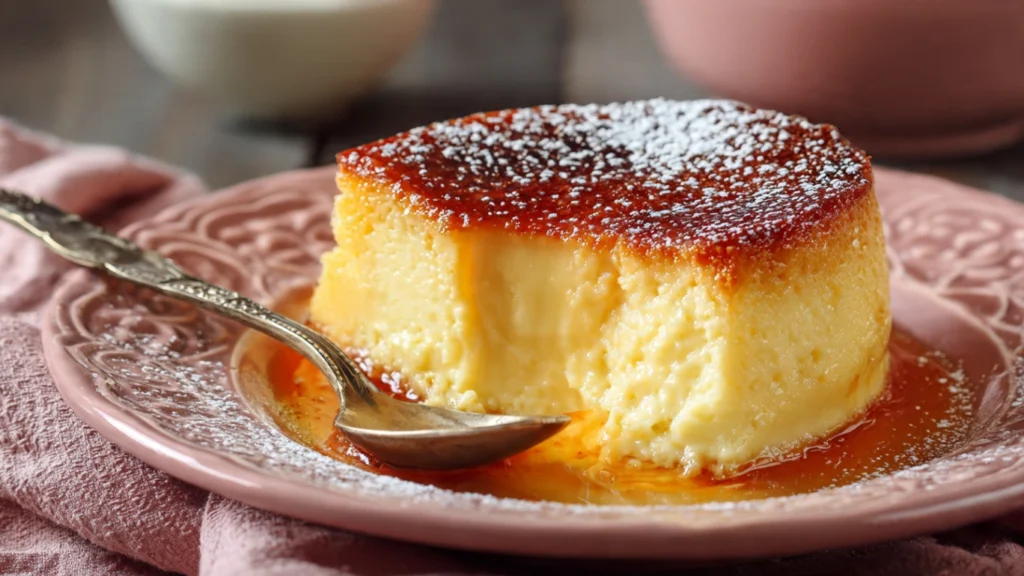

My grandmother made egg custard every Sunday after church, baking individual ramekins while we ate lunch. The house would fill with the sweet scent of vanilla and nutmeg, and we’d fight over who got the ones with the most nutmeg on top. I thought it was complicated magic until she showed me how simple it actually was—just eggs, milk, sugar, and vanilla whisked together and baked gently. Now this egg custard recipe is my go-to comfort dessert when I want something warm, creamy, and nostalgic. It reminds me of Sunday afternoons at her house, and I’ve discovered it’s one of the easiest impressive desserts you can make with ingredients you already have.
Why You’ll Love This Egg Custard Recipe
This egg custard recipe creates a silky, smooth dessert with delicate sweetness and rich vanilla flavor using only five basic ingredients. The texture is luxuriously creamy—somewhere between pudding and flan—with a subtle wobble that makes each spoonful satisfying. Unlike complicated desserts requiring special equipment, custard needs only eggs, milk, sugar, vanilla, and basic baking dishes you already own. The gentle baking method produces foolproof results even for beginners, and the recipe easily scales up for crowds or down for intimate dinners. Custard is naturally gluten-free and can be adapted for different dietary needs by adjusting the milk type. It works beautifully as a make-ahead dessert since it needs to chill anyway, reducing stress when entertaining. The warm, comforting flavors appeal to all ages, making it perfect for family gatherings. Best of all, this humble dessert feels both homey and elegant depending on how you serve it.
What Is Egg Custard?
Egg custard is a simple baked dessert made from eggs, milk, sugar, and vanilla, gently cooked until it sets into a smooth, creamy texture. This egg custard recipe produces what’s also called baked custard or cup custard, featuring a delicate texture that’s firmer than pudding but softer than flan. The eggs provide both richness and the protein structure that allows the custard to set during baking. Traditional baked custard is cooked in a water bath (bain-marie) which ensures gentle, even heating that prevents curdling and creates that signature silky texture. A light dusting of nutmeg on top is classic, though cinnamon works too. Good egg custard should be just set—it should jiggle slightly when moved but hold its shape when spooned. The flavor should be delicately sweet with pronounced vanilla and egg notes, never eggy or overly sweet. This dessert has roots in European cooking and has been a comfort food staple in America since colonial times.
Common Mistakes to Avoid
The biggest mistake with this egg custard recipe is baking at too high a temperature. High heat causes the proteins to cook too quickly, creating a grainy, curdled texture instead of smooth custard. Always use the recommended 325-350°F.
Not using a water bath is another critical error. The surrounding hot water regulates temperature and prevents the edges from overcooking while the center is still liquid.
Overbaking makes custard watery and curdled with an unpleasant texture. The custard should still wobble in the center when you remove it—it continues cooking from residual heat.
Using a whisk too vigorously incorporates too much air, creating bubbles on the surface that bake into an unattractive foam. Mix gently but thoroughly.
Forgetting to strain the mixture means any chalazae (egg white strands) or undissolved sugar remains in the final custard, creating an unpleasant texture.
Not tempering the eggs when using hot milk can scramble them. Always add hot liquid gradually to eggs while whisking constantly.
Finally, cutting into warm custard means it won’t be properly set. These need to chill for at least 2 hours before serving.
How to Know When Your Custard Is Done
Properly baked egg custard should still jiggle in the center when you gently shake the ramekin or dish. A 2-3 inch diameter wobble in the center is perfect—it will firm up as it cools.
Insert a knife about one inch from the edge. It should come out clean. Don’t test the very center, which will still be slightly liquid even when the custard is perfectly done.
The edges should be set and firm, pulling away very slightly from the dish sides. The center should look smooth and slightly glossy.
This egg custard recipe typically requires 35-45 minutes for individual ramekins at 325°F, or 50-60 minutes for a large baking dish. Start checking 5 minutes before the minimum time.
An instant-read thermometer inserted in the center should read 170-175°F. This temperature ensures the eggs are safely cooked while maintaining creamy texture.
The surface should look smooth and set, not liquid or jiggly all over. It should have a slight matte finish rather than wet and shiny.
After removing from the oven, the custard will continue to cook for several minutes from residual heat, so slightly underdone is better than overdone.
What to Serve With Egg Custard
This egg custard recipe creates a dessert that’s delicious served simply chilled with just a sprinkle of fresh nutmeg on top. Sometimes simplicity is best.
Fresh berries, especially raspberries or sliced strawberries, add tartness and color that beautifully contrast the creamy, pale custard.
A drizzle of caramel sauce creates a more indulgent presentation that turns humble custard into an elegant plated dessert.
Whipped cream on the side adds extra richness, though the custard is already quite rich on its own.
Crisp cookies like ladyfingers or shortbread provide textural contrast and make the dessert feel more substantial.
Fresh fruit compote, especially berry or stone fruit, adds brightness and sophistication to this simple dessert.
Strong black coffee or tea makes an excellent accompaniment, with the slight bitterness balancing the custard’s sweetness.
Storage Tips
Store egg custard covered tightly with plastic wrap in the refrigerator for up to 4 days. Press the wrap directly onto the surface if serving from a large dish to prevent skin formation.
Individual ramekins can be covered with plastic wrap or aluminum foil and stacked carefully in the refrigerator to save space.
This egg custard recipe doesn’t freeze well. The texture becomes grainy and watery when thawed, so it’s best enjoyed fresh from the refrigerator.
Always keep custard refrigerated—it contains eggs and milk, so it can’t sit at room temperature for more than 2 hours safely.
If a skin forms on top during storage, simply spoon it off before serving. The custard underneath will be perfectly fine.
Custard tastes best when served cold but not ice-cold. Remove from refrigerator about 15 minutes before serving to take the chill off slightly.
Don’t add toppings like fruit or whipped cream until just before serving, as they can make the custard surface watery over time.
Estimated Nutrition (Per Serving, 6 Servings)
Calories: 155 | Total Fat: 6g | Saturated Fat: 3g | Cholesterol: 130mg | Sodium: 85mg | Total Carbohydrates: 19g | Dietary Fiber: 0g | Sugars: 18g | Protein: 6g
Note: Nutritional information is approximate and based on using whole milk.
Recipe Overview
Prep Time: 10 minutes
Cook Time: 40 minutes
Total Time: 3 hours (including chilling)
Difficulty: Easy
Servings: 6 servings
Ingredients
- 4 large eggs
- ½ cup granulated sugar
- 2½ cups whole milk
- 1½ teaspoons vanilla extract
- ¼ teaspoon salt
- Freshly grated nutmeg for topping
Step-by-Step Instructions
Step 1: Preheat your oven to 325°F. Place six 6-ounce ramekins in a large roasting pan or baking dish deep enough to hold water. Set aside.
Step 2: In a medium bowl, whisk together eggs, sugar, and salt until well combined and slightly frothy, about 1 minute. Don’t overbeat.
Step 3: In a small saucepan, warm the milk over medium heat until it’s hot but not boiling. Small bubbles will form around the edges—that’s perfect.
Step 4: Very slowly pour the hot milk into the egg mixture while whisking constantly. Add it in a thin stream to prevent the eggs from scrambling. This is called tempering.
Step 5: Stir in the vanilla extract until well combined.
Step 6: Pour the custard mixture through a fine-mesh strainer into a large measuring cup or pitcher. This removes any egg strands or undissolved sugar for silky-smooth custard.
Step 7: Divide the strained mixture evenly among the six ramekins, filling each about three-quarters full.
Step 8: Grate fresh nutmeg over the top of each custard, or sprinkle with ground nutmeg if you don’t have fresh.
Step 9: Carefully pour hot water into the roasting pan until it comes halfway up the sides of the ramekins. Be careful not to splash water into the custards.
Step 10: Carefully transfer the roasting pan to the oven. Bake for 35-45 minutes until the edges are set but the centers still jiggle slightly when gently shaken.
Step 11: Carefully remove the roasting pan from the oven. Use tongs to lift the ramekins out of the hot water bath and place them on a wire rack.
Step 12: Let cool to room temperature for about 30 minutes, then cover each ramekin with plastic wrap and refrigerate for at least 2 hours or overnight before serving.
Enjoy this timeless comfort dessert that’s been warming hearts for generations!