
When I first tasted orange tart at a French bistro, I was amazed by how different it was from lemon tart—sweeter and more complex, with floral notes that lemon doesn’t have. The chef insisted orange tart was underappreciated in America compared to its lemon counterpart. She was right. When I developed this orange tart recipe at home, using fresh orange juice and zest, it became an instant favorite with everyone who tried it. The vibrant color, bright citrus flavor, and silky texture make it feel special and sophisticated. Now I make it whenever I want to serve something impressive but don’t want the sharp tang of lemon tart.
Why You’ll Love This Orange Tart Recipe
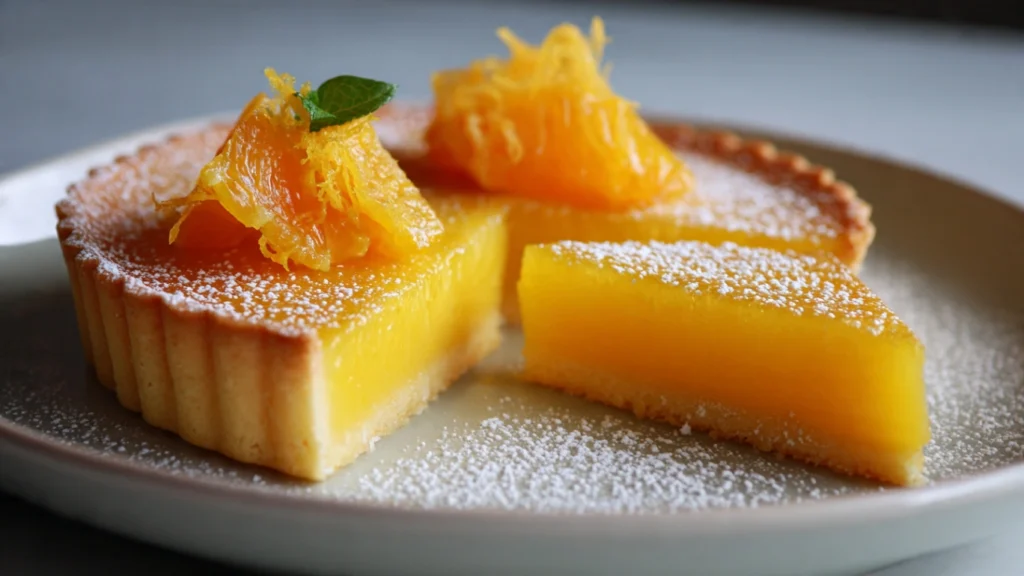
This orange tart recipe creates a stunning dessert with vibrant orange color and bright, sweet-tart flavor that’s less aggressive than lemon but more interesting than plain vanilla. The filling has a luxurious, silky texture similar to lemon curd but with oranges’ distinctive floral sweetness. Fresh orange juice and zest provide pure citrus flavor without any artificial taste. The buttery shortbread crust complements the filling perfectly without competing with it. Unlike heavy desserts, this tart feels light and refreshing—perfect for ending a rich meal. The recipe is actually quite straightforward despite its elegant appearance, requiring no special equipment beyond basic baking tools. It can be made ahead since it needs to chill anyway, reducing stress when entertaining. The tart slices beautifully, revealing that gorgeous orange filling that immediately catches everyone’s eye. Best of all, oranges are available year-round, so you can make this any time, not just during citrus season.
What Is an Orange Tart?
An orange tart is a French-inspired dessert featuring a buttery shortbread crust filled with smooth orange curd—a rich mixture of orange juice, zest, sugar, eggs, and butter. This orange tart recipe produces a classic tart similar to lemon tart (tarte au citron) but with oranges’ sweeter, more complex flavor profile. The filling is essentially orange curd that’s baked in the tart shell until just set, creating a custard-like texture. Good orange tart should have intense orange flavor from both juice and zest, balanced sweetness that’s not cloying, and silky-smooth texture without any graininess. The crust should be crisp and buttery, providing textural contrast to the creamy filling. The tart has French origins but has been embraced by pastry chefs worldwide as an elegant alternative to the more common lemon version. It’s particularly popular in regions with excellent oranges, like California and Florida.
Common Mistakes to Avoid
The biggest mistake with this orange tart recipe is using bottled orange juice instead of fresh. Fresh-squeezed juice is essential for proper flavor and the right acidity balance. Bottled juice tastes flat and processed.
Not zesting the oranges before juicing them means missing out on incredible flavor. The zest contains aromatic oils that add depth and intensity to the filling.
Overbaking the filling creates a grainy, curdled texture instead of silky smoothness. The filling should still jiggle slightly in the center when you remove it from the oven.
Not blind-baking the crust properly results in a soggy bottom. The crust must be fully baked and golden before adding the filling.
Using a tart pan without a removable bottom makes it nearly impossible to serve the tart beautifully. Invest in a proper tart pan for best results.
Not straining the filling before pouring it into the crust leaves bits of cooked egg or zest that create an unpleasant texture.
Finally, cutting into warm tart causes the filling to run everywhere. It must be completely chilled before slicing for clean cuts.
How to Know When Your Tart Is Done
The crust is properly blind-baked when it’s deep golden brown all over, including the bottom. It should feel dry and crisp to the touch with no pale or soft spots.
For the filling, proper doneness is trickier. The edges should be set and firm, while the center should still jiggle slightly when you gently shake the pan—about a 2-3 inch diameter wobble.
The surface should look matte rather than shiny or wet. It will also have puffed slightly during baking, though it will settle as it cools.
Insert a thermometer into the center of the filling. It should read about 170°F. This temperature ensures the eggs are cooked through while maintaining silky texture.
This orange tart recipe typically requires 25-30 minutes of baking for the filling at 325°F after blind-baking the crust. Start checking at 23 minutes.
The filling will continue to set as it cools, so it’s better to slightly underbake than overbake. An underbaked tart will firm up in the fridge; an overbaked one will be grainy forever.
Once cooled and chilled completely, the filling should be firm enough to slice cleanly but still have that luscious, creamy texture on the tongue.
What to Serve With Orange Tart
This orange tart recipe creates a dessert that’s perfect served simply on its own. The bright orange flavor and elegant appearance need no embellishment.
However, lightly sweetened whipped cream on the side provides a creamy contrast that many people enjoy. Keep it minimal to let the orange flavor shine.
Fresh raspberries or strawberries complement the orange flavor beautifully while adding color contrast on the plate.
A drizzle of chocolate sauce creates a chocolate-orange combination that’s classic and beloved.
Candied orange slices make an elegant garnish that reinforces the orange flavor and looks professionally styled.
Serve with strong espresso or Earl Grey tea. Both beverages complement citrus desserts perfectly without overwhelming them.
A small glass of dessert wine like Moscato or late-harvest Riesling creates a sophisticated pairing for dinner parties.
Storage Tips
Store orange tart covered loosely with plastic wrap in the refrigerator for up to 3 days. The crust will soften slightly over time but remains delicious.
For the crispest crust, this tart is best enjoyed within 24 hours of assembly. The filling stays perfect, but the crust gradually loses its snap.
Don’t cover the tart tightly with plastic wrap that touches the surface, as it will mar the smooth filling. Use a cake dome or tent the plastic wrap.
The unbaked tart shell can be made ahead and frozen for up to 3 months. Bake it straight from frozen when ready to use.
The orange curd filling can be made a day ahead and refrigerated in a bowl. Just pour it into the baked shell when ready to bake.
This orange tart recipe doesn’t freeze well once assembled, as the filling becomes watery and the crust soggy upon thawing.
Leftover slices can be individually wrapped and refrigerated for easy single servings throughout the week.
Estimated Nutrition (Per Slice, 8 Servings)
Calories: 385 | Total Fat: 22g | Saturated Fat: 13g | Cholesterol: 185mg | Sodium: 125mg | Total Carbohydrates: 42g | Dietary Fiber: 1g | Sugars: 28g | Protein: 6g
Note: Nutritional information is approximate and varies based on specific ingredients and portion sizes.
Recipe Overview
Prep Time: 30 minutes
Cook Time: 55 minutes
Total Time: 4 hours (including chilling)
Difficulty: Medium
Servings: 8 slices
Ingredients
For the Crust:
- 1¼ cups all-purpose flour
- ½ cup powdered sugar
- ¼ teaspoon salt
- ½ cup cold unsalted butter, cubed
- 1 large egg yolk
- 1-2 tablespoons cold water
For the Filling:
- 4 large eggs
- 3 large egg yolks
- 1 cup granulated sugar
- ⅔ cup fresh orange juice (about 3-4 oranges)
- 2 tablespoons orange zest
- ⅔ cup heavy cream
- Pinch of salt
Step-by-Step Instructions
Step 1: Make the crust by combining flour, powdered sugar, and salt in a food processor. Pulse to mix.
Step 2: Add cold butter cubes and pulse until the mixture resembles coarse crumbs with some pea-sized pieces remaining.
Step 3: Add egg yolk and pulse a few times. Add cold water, one tablespoon at a time, pulsing until the dough just begins to come together.
Step 4: Turn the dough onto a work surface and gather into a disk. Wrap in plastic wrap and refrigerate for at least 30 minutes.
Step 5: Preheat oven to 375°F. Roll out chilled dough on a floured surface to about 12 inches in diameter and ⅛-inch thick.
Step 6: Transfer to a 9-inch tart pan with removable bottom, pressing gently into the corners and up the sides. Trim excess dough flush with the rim. Prick the bottom all over with a fork.
Step 7: Line the crust with parchment paper and fill with pie weights or dried beans. Bake for 20 minutes, then remove weights and parchment. Bake for another 10-12 minutes until deep golden brown. Cool completely.
Step 8: Reduce oven temperature to 325°F. Zest the oranges, then juice them to get ⅔ cup of juice.
Step 9: In a large bowl, whisk together eggs, egg yolks, and sugar until smooth. Whisk in orange juice, zest, cream, and salt until well combined.
Step 10: Strain the mixture through a fine-mesh sieve into a clean bowl or large measuring cup. This removes any cooked egg bits and zest pieces for silky filling.
Step 11: Place the cooled tart shell on a baking sheet. Pour the filling into the shell, filling it nearly to the top. Carefully transfer to the oven.
Step 12: Bake for 25-30 minutes until the edges are set but the center still jiggles slightly. Cool completely at room temperature, then refrigerate for at least 3 hours or overnight before slicing and serving.
Enjoy this stunning citrus tart that brings sunshine to any table!