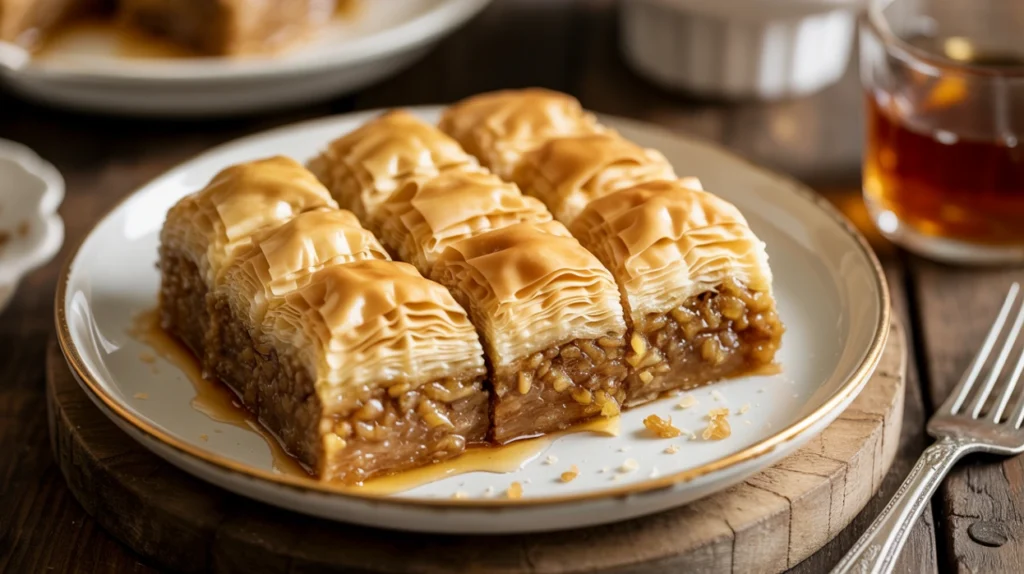
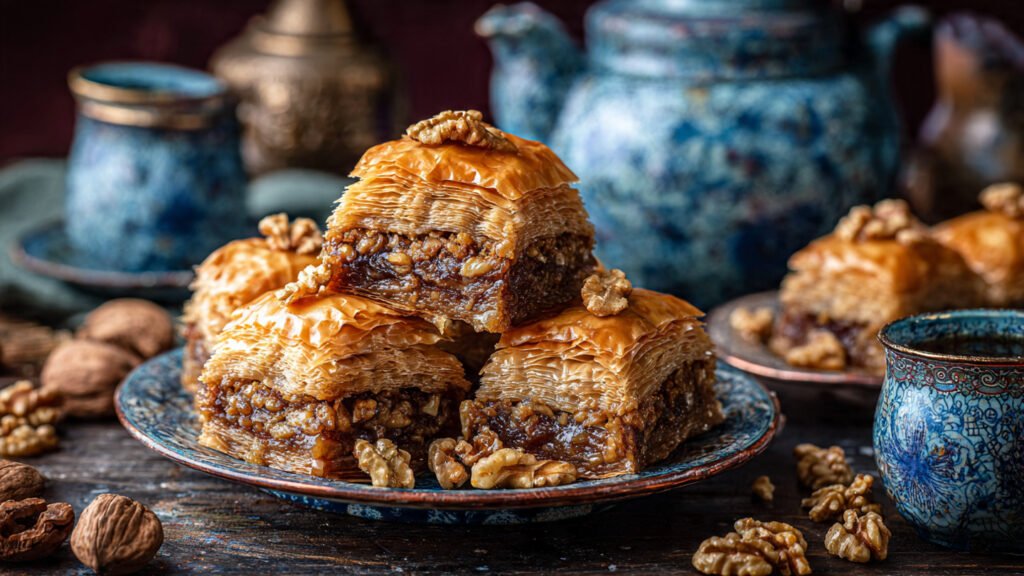
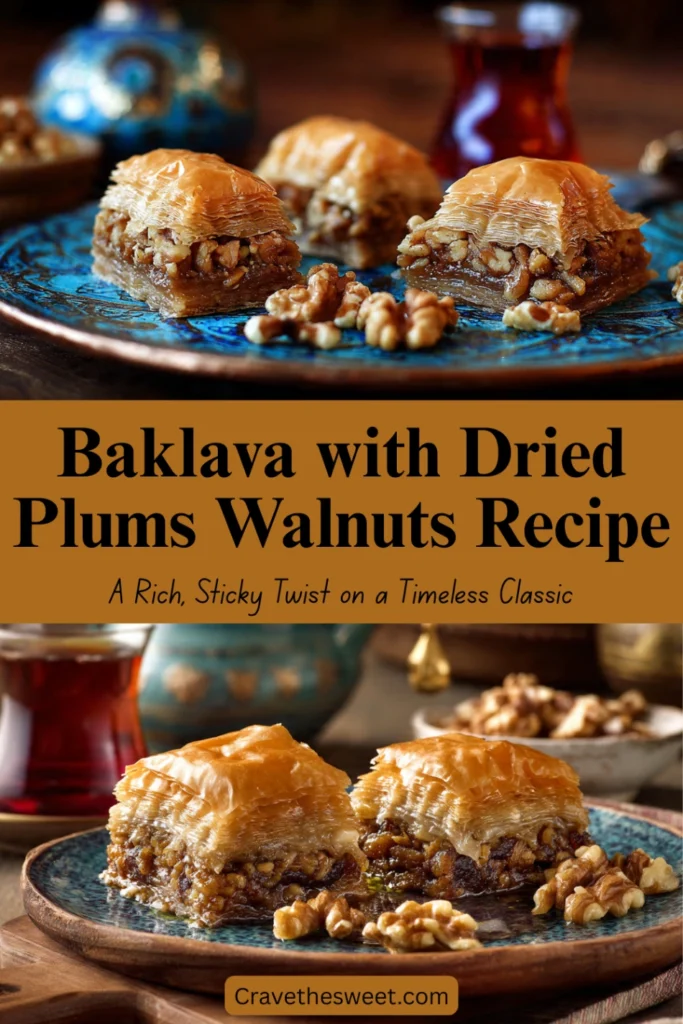
The first time I tasted baklava with dried plums, I was sitting at a small table in my neighbor’s kitchen. She had moved here from Turkey a few years earlier and still cooked like she was feeding a village. She slid a little diamond-shaped piece onto a plate in front of me and watched my face. The moment I bit through the shatteringly crisp phyllo into that sweet, chewy walnut and dried plum filling, I completely understood why she made this instead of the traditional version. The plums added something I hadn’t expected — a deep, jammy, slightly tart richness that made the honey syrup taste even more complex and beautiful. I asked her for the recipe before I finished my first piece. This baklava with dried plums walnuts recipe has been part of my kitchen ever since, and every single person I’ve served it to has asked for the recipe too.
Why You’ll Love It
This baklava with dried plums walnuts recipe takes a beloved classic and gives it a genuinely exciting twist that feels both familiar and completely new. The dried plums bring a natural fruity depth and a slight chewiness that plays off the crunch of the walnuts in the most satisfying way. The honey syrup soaks into all those buttery phyllo layers and binds everything together into something that is sticky, fragrant, and utterly irresistible. It looks spectacular on a platter — golden, glossy, and cut into elegant diamond shapes — but it’s actually quite approachable once you understand how phyllo dough works. It keeps beautifully for days, which makes it ideal for holidays, dinner parties, or gifting.
What Is It?
Baklava is a traditional pastry with deep roots across the Middle East, Mediterranean, and Central Asia. It’s made by layering paper-thin sheets of phyllo dough with a sweetened nut filling, then baking the whole thing until crisp and golden before pouring a fragrant sugar or honey syrup over the hot pastry. This version — a baklava with dried plums walnuts recipe — builds on that foundation by incorporating finely chopped dried plums into the walnut filling. The plums soften during baking and meld with the walnuts, cinnamon, and honey to create a filling that is more complex and nuanced than a traditional nut-only version. The result is a deeply layered dessert in every sense — layers of pastry, layers of flavor, and layers of texture in every single bite.
Common Mistakes to Avoid
Not thawing the phyllo dough properly. Frozen phyllo needs to thaw slowly and completely before you use it — ideally overnight in the refrigerator followed by 1–2 hours at room temperature. If you rush this step, the sheets will crack and tear the moment you try to unfold them, and you’ll have a frustrating, crumbly mess.
Letting the phyllo dry out. Once the package is open, phyllo dries out very quickly when exposed to air. Keep a clean, slightly damp kitchen towel draped over the unused sheets at all times while you work. Never leave them uncovered for more than a minute or two.
Using cold butter. Your melted butter needs to stay warm and liquid while you work. Cold or re-solidified butter doesn’t brush on smoothly and results in phyllo layers that stick together instead of baking up light and separate. Keep the butter over very low heat or rewarm it briefly as needed.
Pouring cold syrup over hot baklava — or vice versa. The temperature contrast is everything. You must pour cool or room-temperature syrup over hot baklava straight from the oven, or pour hot syrup over fully cooled baklava. If both are the same temperature, the syrup won’t absorb correctly and the layers will turn soggy rather than beautifully saturated.
Cutting after baking instead of before. Always cut your baklava into diamonds or squares before it goes into the oven. Trying to cut through fully baked, crispy phyllo will shatter and crumble the pastry into pieces. Pre-cutting ensures clean edges on every piece.
How to Know It’s Done
Your baklava with dried plums walnuts recipe is done when the top is a deep, even golden brown from edge to edge — not pale and blond, and not dark or burnt. The color should look rich and toasty, similar to a perfect pie crust. The layers should look visibly crisp and separated at the edges rather than soft or doughy. Give the pan a very gentle shake — nothing should jiggle or move. If the top looks golden but you’re not sure about the layers beneath, use a thin knife to lift one of the pre-cut pieces slightly and peek at the underside. It should be golden, not pale or wet-looking. Total bake time is typically 45–55 minutes at 325°F, but your oven may vary slightly, so start checking at the 40-minute mark.
What to Serve With It
Baklava with dried plums walnuts is a rich, sweet dessert that pairs beautifully with strong, unsweetened beverages that balance its sweetness. A small cup of Turkish coffee or Greek coffee alongside each piece is the most traditional and wonderful pairing — the bitterness of the coffee cuts right through the honey and butter. Chai tea or a strong black tea works equally well. For a dessert spread, arrange the baklava pieces on a platter with fresh orange slices, pomegranate seeds, and a small bowl of extra chopped walnuts for a stunning presentation. A dollop of thick Greek yogurt or clotted cream served alongside offers a cool, tangy contrast to the warm sweetness of the baklava.
Storage Tips
At room temperature: Baklava stores beautifully at room temperature in an airtight container for up to 2 weeks. The texture actually improves after the first day as the syrup continues to distribute evenly through all the layers. Do not refrigerate — cold air makes the phyllo layers tough and the filling hard.
Layering for storage: Place pieces in a single layer if possible, or separate layers with parchment paper to prevent sticking. Keep the container in a cool, dry spot away from direct sunlight.
Freezing: Baklava freezes exceptionally well. Place pieces in a single layer on a baking sheet, freeze until solid, then transfer to a freezer-safe container with parchment between layers. Freeze for up to 3 months. Thaw at room temperature for 1–2 hours before serving — do not microwave.
Gifting: This baklava with dried plums walnuts recipe is an exceptional gift. Pack pieces in a decorative tin or box lined with parchment and it will keep beautifully for up to a week during transport.
Estimated Nutrition (Per Piece, Based on 30 Pieces)
- Calories: ~195
- Total Fat: 11g
- Saturated Fat: 4g
- Carbohydrates: 24g
- Sugar: 15g
- Protein: 3g
- Sodium: 95mg
Note: These figures are estimates and will vary based on exact quantities and brands used.
Recipe Overview
- Prep Time: 40 minutes
- Cook Time: 50 minutes
- Cooling and Syrup Time: 30 minutes
- Total Time: About 2 hours
- Difficulty: Intermediate — manageable for a careful beginner
- Servings: 30 pieces
Ingredients
For the Filling:
- 2½ cups raw walnuts, finely chopped (not ground — you want texture)
- 1 cup dried plums, finely chopped
- 2 tablespoons granulated sugar
- 1½ teaspoons ground cinnamon
- ¼ teaspoon ground cardamom
- Pinch of ground cloves
For the Pastry:
- 1 pound package frozen phyllo dough, fully thawed
- 1 cup (2 sticks) unsalted butter, melted and kept warm
For the Honey Syrup:
- 1 cup granulated sugar
- ¾ cup water
- ½ cup pure honey
- 1 tablespoon fresh lemon juice
- 1 cinnamon stick
- 3 whole cloves
- 1 teaspoon pure vanilla extract
Step-by-Step Instructions
Step 1: Make the Syrup First
The syrup needs to cool completely before you use it, so always start here. Combine the sugar, water, honey, lemon juice, cinnamon stick, and whole cloves in a medium saucepan over medium heat. Stir until the sugar dissolves, then bring to a gentle boil. Reduce the heat and simmer for 10 minutes without stirring, until the syrup is slightly thickened and coats the back of a spoon. Remove from heat, stir in the vanilla extract, and let it cool completely to room temperature. Remove the cinnamon stick and cloves before using.
Step 2: Prepare the Filling
Combine the finely chopped walnuts and finely chopped dried plums in a large bowl. Add the granulated sugar, cinnamon, cardamom, and pinch of cloves. Toss everything together until evenly mixed. The plums will be slightly sticky — use your fingers to break up any large clumps so the filling is evenly distributed. Set aside.
Step 3: Prep Your Pan and Phyllo
Preheat your oven to 325°F. Brush a 9×13-inch baking pan generously with melted butter, coating the bottom and sides completely. Carefully unroll the thawed phyllo sheets on a clean, flat surface. Trim them if necessary to fit your pan — a few inches of overhang is fine. Cover the stack immediately with a clean, slightly damp kitchen towel to prevent drying.
Step 4: Layer the Bottom Phyllo Sheets
Place one sheet of phyllo into the buttered pan and brush the entire surface generously with melted butter using a pastry brush — edge to edge, no dry spots. Add a second sheet and brush again with butter. Continue layering and buttering individual sheets until you have used about half the phyllo package (roughly 20–22 sheets). Work quickly but carefully, keeping unused sheets covered with the damp towel at all times.
Step 5: Add the Filling
Spread the walnut and dried plum filling evenly over the bottom phyllo layers in a smooth, even coat. Press it gently with your hands so it sits flat and compact — an uneven filling layer will make the finished baklava difficult to cut cleanly. The filling layer should be about ½ inch thick and cover the pastry completely from edge to edge.
Step 6: Layer the Top Phyllo Sheets
Place a sheet of phyllo over the filling and brush immediately with melted butter. Continue layering and buttering the remaining phyllo sheets one at a time, just as you did for the bottom layer, until all the phyllo is used. Finish by brushing the very top sheet generously with the remaining melted butter — don’t be shy here, the top needs a good coat to turn beautifully golden.
Step 7: Cut Before Baking
Using a sharp knife, cut the unbaked baklava all the way through to the bottom of the pan in a diamond pattern. First make parallel diagonal cuts about 1½ inches apart across the entire pan, then make cuts in the opposite diagonal direction to create classic diamond shapes. This pre-cutting step is essential — do not skip it. Clean cuts before baking mean beautiful, intact pieces after.
Step 8: Bake
Place the pan in the preheated 325°F oven and bake for 45–55 minutes, until the top is a deep, rich golden brown across the entire surface. Rotate the pan halfway through baking if your oven has hot spots. Begin checking at the 40-minute mark.
Step 9: Pour the Syrup
The moment the baklava comes out of the oven, immediately and slowly pour the completely cooled syrup evenly over the entire hot surface. Pour slowly and steadily — you’ll hear a satisfying sizzle as the syrup hits the hot pastry and begins to soak in. Pour it all — every drop. Do not stir or touch the baklava after adding the syrup.
Step 10: Rest and Serve
Allow the baklava to cool completely and uncovered at room temperature for a minimum of 4 hours before serving — overnight is even better. The syrup needs time to soak through every layer and fully saturate the filling. Re-trace your cuts with a sharp knife before lifting pieces out and arranging them on a platter. This baklava with dried plums walnuts recipe is best served at room temperature, where every flavor is at its most vibrant and alive.