
When I first started keeping a sourdough starter, nobody warned me about the guilt. Every single feeding day, I’d pour off that cup of starter — that tangy, bubbly, living discard — and drop it straight into the trash, wincing every time. It felt wasteful and honestly a little sad. A friend who had been baking sourdough for years finally pulled me aside and said, “Stop throwing that away. That stuff is gold.” She was right. Once I started exploring sourdough discard recipes easy enough to pull together on a weeknight, my whole relationship with my starter changed. These crackers were the first thing I ever made with discard, and they completely blew me away. Crispy, buttery, a little tangy, and endlessly customizable — they disappeared from the counter within an hour the first time I made them, and they’ve never lasted much longer since.
Why You’ll Love It
Among all the sourdough discard recipes easy options out there, these crackers are the perfect starting point because they require almost no special equipment, no yeast, no rising time, and no complicated technique. You stir everything together in one bowl, roll it out thin, and bake. That’s genuinely it. The result is a cracker that tastes like something from an artisan bakery — deeply savory, satisfyingly crunchy, with that distinctive gentle tang that only sourdough can deliver. They’re also incredibly versatile. Change the toppings, add herbs, sprinkle on seeds — each batch can be completely different. Once you see how simple and rewarding this is, you’ll start looking forward to feeding day just so you have more discard to work with.
What Is It?
Sourdough discard is the portion of your sourdough starter that you remove before each feeding to keep the starter at a manageable size and maintain the right balance of wild yeast and bacteria. Rather than throwing it away, you can use it in a wide range of recipes — and sourdough discard recipes easy enough for everyday baking have become hugely popular among home bakers across the country. This particular recipe turns that discard into thin, crispy, herb-and-sea-salt crackers. The discard contributes a subtle tang and depth of flavor, while butter and a small amount of flour give the crackers their structure and crunch. They don’t rely on the discard for leavening — they’re meant to be flat and crisp — which is why they work perfectly with unfed, inactive discard straight from the fridge.
Common Mistakes to Avoid
Using fresh, active starter instead of discard. Active starter that’s been recently fed is bubbly and full of gas-producing yeast. In a cracker recipe designed for flat, crispy results, this can cause uneven bubbling and puffing during baking. Use discard that has been sitting in the fridge — unfed, deflated, and ready to go.
Rolling the dough too thick. The thinner you roll these crackers, the crispier and more satisfying they’ll be. If the dough is too thick, the centers stay slightly soft and chewy instead of shattering when you bite into them. Aim for about 1/16 of an inch — almost translucent thin. Use a rolling pin and take your time.
Skipping the salt on top. The flaky sea salt sprinkled on before baking is not optional — it’s what makes these crackers truly crave-worthy. The contrast between the buttery cracker and the little bursts of flaky salt on top is what keeps people reaching for just one more.
Not pricking the dough before baking. Use a fork or a docker to prick holes all over the rolled-out dough before it goes in the oven. This prevents large air bubbles from forming and keeps the crackers flat and even.
Overbaking or underbaking. These crackers go from perfectly golden to burnt very quickly. Watch them closely, especially toward the end of the bake time. They should be a deep golden color across the entire surface — pale crackers won’t be crispy, and dark brown crackers will taste bitter.
How to Know It’s Done
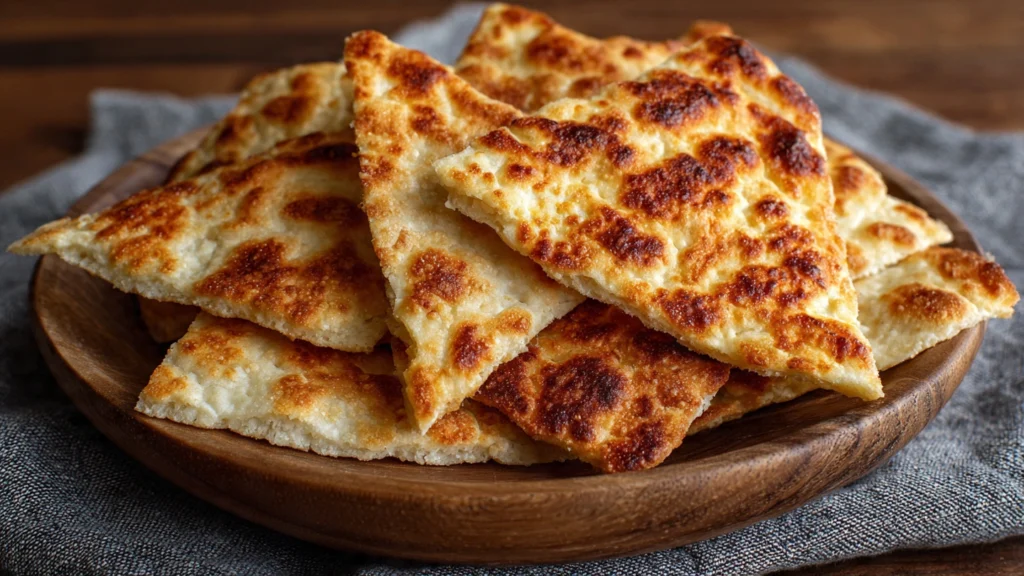
These sourdough discard crackers are done when they are a rich, even golden color across the entire surface with no pale or doughy-looking patches remaining. The edges will likely color slightly faster than the center, which is normal — you can break off the done edges and return the rest to the oven for a couple more minutes if needed. The crackers should feel completely dry and rigid when you gently press the center — if there’s any give or flexibility, they need more time. Keep in mind that they will crisp up slightly more as they cool on the pan, so pull them when they look about 90 percent done. Total bake time is typically 20–25 minutes at 325°F, but oven temperatures vary, so start checking at the 18-minute mark.
What to Serve With It
These crackers are one of those rare sourdough discard recipes easy enough for a Tuesday night but impressive enough for a dinner party cheese board. Serve them alongside a selection of soft cheeses — brie, goat cheese, or a creamy herb spread work beautifully. They’re wonderful with hummus, white bean dip, or smoked salmon and cream cheese. For a simple snack, a drizzle of good honey and a few thin apple slices alongside a sharp cheddar on top of each cracker is genuinely spectacular. On a grazing board with cured meats, olives, pickles, and grapes, these crackers anchor the whole spread and disappear faster than anything else on the table.
Storage Tips
At room temperature: Once completely cooled, store the crackers in an airtight container or zip-top bag at room temperature. They’ll stay crispy and fresh for up to one week. Make sure they are fully cooled before sealing — any residual warmth trapped in the container will create moisture and make them soft.
Refreshing stale crackers: If your crackers have softened slightly after a few days, spread them on a baking sheet and pop them into a 300°F oven for 5–7 minutes. They’ll come right back to their original crispiness.
Freezing: These crackers freeze surprisingly well. Place cooled crackers in a single layer in a freezer-safe bag, removing as much air as possible. Freeze for up to 2 months. Thaw at room temperature for 15–20 minutes, then refresh in a low oven for a few minutes if needed.
Making the dough ahead: The unbaked dough can be wrapped tightly in plastic wrap and refrigerated for up to 3 days before rolling and baking. This makes these one of the most convenient sourdough discard recipes easy to prep in advance for a party or gathering.
Estimated Nutrition (Per Serving, Based on 8 Servings)
- Calories: ~165
- Total Fat: 9g
- Saturated Fat: 5g
- Carbohydrates: 18g
- Sugar: 0g
- Protein: 3g
- Sodium: 210mg
- Fiber: 1g
Note: Nutrition values are estimates and will vary based on the hydration level of your discard and specific ingredient brands.
Recipe Overview
- Prep Time: 15 minutes
- Cook Time: 22 minutes
- Total Time: 37 minutes
- Difficulty: Very Easy — perfect for beginners
- Servings: 8 servings (approximately 40–50 crackers depending on size)
Ingredients
For the Cracker Dough:
- 1 cup sourdough discard (unfed, straight from the fridge is perfect)
- 1 cup all-purpose flour, plus extra for rolling
- 4 tablespoons unsalted butter, melted and slightly cooled
- ½ teaspoon fine kosher salt
- 1 tablespoon olive oil (for brushing before baking)
For the Topping:
- 1 teaspoon flaky sea salt (such as Maldon or any coarse flaky variety)
- 1 teaspoon dried rosemary, thyme, or everything bagel seasoning (pick your favorite or mix)
- Optional: 1 tablespoon sesame seeds, poppy seeds, or fennel seeds
Flavor Variation Ideas:
- Parmesan and black pepper
- Smoked paprika and garlic powder
- Za’atar and olive oil
- Cinnamon sugar for a sweet version
Step-by-Step Instructions
Step 1: Preheat Your Oven and Prep Your Pans
Preheat your oven to 325°F. Line two large baking sheets with parchment paper and set aside. Using a lower oven temperature is key for these sourdough discard recipes easy baked crackers — it allows the crackers to dry out and crisp evenly all the way through without browning too fast on the outside before the center is done.
Step 2: Mix the Dough
In a medium mixing bowl, combine the sourdough discard, all-purpose flour, melted butter, and fine kosher salt. Stir with a fork or rubber spatula until a cohesive, smooth dough forms. It should come together easily and feel pliable but not sticky. If the dough feels too sticky to handle, add flour one tablespoon at a time until it’s workable. If it feels too dry and crumbly, add a teaspoon of water at a time. The dough should feel like soft play dough — smooth, slightly tacky, and easy to handle.
Step 3: Divide and Rest the Dough
Divide the dough into two equal portions. This makes it easier to roll out in manageable batches that fit your baking sheets. Let the dough rest for 5 minutes at room temperature — this relaxes the gluten slightly and makes rolling much easier without the dough snapping back.
Step 4: Roll Out the Dough
Place one portion of dough between two sheets of parchment paper. Using a rolling pin, roll it out as thin as you possibly can — you’re aiming for about 1/16 of an inch thick, which is nearly translucent. The thinner you go, the crispier your crackers will be. If the dough tears, simply press it back together with your fingers and keep rolling. Slide the rolled dough (still on the parchment) onto one of your prepared baking sheets. Repeat with the second portion of dough.
Step 5: Score and Prick the Dough
Using a pizza cutter, sharp knife, or pastry wheel, score the dough into rectangles, squares, or whatever shape you prefer. You don’t need to separate the pieces — just score them so they’ll break apart easily after baking. Then use a fork to prick holes all over the entire surface of the dough. Space the holes about an inch apart. This crucial step prevents large air bubbles from forming during baking and keeps your crackers beautifully flat and even.
Step 6: Brush and Season
Brush the entire surface of the scored, pricked dough generously with olive oil — reach the edges and every corner. The oil helps the toppings adhere and promotes an even golden color across the whole cracker. Immediately sprinkle flaky sea salt evenly over the surface, followed by your chosen herbs or seeds. Press the toppings very gently into the dough with your palm so they stick and don’t fall off during baking.
Step 7: Bake
Slide both baking sheets into the preheated 325°F oven. Bake for 20–25 minutes, rotating the pans halfway through for even browning. Begin checking at the 18-minute mark. The crackers are done when they are a rich, uniform golden color with no pale patches. The edges will be slightly darker — that’s perfectly fine and normal.
Step 8: Cool and Break
Remove the pans from the oven and let the crackers cool completely on the baking sheet — don’t rush this step. As they cool, they’ll continue crisping up to their final, satisfying crunch. Once completely cool, break them apart along the scored lines. Some pieces will be perfectly even, others a little rustic and irregular — both are beautiful.
Pile them onto a board, pull out your favorite cheese and dip, and watch them vanish. These are exactly the kind of sourdough discard recipes easy wins that make you genuinely excited for every feeding day.