
Every Saturday morning during high school, my dad would surprise us with a box of fresh donuts from the local bakery. The glazed ones were always my favorite—light, airy, and covered in that sweet, shiny coating. When the bakery closed years later, I was heartbroken until I realized I could learn to make them myself. My first attempt was a disaster with dense, greasy rings that tasted nothing like the real thing. But after many batches and lessons learned, I finally cracked the code. Now this donuts recipe produces those same fluffy, melt-in-your-mouth treats that remind me of those special Saturday mornings.
Why You’ll Love This Donuts Recipe
These homemade donuts are impossibly light and fluffy with a tender crumb that practically dissolves on your tongue. The sweet glaze hardens into that signature smooth coating that cracks gently when you bite through it. Making donuts from scratch sounds intimidating, but this recipe breaks everything down into manageable steps that even beginners can follow successfully.
What makes this donuts recipe truly special is how much better they taste than store-bought versions. Fresh donuts still warm from frying are an entirely different experience—the texture is lighter, the flavor is cleaner, and you control exactly what goes into them. No preservatives, no artificial flavors, just simple ingredients transformed into something magical.
The recipe is also incredibly versatile. Once you master the basic glazed version, you can experiment with chocolate glaze, cinnamon sugar coating, sprinkles, or filled centers. These donuts are perfect for weekend breakfast treats, birthday celebrations, or any time you want to create something truly special. The joy on people’s faces when they bite into a warm, fresh donut you made yourself is absolutely priceless. Plus, your house will smell like a bakery while they’re frying, which might be the best part of all.
What Are Donuts?
Donuts, also spelled doughnuts, are fried pastries that come in two main varieties—yeast-raised and cake-style. This donuts recipe focuses on yeast-raised donuts, which use active yeast to create that signature light, airy texture. The dough is enriched with milk, butter, and eggs, then allowed to rise until doubled in size.
After rising, the dough is rolled out and cut into rings using a donut cutter or two different-sized round cutters. The rings are fried in hot oil until golden brown on both sides, which takes just a couple minutes per batch. The frying process creates a crispy exterior while keeping the interior incredibly soft and fluffy.
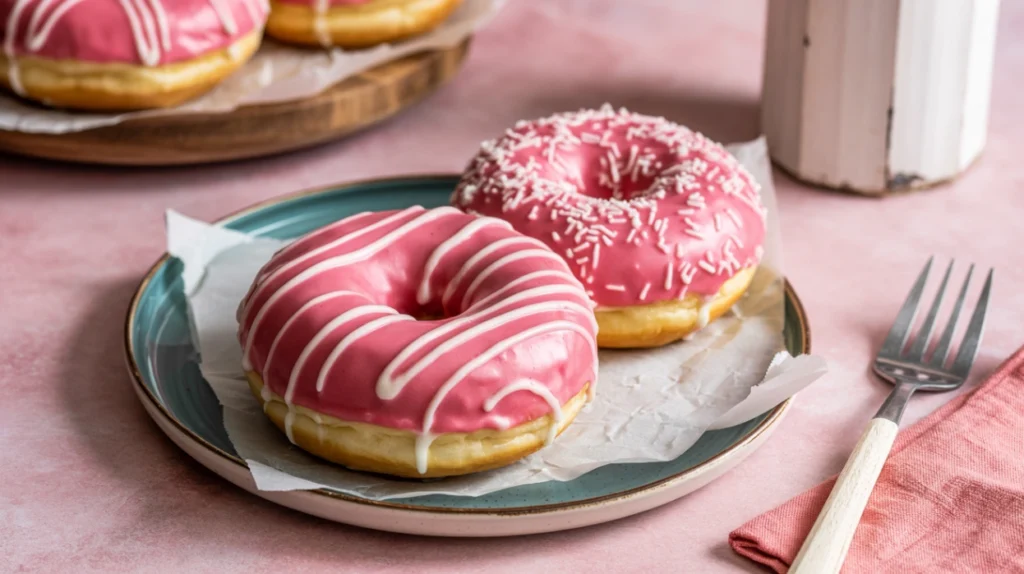
Traditional glazed donuts are dipped in a simple mixture of powdered sugar, milk, and vanilla while still warm. The glaze hardens into that iconic smooth, sweet coating. The center holes, called donut holes, are fried separately and make perfect bite-sized treats. This classic American pastry has been beloved since the mid-1800s and remains one of the most popular breakfast treats in the country.
Common Mistakes to Avoid
The most critical mistake is using water that’s too hot or too cold for the yeast. Water between 105 and 110 degrees Fahrenheit is ideal—warm enough to activate the yeast but not so hot that it kills it. Too cold and the yeast won’t activate properly, resulting in dense donuts that don’t rise. Test the water temperature on your wrist; it should feel like a comfortable warm bath.
Another common error is not allowing enough rise time. Yeast dough needs patience. The first rise should double the dough in size, which takes about one to one and a half hours depending on your kitchen temperature. The second rise after cutting shapes is equally important—donuts should look puffy and almost doubled before frying. Rushing this step creates heavy, dense donuts.
Oil temperature is crucial for this donuts recipe. Too hot and the outside burns before the inside cooks; too cold and the donuts absorb excessive oil and become greasy. Use a thermometer to maintain 365 to 375 degrees Fahrenheit. If you don’t have a thermometer, test with a small piece of dough—it should sizzle immediately and rise to the surface within a few seconds.
Many people also overcrowd the pan while frying. Fry only two or three donuts at once, giving them space to float freely. Overcrowding drops the oil temperature significantly and causes uneven cooking. Don’t flip the donuts too early either—wait until the bottom side is deep golden brown before turning.
Finally, improper glazing technique can ruin beautiful donuts. The glaze should be thin enough to coat smoothly but thick enough to create a visible layer. Glaze donuts while they’re still slightly warm so the glaze sets properly with that characteristic smooth finish.
How to Know Your Donuts Are Done
During the rising stages, properly proofed dough should double in size and feel light and puffy when gently poked. If the indentation springs back slowly, the dough is ready. If it springs back immediately, it needs more time. If the indent remains, you’ve over-proofed and should proceed to the next step quickly.
When frying, donuts are ready to flip when the bottom side is deep golden brown—this takes about 45 seconds to one minute. The uncooked top will look paler and the edges will be set. After flipping, cook another 45 seconds until both sides match in color. Properly fried donuts are uniformly golden brown all over with no pale or dark spots.
The donuts should feel light when you lift them from the oil. If they feel heavy or dense, your oil temperature was likely too low. When you cut into a finished donut, the interior should look airy with visible small holes throughout the crumb, similar to good bread. The texture should be soft and tender, not dense or gummy.
The glaze is perfect when it forms a smooth, thin coating that sets within a few minutes. You should be able to touch it without it being sticky, though it will remain slightly tacky. The glaze should have a subtle shine and crack gently when you bite through it.
What to Serve With Donuts
The classic pairing is coffee—the slight bitterness perfectly balances the sweet glaze. A medium or dark roast works best, as light roasts can taste too acidic with sugary donuts. Black coffee is traditional, but lattes and cappuccinos also complement these treats beautifully. Hot chocolate is another excellent choice, especially for kids or non-coffee drinkers.
Fresh fruit provides a refreshing contrast to rich donuts. Sliced strawberries, orange segments, or mixed berries add brightness and help balance the sweetness. Bacon is a surprisingly popular pairing—the salty, savory flavor contrasts wonderfully with sweet glazed donuts. Some people even put bacon pieces on top of the glaze for a sweet-and-salty combination.
For a complete breakfast spread, serve this donuts recipe alongside scrambled eggs, fresh juice, and yogurt. The donuts become part of a balanced meal rather than the entire breakfast. Cold milk is another classic pairing, especially popular with children. The creamy milk cuts through the sweetness and provides a nostalgic combination that many people love.
If you’re serving donuts for a party or celebration, arrange them on a tiered stand with different glazes and toppings. Offer coffee, tea, and juice as beverage options. Fresh flowers as decoration make the display even more special and Instagram-worthy.
Storage and Make-Ahead Tips
Donuts taste best the day they’re made, ideally within a few hours of frying. Store them at room temperature in an airtight container for up to two days. Don’t refrigerate donuts as this dries them out quickly. If they lose some freshness, warm them in the microwave for 8 to 10 seconds to revive the texture slightly.
For longer storage, freeze unglazed donuts wrapped individually in plastic wrap, then placed in a freezer bag. They’ll keep for up to two months. Thaw at room temperature for about an hour, then glaze before serving. The texture holds up remarkably well after freezing, though they’re never quite as perfect as fresh.
You can prepare the dough the night before for fresh morning donuts. After the first rise, punch down the dough, cover it tightly, and refrigerate overnight. In the morning, let it come to room temperature for about 30 minutes, then roll out, cut shapes, allow the second rise, and fry as usual. This method gives you fresh donuts without the early morning wait.
The glaze can be made ahead and stored in an airtight container at room temperature for up to one week. Whisk it smooth before using, adding a tiny bit of milk if it’s become too thick.
Estimated Nutrition Information
One glazed donut from this donuts recipe contains approximately 260 calories. Each donut provides about 4 grams of protein from the eggs and milk, 32 grams of carbohydrates, and 12 grams of fat from the frying oil and butter in the dough. The sugar content is around 14 grams per donut, which includes both the sugar in the dough and the glaze.
You’ll get small amounts of calcium and iron from the enriched flour and milk—about 4% of your daily calcium needs and 6% of iron per donut. Each donut contains roughly 180 milligrams of sodium.
These numbers are estimates based on proper frying technique. If the oil temperature is too low and the donuts absorb excess oil, the fat and calorie content will be higher. Using vegetable oil for frying is standard, though some people prefer peanut oil for its higher smoke point and neutral flavor.
Remember that donuts are an occasional treat rather than an everyday breakfast. Enjoying them mindfully as part of special occasions makes them even more special and memorable.
Recipe Overview
Prep Time: 30 minutes
Rise Time: 2 hours
Fry Time: 20 minutes
Total Time: 2 hours 50 minutes
Difficulty: Medium
Servings: 12 donuts plus donut holes
Ingredients
For the donuts:
- 2 and 1/4 teaspoons active dry yeast (one packet)
- 1/4 cup warm water (105-110°F)
- 3/4 cup whole milk, warmed
- 1/4 cup granulated sugar
- 1 teaspoon salt
- 1/3 cup unsalted butter, softened
- 2 large eggs, room temperature
- 3 and 3/4 cups all-purpose flour
- Vegetable oil for frying (about 8 cups)
For the glaze:
- 3 cups powdered sugar
- 1/3 cup whole milk
- 1 teaspoon vanilla extract
Step-by-Step Instructions
In a small bowl, combine the warm water and yeast. Stir gently and let sit for five minutes until foamy. This proves your yeast is alive and active. If it doesn’t foam, your water was too hot or the yeast is dead—start over with fresh yeast.
In a large mixing bowl or the bowl of a stand mixer, combine the warm milk, sugar, salt, softened butter, and eggs. Whisk until everything is well combined and the butter is mostly melted. The mixture doesn’t need to be perfectly smooth.
Add the foamy yeast mixture to the bowl and stir to combine. Add three cups of flour and mix with a wooden spoon or the dough hook attachment on low speed. The dough will be very sticky at this point.
Gradually add the remaining flour, a quarter cup at a time, until the dough pulls away from the sides of the bowl but remains soft and slightly sticky. You may not need all the flour, or you might need a tablespoon or two more depending on humidity and flour brands. Knead the dough for about five minutes in the mixer or eight minutes by hand on a floured surface. The dough should be smooth, elastic, and only slightly tacky.
Form the dough into a ball and place it in a greased bowl, turning once to coat all sides. Cover with a clean kitchen towel or plastic wrap. Let rise in a warm, draft-free spot for one to one and a half hours until doubled in size. A turned-off oven with the light on works perfectly.
Once doubled, punch down the dough gently to release air. Turn it out onto a lightly floured surface. Roll the dough to about half-inch thickness using a rolling pin. Don’t make it thinner or the donuts will be too delicate.
Using a donut cutter or two round cutters (one about 3 inches and one about 1 inch), cut out donut shapes. Place the donuts and holes on a parchment-lined baking sheet, spacing them about two inches apart. Gather the scraps, gently knead together, and cut more shapes.
Cover the cut donuts with a kitchen towel and let rise for 30 to 45 minutes until puffy and nearly doubled. They should feel light and airy when gently touched. This second rise is crucial for fluffy donuts.
About 15 minutes before frying, heat three to four inches of vegetable oil in a heavy-bottomed pot or deep fryer to 365-375 degrees Fahrenheit. Use a thermometer to monitor temperature—this is essential for perfect results.
Carefully slide two or three donuts into the hot oil using a slotted spatula. Don’t crowd the pot. Fry for about 45 seconds to one minute until the bottom is deep golden brown. The timing depends on your exact oil temperature. Flip carefully with chopsticks or a slotted spoon and fry the other side for another 45 seconds until evenly golden.
Remove donuts with a slotted spoon and place them on a wire rack set over paper towels to drain excess oil. Let them cool for about five minutes before glazing—they should be warm but not hot.
While the donuts cool slightly, make the glaze. Whisk together the powdered sugar, milk, and vanilla extract in a shallow bowl until completely smooth. The glaze should be thin enough to drip slowly from a spoon but thick enough to coat.
Dip the top of each warm donut into the glaze, letting the excess drip back into the bowl. Place glazed donuts on the wire rack to let the glaze set, which takes about ten minutes. The glaze will harden into that signature smooth, shiny coating.
Fry the donut holes using the same method but watch them carefully—they cook faster than full donuts, usually about 30 seconds per side. Toss them in cinnamon sugar or dip them in glaze while warm.
Serve these donuts fresh and watch them disappear. This donuts recipe creates the kind of fluffy, glazed perfection that makes people’s eyes light up with joy. The effort is absolutely worth it when you bite into a warm, homemade donut that tastes better than anything from a bakery.