
My mother made angel food cake for every birthday in our family because it was the one dessert my diabetic grandmother could enjoy without guilt. I remember watching Mom separate eggs with such precision, making sure not a single drop of yolk contaminated the whites. She’d beat those whites until they formed glossy peaks, fold in the flour with the gentlest touch, and somehow transform simple ingredients into the most ethereal cake imaginable. When Grandma took her first bite, her face would light up with pure joy. Now I make this same angel food cake recipe for my own family, and every time I pull that tall, golden cake from the oven, I think of her smile.
Why You’ll Love This Angel Food Cake Recipe
This cake is remarkably light and airy with a delicate, almost spongy texture that melts on your tongue. It’s naturally fat-free since it contains no butter or oil, making it a lighter dessert option that doesn’t feel heavy after a meal. Despite having no added fat, the cake is incredibly moist and tender with a subtle sweetness that pairs beautifully with fresh fruit and whipped cream.
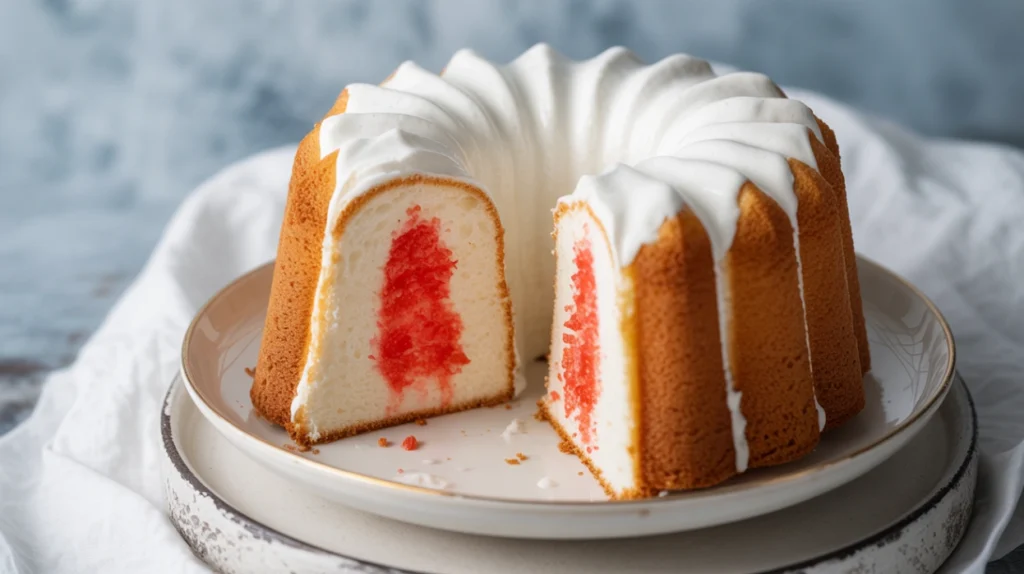
What makes this angel food cake recipe special is how it showcases the power of properly beaten egg whites. The cake rises tall and impressive in the oven, creating that signature tunnel in the center. The slight golden crust on top contrasts beautifully with the pure white interior. The flavor is clean and simple—vanilla and almond extract enhance the eggs without overwhelming them.
This cake is surprisingly versatile. Serve it plain for a light dessert, top it with fresh berries and cream for something more elaborate, or use it as a base for trifles and shortcakes. It’s perfect for spring and summer when you want something refreshing rather than rich. The recipe also works wonderfully for special occasions since it looks so elegant and impressive. Best of all, once you master the egg white technique, this cake is actually quite simple to make and requires no special equipment beyond a tube pan.
What Is Angel Food Cake?
Angel food cake is a type of sponge cake made primarily from egg whites, sugar, flour, and cream of tartar. Unlike most cakes that rely on butter and chemical leaveners for structure and rise, angel food cake gets its height entirely from beaten egg whites. The egg whites are whipped to stiff peaks, trapping air bubbles that expand during baking and create that characteristic light, airy texture.
The cake is always baked in an ungreased tube pan with a removable bottom. The ungreased surface is essential—the batter needs to cling to the pan sides as it rises, and greasing would cause it to slip down and deflate. After baking, the cake is inverted and cooled upside down, which prevents it from collapsing as it cools. This unusual cooling method helps maintain the cake’s height and structure.
Traditional angel food cake has a pure white interior with a slightly golden crust. The texture should be tender and springy with small, even air pockets throughout. The flavor is delicate and slightly sweet with hints of vanilla and almond. This angel food cake recipe follows the classic American method that’s been used for over a century to create this beloved dessert.
Common Mistakes to Avoid
The most critical mistake is getting any fat into the egg whites. Even a tiny bit of egg yolk, butter, or oil will prevent the whites from reaching their full volume. Use completely clean, dry bowls and beaters. Many bakers prefer glass or metal bowls over plastic, as plastic can retain oily residues.
Another common error is overbeating or underbeating the egg whites. Underbeaten whites won’t provide enough structure, resulting in a dense cake that doesn’t rise properly. Overbeaten whites become dry and grainy, losing their ability to fold smoothly into the batter. Beat until you achieve stiff, glossy peaks that stand straight up when you lift the beaters.
Folding the flour too vigorously is another mistake. Once you add the flour mixture, you must fold it in gently using a rubber spatula with sweeping motions from the bottom up. Stirring or mixing aggressively deflates all those air bubbles you worked hard to create. The batter will look slightly uneven—this is fine and better than overmixing.
Many people also make the mistake of greasing the pan. This seems counterintuitive, but the batter must cling to the ungreased pan to rise and maintain its height. Greasing causes the cake to slide down and collapse. Similarly, using a regular cake pan instead of a tube pan doesn’t work—the tube conducts heat through the center, ensuring even baking.
Finally, not cooling the cake upside down causes it to collapse. The cake’s structure is too delicate to support its own weight while warm. Inverting it allows gravity to keep it stretched and prevents deflation.
How to Know Your Angel Food Cake Is Done
A properly baked angel food cake has several visual and textural indicators. The top should be golden brown with deep cracks across the surface. These cracks are normal and desirable—they show the cake rose properly. The cake should have risen significantly, coming close to the top of the pan.
When you gently press the top, it should spring back immediately without leaving an indentation. If your finger leaves a dent, the cake needs more time. The surface should feel dry and firm, not sticky or wet.
The most reliable test is the toothpick method. Insert a long wooden skewer or toothpick into the cake. It should come out completely clean with no crumbs or wet batter. Check in several spots since angel food cakes sometimes bake unevenly.
Another sign is that the cake starts pulling away slightly from the pan edges. You’ll notice a small gap forming between the cake and the pan sides. The typical baking time for this angel food cake recipe is 35 to 40 minutes at 350 degrees Fahrenheit, though this varies by oven. Start checking at 35 minutes to avoid overbaking, which creates a dry, tough cake.
The wonderful vanilla aroma filling your kitchen is another good indicator that the cake is nearly done. Trust your senses along with the physical tests.
What to Serve With Angel Food Cake
Fresh berries are the classic pairing for angel food cake. Strawberries, blueberries, raspberries, or a combination create beautiful color and add tartness that balances the cake’s sweetness. Macerate the berries with a bit of sugar to draw out their juices, creating a syrup that soaks into the cake.
Whipped cream is traditional and essential. Lightly sweetened whipped cream adds richness without being too heavy. Some people add a touch of vanilla or almond extract to complement the cake’s flavor. For a lighter option, use Greek yogurt sweetened with honey.
Lemon curd makes an elegant topping that adds bright, tangy flavor. The creamy curd contrasts beautifully with the light, airy cake. Chocolate sauce or hot fudge is another popular choice for chocolate lovers, creating a delightful contrast between rich chocolate and delicate cake.
This angel food cake recipe also works wonderfully in layered desserts. Cut it into cubes and layer with pudding, fruit, and whipped cream to make trifles. Use thick slices as the base for strawberry shortcake. Toast slices lightly and serve with ice cream for a simple but impressive dessert.
For beverages, serve with coffee, tea, or dessert wines. Sweet Riesling or Moscato pair particularly well with the fruit toppings. Fresh lemonade or iced tea work beautifully for afternoon gatherings.
Storage Tips
Angel food cake stays fresh at room temperature for up to two days. Once completely cooled, wrap it tightly in plastic wrap or place it in an airtight container. Don’t refrigerate plain angel food cake as this dries it out quickly. The cake should remain soft and springy if properly wrapped.
For longer storage, freeze the cake wrapped tightly in plastic wrap and then aluminum foil for up to three months. Thaw at room temperature for several hours before serving. The texture holds up remarkably well after freezing, making this a great make-ahead dessert for parties.
If you’ve topped the cake with fruit and whipped cream, refrigerate it and consume within one day. The moisture from the fruit will begin to make the cake soggy after that. For best results, store the cake plain and add toppings just before serving.
Individual slices can be frozen separately, wrapped in plastic wrap. This makes it easy to thaw single portions for quick desserts. Thaw for about 30 minutes at room temperature.
The cake tends to dry out around the cut edges. Press plastic wrap directly against any cut surfaces to minimize drying. Some bakers brush the cut edges with simple syrup to keep them moist.
Estimated Nutrition Information
One slice of this angel food cake recipe (based on 12 servings) contains approximately 140 calories. Each serving provides about 4 grams of protein from the egg whites, 30 grams of carbohydrates, and virtually zero grams of fat—making it one of the lowest-fat cake options available. The sugar content is around 18 grams per slice.
Angel food cake is an excellent source of protein relative to other cakes due to the high proportion of egg whites. Each slice contains roughly 150 milligrams of sodium. You’ll get small amounts of selenium and riboflavin from the eggs.
These estimates are for plain cake without any toppings. Adding whipped cream increases calories by about 50 to 100 per serving depending on how much you use. Fresh berries add minimal calories—about 20 to 30 per serving—while also providing fiber, vitamins, and antioxidants.
Because angel food cake contains no fat and is relatively low in calories, it’s often considered a lighter dessert option. However, the high sugar content means it should still be enjoyed in moderation as an occasional treat.
Recipe Overview
Prep Time: 20 minutes
Bake Time: 40 minutes
Cool Time: 2 hours
Total Time: 3 hours
Difficulty: Medium
Servings: 12
Ingredients
- 12 large egg whites, room temperature
- 1 and 1/2 teaspoons cream of tartar
- 1/4 teaspoon salt
- 1 and 1/2 cups granulated sugar, divided
- 1 cup cake flour
- 1 and 1/2 teaspoons vanilla extract
- 1/2 teaspoon almond extract
Step-by-Step Instructions
Position a rack in the lower third of your oven and preheat to 350 degrees Fahrenheit. Have ready a 10-inch tube pan with a removable bottom. Do not grease the pan—this is essential for the cake to rise properly.
Sift together one cup of the sugar and all of the cake flour three times. Sifting multiple times ensures the mixture is extremely light and incorporates easily into the egg whites. Set this aside.
Separate your eggs carefully, ensuring no yolk gets into the whites. Even a tiny amount of yolk will prevent proper whipping. Let the egg whites sit at room temperature for about 15 minutes—room temperature whites whip to greater volume than cold ones.
Place the egg whites in a large, completely clean and dry mixing bowl. Add the cream of tartar and salt. Beat with an electric mixer on medium speed until the mixture becomes foamy and opaque, about one minute.
Gradually add the remaining half cup of sugar, about two tablespoons at a time, while beating continuously. Once all the sugar is added, increase the mixer speed to high. Beat until the egg whites form stiff, glossy peaks. This takes about four to six minutes total. When you lift the beaters, the peaks should stand straight up without drooping. The mixture should look smooth and shiny, not dry or grainy.
Beat in the vanilla and almond extracts on low speed just until combined, about 10 seconds.
Sift about one-quarter of the flour-sugar mixture over the beaten egg whites. Using a large rubber spatula, fold it in gently with sweeping motions from the bottom up and over. Rotate the bowl as you fold. Add the remaining flour mixture in three more additions, folding gently after each. The batter will look slightly streaky—don’t overmix trying to make it perfectly smooth.
Gently spoon the batter into the ungreased tube pan. Run a knife through the batter in a circular motion to release any large air pockets, but don’t overdo it—you want to keep most of the air in.
Bake for 35 to 40 minutes until the top is golden brown and springs back when lightly touched. The cake should have risen significantly and may have cracks on top. A long skewer inserted into the cake should come out clean.
Immediately invert the pan onto a wire rack or bottle neck. If your pan has feet, simply turn it upside down on the counter. Let the cake cool completely upside down for at least two hours. This prevents collapse and maintains the cake’s height and structure.
Once completely cool, run a thin knife around the outer edge and the tube to loosen the cake. Remove the outer ring, then run the knife under the bottom to release the cake completely. Invert onto a serving plate.
Slice with a serrated knife using a gentle sawing motion. Pressing down will compress the delicate cake. Serve plain or with your favorite toppings.
This angel food cake recipe creates a dessert that’s light as air yet satisfying and delicious. The pure, simple flavors and cloud-like texture make every bite feel special and prove that sometimes the most elegant desserts are also the simplest.