
Last summer, my kids begged me to buy ice cream sandwiches from the grocery store every single week. After spending a small fortune on boxes of them, I decided there had to be a better way. I found a simple recipe and gave it a shot one Saturday afternoon. The kids gathered around the kitchen counter as I assembled the sandwiches, and their eyes lit up when they took their first bites. They declared my homemade version even better than the store-bought ones, and I felt like a superhero parent. Now making ice cream sandwiches has become our favorite summer activity, and the best part is customizing them with different flavors and add-ins.
Why You’ll Love This Ice Cream Sandwich Recipe
This recipe creates soft, chewy chocolate cookies that stay tender even when frozen, paired with creamy ice cream in whatever flavor you love. Unlike store-bought versions that often have hard, cakey cookies, these homemade treats feature cookies that are easy to bite through without the filling squishing out everywhere. You’ll love being able to customize everything from the cookie flavor to the ice cream and even roll the edges in sprinkles, mini chocolate chips, or crushed cookies for extra fun. Making them at home costs significantly less than buying premium ice cream sandwiches from the store, and you know exactly what ingredients go into them. The recipe is also surprisingly simple, requiring just basic baking skills and ingredients you probably already have. Kids absolutely love helping make these, from scooping the ice cream to decorating the edges. They’re perfect for birthday parties, summer gatherings, or simply cooling down on a hot afternoon.
What Is an Ice Cream Sandwich?
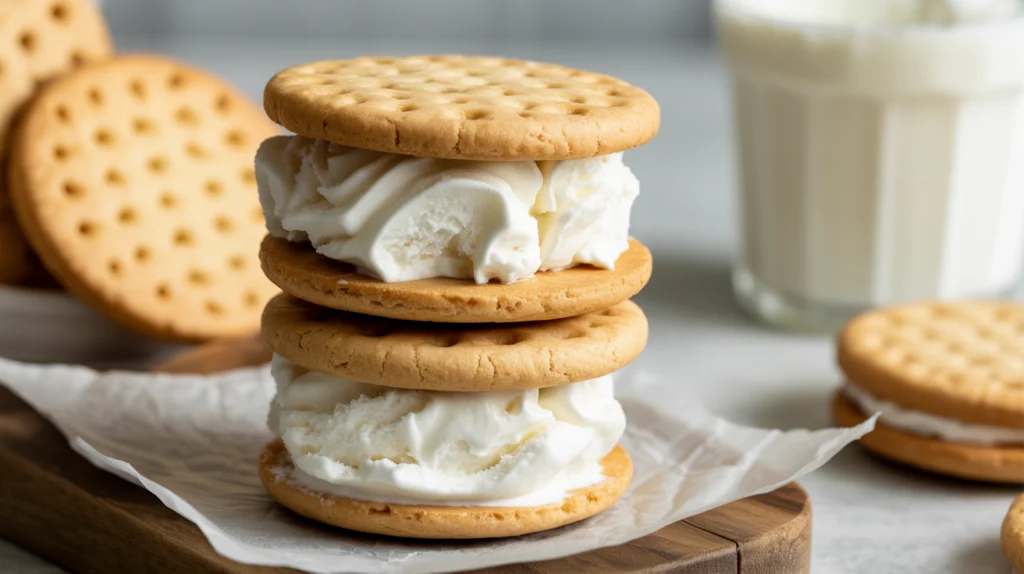
An ice cream sandwich consists of ice cream layered between two cookies, wafers, or cake-like layers. The treat became popular in America in the early 1900s, with street vendors selling them from pushcarts in New York City. Traditional versions used chocolate wafer cookies with vanilla ice cream, a combination that remains popular today. However, modern ice cream sandwiches come in countless variations, from cookie sandwiches to those made with brownies, cake, or even donuts. The key to a great ice cream sandwich recipe is finding the right balance between the cookie or outer layer and the ice cream. The cookies need to be soft enough to bite through when frozen but sturdy enough to hold the ice cream without breaking. The ice cream should be firm enough to maintain its shape but not so hard that it makes the sandwich difficult to eat. Homemade versions have a huge advantage because you can control the texture perfectly and use high-quality ingredients.
Common Mistakes to Avoid
The most common mistake with this ice cream sandwich recipe is using cookies that are too thin or crispy. Thin, crispy cookies will crack and shatter when you bite into the frozen sandwich. You want cookies that are thick and slightly soft, almost chewy in texture. Another frequent error is trying to assemble the sandwiches with ice cream that’s too soft. If the ice cream is melting, it will squish out the sides and make a mess. The ice cream should be softened just enough to spread easily but still hold its shape. Many people also make their cookies too large, creating enormous sandwiches that are difficult to eat. Keep your cookies to about two and a half to three inches in diameter for perfectly sized treats. Don’t skip the freezing time between steps. After assembling, the sandwiches need at least two hours in the freezer to firm up properly. Some bakers forget to wrap the finished sandwiches individually, causing them to stick together or develop freezer burn. Always wrap each one separately for best results.
How to Know When Your Cookies Are Done
For this ice cream sandwich recipe, you want to slightly underbake the cookies so they stay soft when frozen. The cookies are ready when the edges look set but the centers still appear slightly puffy and soft. They should be lightly golden around the edges but darker in the center. When you gently press the top with your finger, it should leave a slight indentation that slowly springs back. The cookies will continue to cook slightly from residual heat after you remove them from the oven, so taking them out when they look almost done is perfect. Bake them for about eight to ten minutes at 350 degrees. If you bake them until they look completely done, they’ll be too hard when frozen. The cookies will firm up as they cool on the baking sheet, so don’t worry if they seem too soft right out of the oven. Let them cool completely on the pan before using them for sandwiches.
What to Serve With Ice Cream Sandwiches
These frozen treats are delicious on their own, but you can make them even more special with accompaniments. Serve them alongside fresh berries for a refreshing contrast to the rich, creamy ice cream. Hot fudge or caramel sauce for dipping takes them to the next level of indulgence. For a fun presentation at parties, create an ice cream sandwich bar where guests can choose their own cookies, ice cream flavors, and edge coatings like sprinkles, crushed nuts, mini chocolate chips, or coconut flakes. This ice cream sandwich recipe works wonderfully for summer barbecues served with lemonade or iced tea. They’re also perfect for kids’ birthday parties, especially when you let children help decorate them. During holidays, you can theme them by using red and green sprinkles for Christmas or pastel colors for Easter. Some people enjoy crumbling an extra ice cream sandwich over a bowl of ice cream for an extra decadent dessert.
Storage Tips for Maximum Freshness
Proper storage is essential for keeping your homemade treats fresh and preventing freezer burn. Once assembled and frozen solid, wrap each ice cream sandwich individually in plastic wrap or parchment paper. Then place all the wrapped sandwiches in a large freezer bag or airtight container. This double layer of protection prevents ice crystals from forming and keeps the cookies from absorbing freezer odors. Store them in the coldest part of your freezer, typically the back rather than the door. The sandwiches will keep for up to two months when stored properly, though they’re usually eaten much faster than that. For this ice cream sandwich recipe, don’t store them near strongly scented foods like fish or onions, as ice cream easily absorbs odors. When you’re ready to eat one, let it sit at room temperature for just two to three minutes to soften slightly for easier eating. If the ice cream is too hard straight from the freezer, waiting a few minutes makes it much more enjoyable.
Estimated Nutrition Information
Per ice cream sandwich: Approximately 320 calories, 14g fat, 45g carbohydrates, 2g fiber, 32g sugar, and 4g protein. The exact nutrition depends on your choice of ice cream and any additional toppings or coatings you add to the edges.
Recipe Overview
Prep Time: 20 minutes
Cook Time: 10 minutes
Total Time: 2 hours 45 minutes (includes freezing)
Difficulty Level: Easy
Servings: 12 sandwiches
Ingredients
For the Cookies:
- 1 and 1/2 cups all-purpose flour
- 1/2 cup unsweetened cocoa powder
- 1 teaspoon baking soda
- 1/4 teaspoon salt
- 1/2 cup unsalted butter, softened
- 1 cup granulated sugar
- 1 large egg
- 1 teaspoon vanilla extract
For Assembly:
- 1 quart vanilla ice cream (or your favorite flavor), slightly softened
- Optional: sprinkles, mini chocolate chips, or chopped nuts for rolling edges
Step-by-Step Instructions
Preheat your oven to 350 degrees Fahrenheit. Line two large baking sheets with parchment paper or silicone baking mats.
In a medium bowl, whisk together the flour, cocoa powder, baking soda, and salt. Set this dry mixture aside.
In a large bowl, beat the softened butter and sugar together with an electric mixer on medium speed for about two minutes until light and fluffy. Add the egg and vanilla extract, beating until well combined.
Gradually add the dry ingredients to the wet ingredients, mixing on low speed just until combined. The dough will be thick and slightly sticky.
Scoop the dough using a small cookie scoop or tablespoon, making balls about one inch in diameter. You should get about twenty-four cookies total. Place them on your prepared baking sheets, spacing them about two inches apart because they’ll spread slightly during baking.
Bake for eight to ten minutes. Remember, you want to slightly underbake these cookies for this ice cream sandwich recipe. The edges should look set but the centers should still appear soft and puffy. Don’t wait until they look completely done.
Remove from the oven and let the cookies cool completely on the baking sheets. This is important because warm cookies will melt the ice cream when you try to assemble the sandwiches.
While the cookies cool, remove your ice cream from the freezer and let it soften slightly at room temperature for about ten minutes. It should be soft enough to spread but not melting.
Once the cookies are completely cool, flip half of them over so the flat bottoms face up. These will be the bases of your sandwiches. Scoop about one-third cup of softened ice cream onto each bottom cookie. Use a spoon or small offset spatula to spread the ice cream evenly to the edges.
Top each one with another cookie, flat side down, pressing gently to spread the ice cream to the edges. Don’t press too hard or the ice cream will squish out.
If desired, roll the edges of each sandwich in sprinkles, mini chocolate chips, or chopped nuts while the ice cream is still slightly soft.
Place the assembled sandwiches on a parchment-lined baking sheet and freeze for at least two hours until completely solid.
Once frozen solid, wrap each ice cream sandwich individually in plastic wrap or parchment paper for storage. Transfer to a freezer bag or airtight container.
When ready to serve, let the sandwiches sit at room temperature for two to three minutes to soften slightly before eating.
This ice cream sandwich recipe creates the perfect summer treat that tastes so much better than anything you can buy at the store!