
I still remember the first time my grandmother pulled a golden lemon cake from her oven on a warm spring afternoon. The kitchen filled with the most incredible citrus aroma, and that first bite changed everything I thought I knew about cake. It was perfectly moist, delicately sweet, and had this bright lemon flavor that made my taste buds dance. Since that day, I’ve been on a mission to recreate that magic, and after years of testing, I’ve finally perfected this lemon cake recipe that I’m thrilled to share with you today.
Why You’ll Love This Lemon Cake Recipe
This lemon cake recipe checks all the boxes for what makes a truly exceptional dessert. First, it delivers an authentic lemon flavor without being overwhelmingly tart or artificially sweet. The texture is incredibly moist and tender, with a delicate crumb that practically melts in your mouth. What I love most is how approachable this recipe is for bakers of all skill levels. You don’t need fancy equipment or hard-to-find ingredients, just basic pantry staples and fresh lemons. It’s also wonderfully versatile, perfect for birthday celebrations, afternoon tea, potluck dinners, or simply enjoying with your morning coffee. The cake stays fresh for days and actually tastes even better the next day as the flavors develop and meld together.
What Is a Lemon Cake?
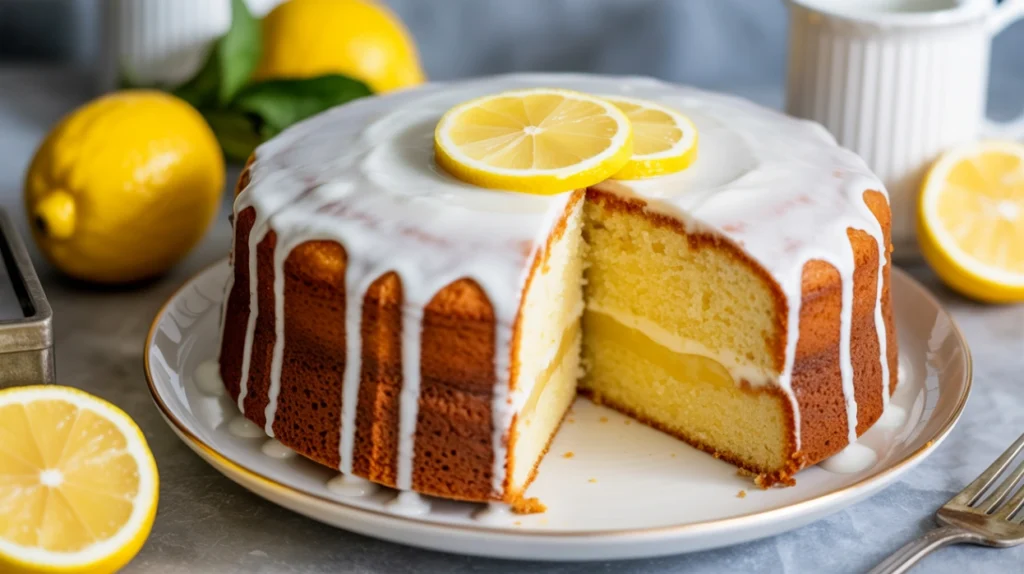
A lemon cake is a classic butter cake infused with bright, sunny lemon flavor throughout. Unlike a simple vanilla cake with lemon frosting, a true lemon cake incorporates fresh lemon juice and zest directly into the batter, creating layers of citrus flavor in every bite. The best versions strike a beautiful balance between sweet and tart, with a tender, moist crumb that comes from the perfect ratio of butter, sugar, eggs, and flour. This particular lemon cake recipe uses both lemon zest and juice to maximize flavor, plus a simple glaze that adds an extra punch of lemony goodness and keeps the cake incredibly moist.
Common Mistakes to Avoid
Many home bakers struggle with lemon cakes that turn out dry, dense, or lacking in flavor. The most common mistake is overmixing the batter once you add the flour. When you mix too vigorously or for too long, you develop the gluten in the flour, which creates a tough, dense cake instead of a light, tender one. Mix just until the flour disappears into the batter and no more. Another frequent error is using bottled lemon juice instead of fresh. Bottled juice often has a bitter, artificial taste that can ruin your cake. Always use fresh lemons for the best flavor. Overbaking is another culprit behind dry lemon cakes. Since ovens vary in temperature, start checking your cake a few minutes before the recommended baking time. Finally, don’t skip the zest! The lemon zest contains aromatic oils that give your cake incredible depth of flavor that juice alone cannot provide.
How to Know When Your Lemon Cake Is Done
Knowing exactly when to remove your cake from the oven makes the difference between a perfectly moist cake and a dry disappointment. Start checking around the 28-minute mark, even if your recipe says 35 minutes. The top should be golden brown and spring back lightly when you gently press the center with your fingertip. Insert a toothpick or cake tester into the center of the cake. It should come out with just a few moist crumbs clinging to it, not wet batter. If the toothpick comes out completely clean, your cake may already be slightly overbaked. The edges should also be just starting to pull away from the sides of the pan. Remember that the cake will continue cooking slightly from residual heat even after you remove it from the oven, so it’s better to err on the side of slightly underdone.
What to Serve With Lemon Cake
This lemon cake recipe is delicious on its own, but pairing it with complementary flavors and textures takes it to the next level. Fresh berries, especially strawberries, raspberries, or blueberries, are a natural match for lemon. The fruit adds a pop of color and a fresh element that balances the richness of the cake. A dollop of freshly whipped cream or vanilla ice cream provides a cool, creamy contrast to the bright citrus flavor. For a more elegant presentation, try serving slices with a berry compote or lemon curd on the side. Hot tea is the perfect beverage companion, particularly Earl Grey or chamomile, which complement the lemon beautifully. For special occasions, a glass of sparkling wine or champagne makes your lemon cake feel extra celebratory.
Storage Tips for Maximum Freshness
Proper storage keeps your lemon cake tasting fresh and moist for days. Once the cake has completely cooled and you’ve applied any glaze, cover it tightly with plastic wrap or aluminum foil. You can also store it in an airtight container at room temperature for up to three days. If your kitchen is particularly warm, refrigerating the cake is a better option to prevent spoilage, though this may slightly firm up the texture. Before serving refrigerated cake, let it sit at room temperature for about 30 minutes to restore its soft, tender texture. For longer storage, this lemon cake recipe freezes beautifully for up to three months. Wrap individual slices or the whole cake tightly in plastic wrap, then again in aluminum foil before freezing. Thaw overnight in the refrigerator or at room temperature for a few hours.
Estimated Nutrition Information
Per serving (based on 12 slices): Approximately 285 calories, 12g fat, 41g carbohydrates, 4g protein, 75mg cholesterol, 210mg sodium. Keep in mind these are estimates and will vary based on specific ingredients used and portion sizes.
Recipe Overview
Prep Time: 15 minutes
Cook Time: 35 minutes
Total Time: 50 minutes
Difficulty: Easy
Servings: 12 slices
Ingredients
For the cake:
- 1 and 3/4 cups all-purpose flour
- 1 and 1/2 teaspoons baking powder
- 1/2 teaspoon salt
- 3/4 cup unsalted butter, softened
- 1 and 1/4 cups granulated sugar
- 3 large eggs, room temperature
- 2 teaspoons vanilla extract
- Zest of 2 large lemons
- 3 tablespoons fresh lemon juice
- 1/2 cup whole milk, room temperature
For the glaze:
- 1 cup powdered sugar
- 3 tablespoons fresh lemon juice
- 1 teaspoon lemon zest
Step-by-Step Instructions
Start by preheating your oven to 350°F. Grease a 9-inch round cake pan generously with butter or non-stick spray, then dust with flour, tapping out any excess. This prevents sticking and ensures easy removal.
In a medium bowl, whisk together the flour, baking powder, and salt. Set this dry mixture aside. In a large mixing bowl, beat the softened butter with an electric mixer on medium speed until creamy and smooth, about one minute. Gradually add the sugar and continue beating for three to four minutes until the mixture is light and fluffy. This step incorporates air into your batter, creating a lighter cake texture.
Add the eggs one at a time, beating well after each addition. Mix in the vanilla extract and lemon zest. The batter might look slightly curdled at this point, which is completely normal. In a small measuring cup, combine the lemon juice and milk. With your mixer on low speed, add about one-third of the flour mixture to the butter mixture, followed by half of the milk mixture. Add another third of the flour, then the remaining milk mixture, and finally the last of the flour. Mix just until each addition is incorporated. Remember not to overmix at this stage.
Pour the batter into your prepared pan and smooth the top with a spatula. Bake for 30 to 35 minutes, using the doneness tests described earlier. When done, remove from the oven and let the cake cool in the pan for ten minutes. Then carefully turn it out onto a wire rack to cool completely.
While the cake cools, make your glaze by whisking together the powdered sugar, lemon juice, and zest until smooth. Once the cake is completely cool, drizzle the glaze over the top, allowing it to drip down the sides naturally. Let the glaze set for about 15 minutes before slicing and serving.
This lemon cake recipe has become my go-to dessert for every occasion. Its bright, refreshing flavor and tender crumb never fail to impress, whether I’m serving it to guests or simply treating my family to something special on a weekend afternoon.