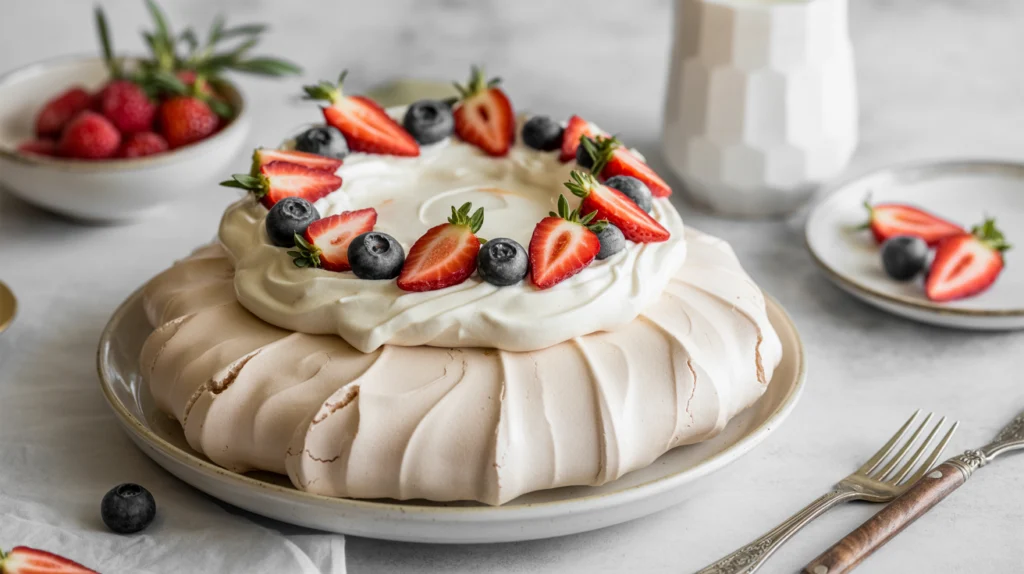
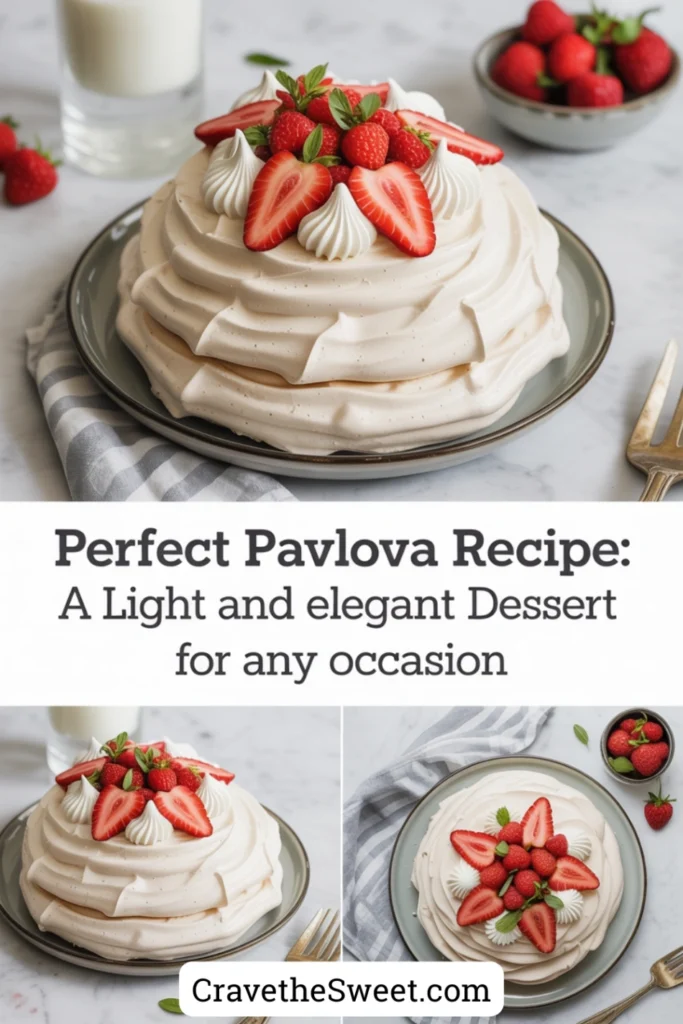
I discovered pavlova at a summer barbecue about five years ago, and it completely changed my perspective on desserts. The hostess brought out this stunning creation topped with fresh berries and whipped cream, and when I took my first bite, I was amazed by the contrast of textures—crispy on the outside, soft and marshmallowy on the inside. I thought it would be incredibly difficult to make, but she assured me it was surprisingly simple. After making my first pavlova that weekend, I realized she was right. Now, this pavlova recipe has become my signature dessert for dinner parties and celebrations.
Why You’ll Love This Pavlova Recipe
This dessert is absolutely show-stopping yet surprisingly easy to make. The crispy meringue shell gives way to a soft, pillowy center that melts in your mouth. It’s light and airy, making it the perfect ending to a heavy meal. What I love most about this pavlova recipe is how elegant it looks with minimal effort. The billowy white meringue topped with cream and colorful fruit always impresses guests, and they’re shocked when I tell them how simple it is. Plus, it’s naturally gluten-free, which makes it perfect for guests with dietary restrictions. You can customize the toppings based on the season or your preferences, making it versatile for any occasion. The sweetness is perfectly balanced, especially when paired with tart fruit.
What Is Pavlova?
Pavlova is a meringue-based dessert with a crispy outer shell and soft, marshmallow-like interior, traditionally topped with whipped cream and fresh fruit. It’s named after the Russian ballerina Anna Pavlova, and both Australia and New Zealand claim to have invented it in her honor during her tours in the 1920s. The dessert is characterized by its unique texture—unlike French meringues that are crispy all the way through, pavlova should have that signature soft center. The secret to achieving this texture is adding a small amount of cornstarch and vinegar to the meringue, which creates that coveted marshmallowy middle. It’s typically served as a large cake-like dessert that’s cut into wedges, though you can also make individual pavlovas.
Common Mistakes to Avoid
The biggest mistake people make with this pavlova recipe is having any trace of fat in their bowl or on their beaters. Even a tiny bit of grease or egg yolk will prevent the egg whites from whipping properly. Make sure everything is completely clean and dry. Another common error is adding the sugar too quickly. If you dump it in all at once, the meringue won’t achieve the right glossy, stiff texture. Add it gradually, one tablespoon at a time. Opening the oven door during baking is another mistake—this can cause the pavlova to crack or collapse. Let it bake and cool completely in the oven without peeking. Some people bake pavlova at too high a temperature, which causes it to brown and become too crispy. Low and slow is the key. Also, don’t make pavlova on a humid day if you can avoid it, as moisture in the air can affect the meringue’s ability to crisp up properly.
How to Know When Your Pavlova Is Done
Your pavlova is ready when the outside feels dry and crisp to the touch. The surface should be firm enough that you can gently tap it without leaving an indentation. It should have a very pale cream color—if it’s turning golden or brown, your oven temperature is too high. The meringue should lift easily from the parchment paper without sticking. When you tap the side gently, it should sound hollow. After baking, the pavlova needs to cool completely in the oven with the door closed. This gradual cooling helps prevent cracks. Once cool, the center should still feel slightly soft when you press it very gently—this is perfect. If the whole thing is rock hard, it’s been overbaked. Don’t worry if you see a few small cracks on the surface—this is completely normal and adds to the rustic charm. The cracks will be covered by cream and fruit anyway.
What to Serve With Pavlova
Fresh berries are the classic choice for topping this pavlova recipe. Strawberries, blueberries, raspberries, and blackberries all work beautifully, either alone or mixed together. In summer, try sliced peaches, nectarines, or fresh cherries. Tropical fruits like kiwi, mango, and passion fruit create an exotic twist. For fall, roasted figs or poached pears are elegant options. The whipped cream is essential—I like to add a touch of vanilla and just a hint of sugar. Some people enjoy adding a layer of lemon curd under the cream for extra tanginess. A drizzle of berry coulis or chocolate sauce can add another flavor dimension. For a more sophisticated version, try mascarpone cream instead of regular whipped cream. Fresh mint leaves make a lovely garnish that adds color and a hint of freshness.
Storage Tips
The unfilled meringue base can be stored in an airtight container at room temperature for up to two days. Make sure it’s completely cool before storing, and keep it in a dry place away from humidity. Never refrigerate the bare meringue, as moisture will make it soggy. Once you’ve topped the pavlova with cream and fruit, it should be served within two to three hours. The cream will start to weep and make the meringue soft if it sits too long. If you have leftover topped pavlova, you can refrigerate it for a day, but the texture won’t be as perfect. The meringue will become softer and chewier, though it’s still delicious. For best results, make the meringue base ahead of time and add the toppings just before serving.
Estimated Nutrition Information
Per serving (based on 8 servings with cream and berries): Approximately 220 calories, 9g fat, 34g carbohydrates, 1g fiber, 32g sugar, 3g protein. The meringue itself is relatively low in calories since it’s mostly egg whites and sugar, but the whipped cream adds richness. You can reduce calories by using less cream or substituting with Greek yogurt for a tangier, lighter option.
Recipe Overview
Prep Time: 15 minutes
Cook Time: 90 minutes
Total Time: 3 hours (including cooling)
Difficulty: Medium
Servings: 8
Ingredients
For the pavlova:
- 4 large egg whites, at room temperature
- 1 cup superfine sugar (or regular granulated sugar)
- 1 teaspoon white vinegar
- 1 tablespoon cornstarch
- 1 teaspoon vanilla extract
For the topping:
- 1 cup heavy whipping cream
- 2 tablespoons powdered sugar
- 1 teaspoon vanilla extract
- 3 cups mixed fresh berries
- Fresh mint leaves for garnish (optional)
Step-by-Step Instructions
Preheat your oven to 300°F. Line a large baking sheet with parchment paper. Draw an 8-inch circle on the parchment as a guide, then flip the paper over so the marking is on the bottom but still visible through the paper.
Ensure your mixing bowl and beaters are completely clean and dry. Separate your eggs carefully, making sure no yolk gets into the whites. Let the egg whites sit at room temperature for about 15 minutes—room temperature whites whip better than cold ones.
Beat the egg whites on medium speed until soft peaks form. This takes about three to four minutes. The whites should look foamy and hold a soft shape when you lift the beaters.
Now begin adding the sugar very gradually, about one tablespoon at a time, while continuing to beat on medium-high speed. Wait about 15 seconds between each addition. This gradual process is crucial for achieving the right texture.
Once all the sugar is incorporated, continue beating for another five to seven minutes until the meringue is thick, glossy, and holds stiff peaks. When you lift the beaters, the peaks should stand straight up without drooping.
Sprinkle the cornstarch and vinegar over the meringue, add the vanilla extract, then gently fold everything together with a spatula. Use a gentle folding motion rather than stirring to keep the air in the meringue.
Spoon the meringue onto your prepared baking sheet within the circle you drew. Create a slight well in the center by building up the edges a bit higher—this will hold your cream and fruit later. The pavlova will expand slightly during baking.
Place the baking sheet in the oven and immediately reduce the temperature to 250°F. Bake for 90 minutes without opening the oven door.
After 90 minutes, turn off the oven but leave the pavlova inside with the door closed. Let it cool completely in the oven for at least two hours or overnight. This gradual cooling prevents cracking.
When ready to serve, make your whipped cream. Beat the heavy cream with powdered sugar and vanilla until soft peaks form. Don’t overbeat or it will become grainy.
Carefully transfer the cooled pavlova to a serving plate. Spread the whipped cream over the top, leaving a small border around the edges. Arrange your fresh berries on top of the cream in an attractive pattern.
Garnish with fresh mint leaves if desired, then slice and serve immediately. Use a sharp knife and cut with a gentle sawing motion to get through the crispy meringue.
This pavlova recipe has earned me countless compliments at gatherings. The combination of crispy meringue, fluffy cream, and fresh fruit creates a dessert that’s both impressive and incredibly satisfying.