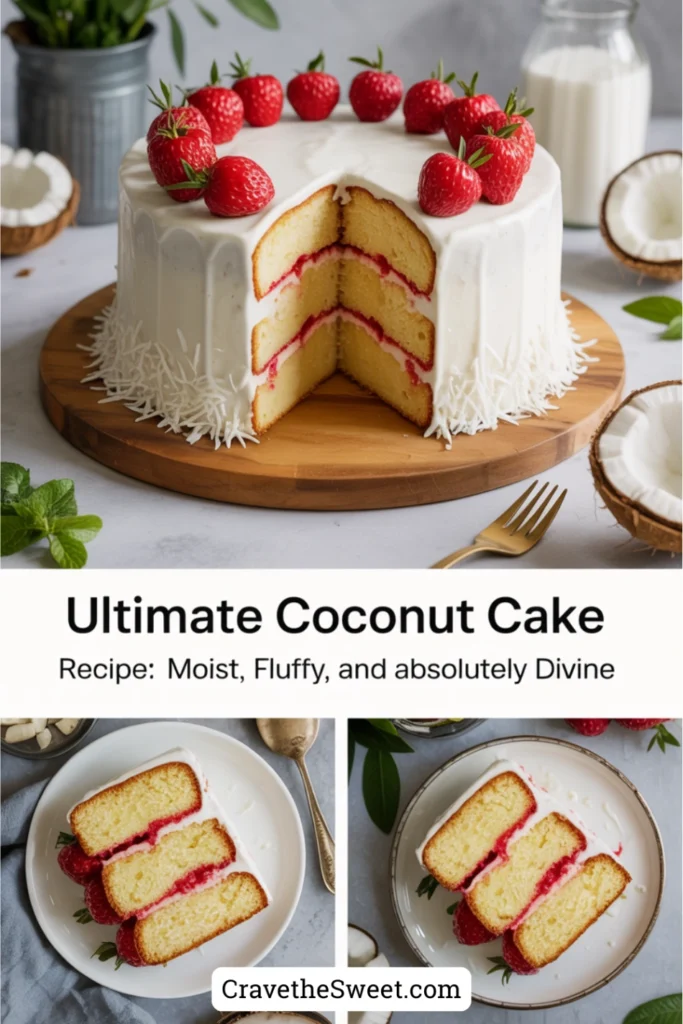
Last summer, my grandmother handed me a worn recipe card with faded handwriting. “This coconut cake,” she said with a knowing smile, “has made people cry at every family gathering for forty years.” I thought she was exaggerating until I baked it myself. The first bite transported me to a tropical paradise—tender crumbs practically melting on my tongue, with that perfect balance of sweetness and rich coconut flavor. Now I’m sharing this treasure with you because everyone deserves a coconut cake this good in their life.
Why You’ll Love This Ultimate Coconut Cake Recipe
This isn’t just another cake—it’s the kind of dessert that makes people ask for seconds before they’ve finished their first slice. The texture is incredibly moist without being dense, and the coconut flavor shines through in every layer without overwhelming your palate. What makes this recipe special is how forgiving it is for beginners while still delivering bakery-quality results. You don’t need fancy equipment or professional skills, just a mixing bowl and a desire to create something spectacular. Plus, this cake stays fresh for days, making it perfect for meal prep or bringing to gatherings where you want to be remembered as “that person who made the amazing cake.”
What Is Coconut Cake?
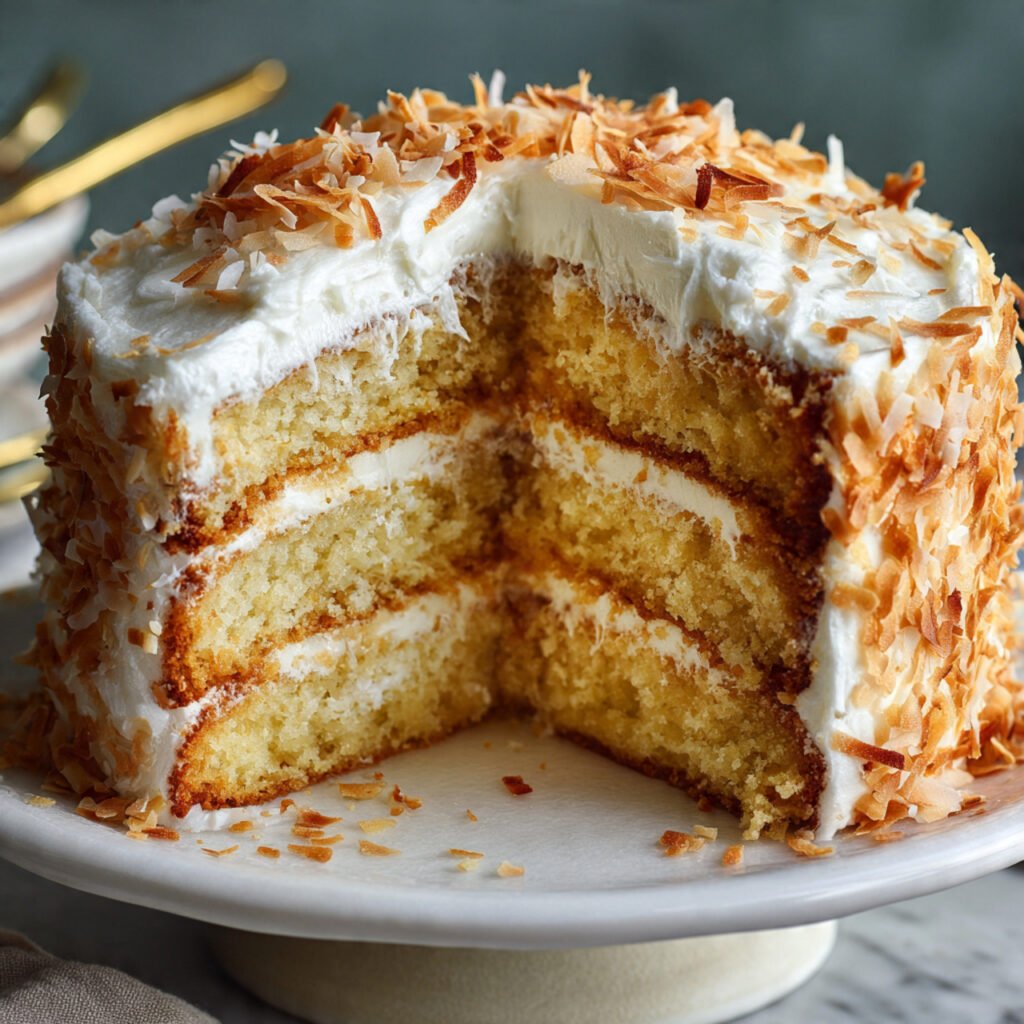
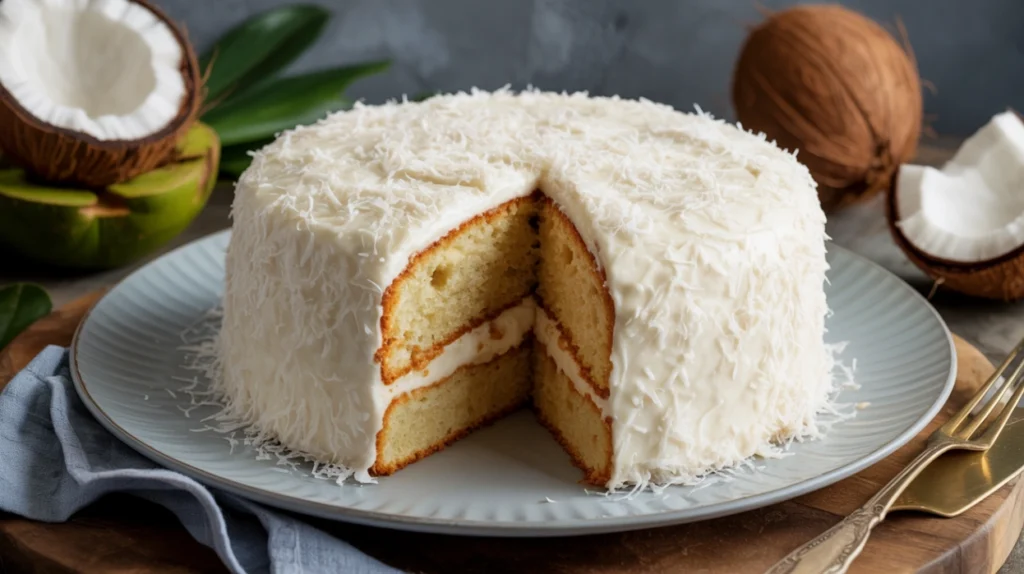
Coconut cake is a classic Southern dessert that features coconut in multiple forms throughout the cake. The base is a tender vanilla cake enhanced with coconut milk or cream, which keeps it incredibly moist. Traditional versions include shredded coconut mixed into the batter and piled high on the frosting, creating layers of texture and flavor. This ultimate coconut cake recipe takes that foundation and perfects it with just the right ratios of ingredients to create a crumb that’s soft and fluffy while maintaining enough structure to hold multiple layers. The frosting is typically a cream cheese or buttercream base loaded with more coconut, making every bite a celebration of this tropical ingredient.
Common Mistakes to Avoid
The biggest mistake people make with coconut cake is using only sweetened coconut, which can make the final result cloyingly sweet. Balance is key—I use a combination of sweetened and unsweetened coconut for the perfect flavor profile. Another common error is overmixing the batter once you add the flour. This develops too much gluten and results in a tough, chewy cake instead of that tender crumb we’re after. Mix just until the ingredients are combined and you still see a few small lumps.
Many bakers also make the mistake of opening the oven door too early to check on their cake. This releases heat and can cause the center to sink. Wait until at least three-quarters of the baking time has passed before peeking. Finally, don’t skip the step of letting your cake layers cool completely before frosting. Warm cake will melt your frosting and create a messy situation that’s difficult to salvage.
How to Know Your Coconut Cake Is Done
Your cake is perfectly baked when a toothpick inserted into the center comes out with just a few moist crumbs attached—not wet batter, but not completely clean either. Those few crumbs mean you’ve hit the sweet spot of doneness without overbaking. The top should be golden and spring back lightly when you touch it. The edges will just begin to pull away from the sides of the pan, creating a small gap all around. If you notice the top browning too quickly before the center is done, tent a piece of aluminum foil loosely over the pans for the remaining baking time.
What to Serve With Coconut Cake
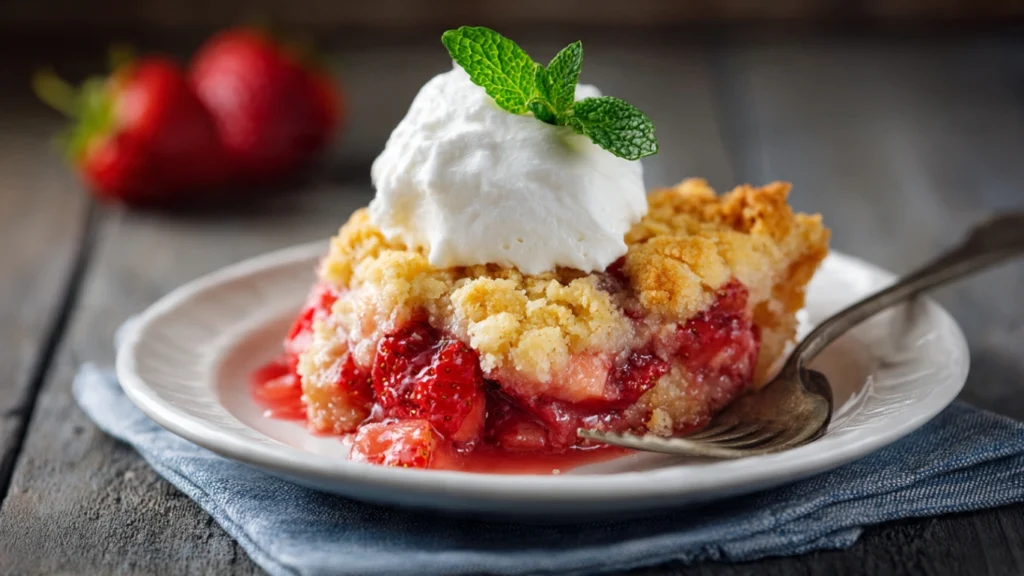
This coconut cake is rich enough to stand alone, but pairing it with the right accompaniments can elevate the experience. Fresh berries—especially raspberries or strawberries—provide a tart contrast that cuts through the sweetness beautifully. A scoop of vanilla ice cream or a dollop of lightly sweetened whipped cream adds a cool, creamy element that complements the cake’s texture. For a tropical theme, serve alongside sliced mango or pineapple.
Coffee and tea are natural beverage pairings. A strong black coffee balances the sweetness, while coconut or vanilla chai tea echoes the cake’s flavors. For special occasions, a glass of dessert wine or champagne makes this feel extra celebratory. I’ve even served this with a coconut rum sauce drizzled over each slice for adult gatherings, which was an absolute hit.
Storage Tips for Maximum Freshness
Store your coconut cake in an airtight container at room temperature for up to three days. If your kitchen is particularly warm, refrigeration is better, though the texture will firm up slightly—just let it come to room temperature for 30 minutes before serving. The high moisture content from the coconut milk actually helps this cake stay fresh longer than most cakes.
For longer storage, coconut cake freezes beautifully for up to three months. Wrap individual slices tightly in plastic wrap, then aluminum foil, and place in a freezer-safe container. Thaw overnight in the refrigerator or at room temperature for a few hours. You can freeze unfrosted cake layers for up to three months and frost them fresh when you’re ready to serve.
Estimated Nutrition Information
Per slice (based on 12 servings): Approximately 420 calories, 22g fat, 52g carbohydrates, 5g protein, 2g fiber. Keep in mind these are estimates and will vary based on specific ingredients used and portion sizes. This is definitely an indulgent treat meant for special occasions rather than everyday eating.
Recipe Overview
Prep Time: 25 minutes
Cook Time: 30 minutes
Total Time: 55 minutes (plus cooling time)
Difficulty Level: Easy to Intermediate
Servings: 12 slices
Ingredients
For the Cake:
- 2½ cups all-purpose flour
- 2 teaspoons baking powder
- ½ teaspoon salt
- 1 cup unsalted butter, softened
- 2 cups granulated sugar
- 4 large eggs, room temperature
- 1 cup coconut milk
- 2 teaspoons vanilla extract
- 1 teaspoon coconut extract
- 1 cup sweetened shredded coconut
For the Frosting:
- 1 cup unsalted butter, softened
- 8 ounces cream cheese, softened
- 5 cups powdered sugar
- 2 teaspoons vanilla extract
- 3 tablespoons coconut milk
- 2 cups sweetened shredded coconut for coating
Step-by-Step Instructions
Step 1: Preheat your oven to 350°F. Grease and flour two 9-inch round cake pans, then line the bottoms with parchment paper for easy release.
Step 2: Whisk together flour, baking powder, and salt in a medium bowl. Set aside.
Step 3: In a large bowl, beat softened butter and sugar with an electric mixer on medium-high speed for 4-5 minutes until light and fluffy. This incorporates air for a lighter texture.
Step 4: Add eggs one at a time, beating well after each addition. Scrape down the bowl sides between additions.
Step 5: Mix vanilla and coconut extracts into the coconut milk.
Step 6: Alternate adding the flour mixture and coconut milk mixture to the butter mixture in three parts, beginning and ending with flour. Mix on low speed just until combined.
Step 7: Gently fold in one cup of shredded coconut with a spatula.
Step 8: Divide batter evenly between prepared pans. Bake for 28-32 minutes until a toothpick comes out with moist crumbs.
Step 9: Cool in pans for 10 minutes, then turn out onto wire racks to cool completely.
Step 10: For frosting, beat butter and cream cheese until smooth and creamy, about 3 minutes.
Step 11: Gradually add powdered sugar one cup at a time, beating on low then increasing to medium speed.
Step 12: Add vanilla extract and coconut milk. Beat until fluffy, about 2 minutes.
Step 13: Place one cake layer on your serving plate. Spread with about one cup of frosting.
Step 14: Top with second layer and frost the top and sides generously.
Step 15: Press shredded coconut onto the frosting all over the cake, covering completely. Refrigerate for 30 minutes to set before slicing.
This ultimate coconut cake recipe delivers everything you want in a special occasion dessert—impressive appearance, incredible flavor, and that perfect moist texture that keeps people coming back for more. Enjoy every divine bite!