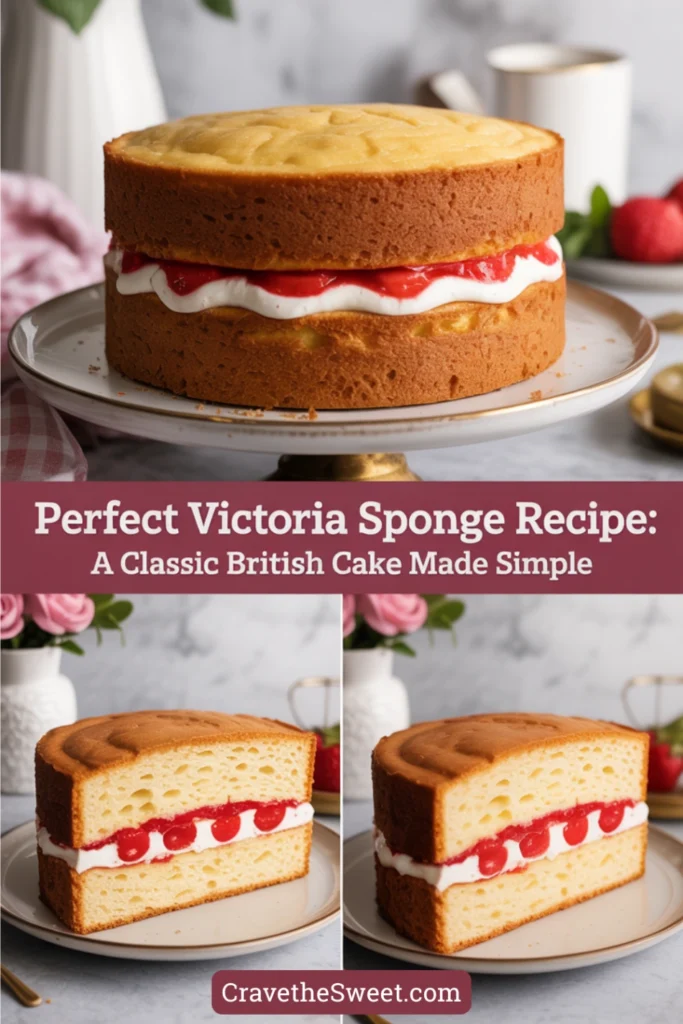
During my first trip to England, I sat in a cozy tearoom in the Cotswolds and experienced my first proper Victoria sponge. The light-as-air cake layers, sweet jam filling, and delicate dusting of powdered sugar seemed almost too simple to be so incredibly delicious. When I returned home, I became obsessed with recreating that perfect afternoon tea moment in my own kitchen. After dozens of attempts and plenty of research into British baking traditions, I finally cracked the code. This Victoria sponge recipe delivers that authentic tender crumb and elegant simplicity that makes this cake a timeless classic worth mastering.
Why You’ll Love This Perfect Victoria Sponge Recipe
This cake proves that sometimes the simplest recipes are the most satisfying. With just four main ingredients in equal proportions, this Victoria sponge is incredibly easy to remember and execute, even for nervous bakers. There’s no complicated frosting to master or intricate decorating required—the beauty lies in its understated elegance. The texture is impossibly light and tender, practically melting on your tongue, while the sweet jam and cream filling provides just enough richness without overwhelming the delicate cake.
What makes this recipe special is how it teaches you fundamental baking techniques that will improve all your future cakes. You’ll learn the proper way to cream butter and sugar, how to fold in flour without deflating your batter, and the exact signs of a perfectly baked sponge. Plus, this cake comes together quickly, bakes in under 25 minutes, and requires minimal cleanup. It’s sophisticated enough for special occasions yet simple enough to make on a quiet Sunday afternoon when you need a little treat.
What Is a Victoria Sponge?
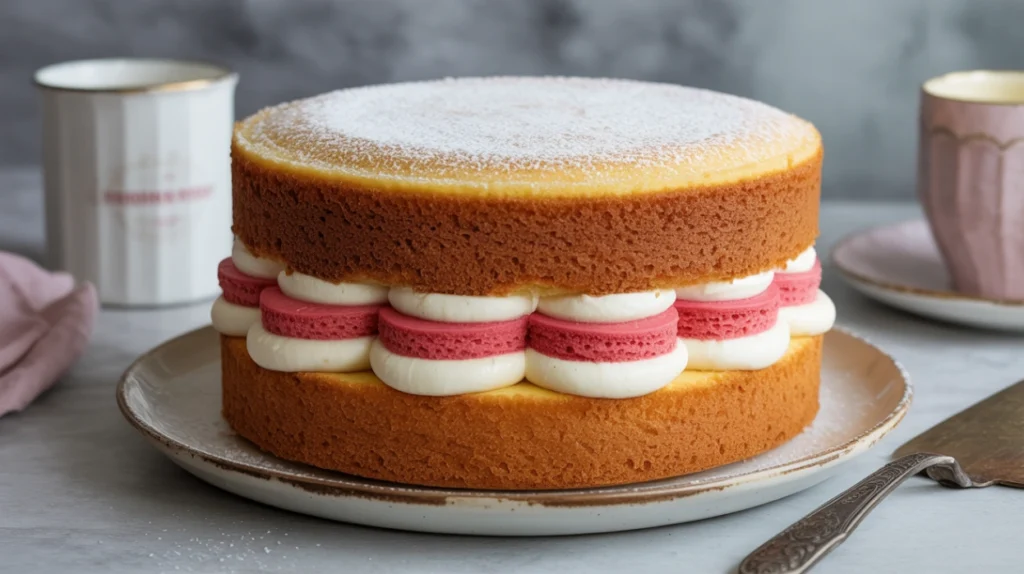
A Victoria sponge, also called Victoria sandwich, is a traditional British cake named after Queen Victoria, who apparently enjoyed a slice with her afternoon tea. The classic version consists of two light sponge cake layers filled with jam and sometimes whipped cream or buttercream, then finished with a simple dusting of powdered sugar on top. The traditional jam is always raspberry or strawberry, though purists insist on raspberry.
What distinguishes a proper Victoria sponge from other cakes is its incredibly light, airy texture achieved through careful creaming of butter and sugar, and the restrained sweetness that allows the quality of each ingredient to shine. British bakers follow the “equal weight” rule—the weight of eggs used determines the weight of butter, sugar, and flour, creating perfect balance. This Victoria sponge recipe adapts those principles for easy cup measurements while maintaining that authentic delicate crumb that makes this cake so beloved across the pond.
Common Mistakes to Avoid
The most frequent mistake is not creaming the butter and sugar long enough. This step incorporates air into your batter, which is crucial for that light, fluffy texture. You need to beat for at least 5 minutes until the mixture is pale, fluffy, and has increased in volume. If it still looks yellow and dense, keep going. Another error is adding cold eggs directly from the refrigerator, which can cause the batter to curdle or split. Always bring eggs to room temperature first, or place them in warm water for 5 minutes before using.
Overmixing once you add the flour is a surefire way to create a tough, dense cake instead of a tender sponge. Use a gentle folding motion and stop as soon as you no longer see dry flour streaks. Many bakers also make the mistake of opening the oven door too early, which causes the cake to sink in the middle. Resist the temptation to peek until at least 15 minutes have passed.
Finally, don’t assemble your Victoria sponge while the cakes are still warm. The heat will melt your jam and cream, creating a soggy mess. Patience is essential—let those layers cool completely on a wire rack before filling.
How to Know Your Victoria Sponge Is Done
Your sponge is perfectly baked when it’s risen beautifully, golden on top, and springs back when you gently press the center with your fingertip. The edges should just begin to pull away from the sides of the pan. A toothpick inserted into the center should come out clean or with just a tiny crumb or two attached—not wet batter.
The cake should feel set and firm, not jiggly or wobbly when you gently shake the pan. You’ll also notice a wonderful vanilla and butter aroma filling your kitchen. If the tops are browning too quickly but the centers aren’t done, reduce your oven temperature by 25 degrees and continue baking. Remember that sponge cakes continue cooking slightly from residual heat after you remove them from the oven, so don’t wait until they’re completely firm or you’ll end up with a dry cake.
What to Serve With Victoria Sponge
This classic cake is traditionally served as the centerpiece of afternoon tea, accompanied by a proper pot of English breakfast tea or Earl Grey. The tannins in tea cut through the sweetness beautifully and cleanse your palate between bites. Coffee works wonderfully too, especially a milder roast that won’t overpower the delicate cake flavors.
For a complete tea service, serve your Victoria sponge alongside small sandwiches with cucumber or egg salad, scones with clotted cream, and perhaps some shortbread cookies. Fresh berries on the side add color and a tart contrast to the sweet cake. During summer months, serve slices with fresh strawberries and a dollop of whipped cream for an extra special presentation.
This cake is also perfect for birthday celebrations, bridal showers, or any gathering where you want something elegant but not fussy. A glass of champagne or sparkling wine alongside Victoria sponge creates a delightful pairing for celebratory occasions.
Storage Tips for Maximum Freshness
Store your assembled Victoria sponge in an airtight container at room temperature for up to two days. If you’ve used fresh cream in the filling, it must be refrigerated and will stay fresh for about 24 hours. Bring it to room temperature for 30 minutes before serving for the best flavor and texture.
For longer storage, you can freeze unfilled cake layers wrapped tightly in plastic wrap and aluminum foil for up to three months. Thaw overnight in the refrigerator, then bring to room temperature before filling and serving. I don’t recommend freezing the assembled cake, as the jam and cream don’t freeze well and can make the layers soggy when thawed.
If you notice your cake drying out, place half an apple in the container with it. The moisture from the apple will help keep the cake tender for an extra day or two.
Estimated Nutrition Information
Per slice (based on 8 servings): Approximately 340 calories, 18g fat, 42g carbohydrates, 5g protein, 1g fiber. These numbers are estimates and will vary based on the specific jam and cream you use for filling. While not an everyday health food, this Victoria sponge makes a lovely occasional treat.
Recipe Overview
Prep Time: 20 minutes
Cook Time: 20 minutes
Total Time: 40 minutes (plus cooling time)
Difficulty Level: Easy
Servings: 8 slices
Ingredients
For the Cake:
- 1 cup unsalted butter, softened to room temperature
- 1 cup granulated sugar
- 4 large eggs, room temperature
- 2 cups self-rising flour
- 2 teaspoons vanilla extract
- 2 tablespoons milk
For the Filling:
- ⅔ cup raspberry or strawberry jam
- 1 cup heavy whipping cream
- 2 tablespoons powdered sugar
For Topping:
- 2 tablespoons powdered sugar for dusting
Step-by-Step Instructions
Step 1: Preheat your oven to 350°F. Grease two 8-inch round cake pans with butter, then line the bottoms with parchment paper circles. Grease the parchment as well.
Step 2: In a large mixing bowl, beat softened butter and granulated sugar together with an electric mixer on medium-high speed for 5-7 minutes. The mixture should be pale, fluffy, and nearly white in color.
Step 3: Add eggs one at a time, beating well after each addition. If the mixture starts to look curdled, add a tablespoon of flour and continue beating. Scrape down the bowl sides as needed.
Step 4: Add vanilla extract and mix until combined.
Step 5: Sift the self-rising flour over the batter to remove any lumps.
Step 6: Using a rubber spatula, gently fold the flour into the batter using a figure-eight motion. Fold just until you no longer see dry flour streaks. Add milk and fold a few more times until just combined.
Step 7: Divide batter evenly between the two prepared pans, smoothing the tops with your spatula.
Step 8: Bake for 18-22 minutes until golden, risen, and a toothpick inserted in the center comes out clean.
Step 9: Let cakes cool in pans for 5 minutes, then turn out onto wire racks. Peel off parchment paper and let cool completely, about 45 minutes.
Step 10: While cakes cool, whip heavy cream with 2 tablespoons powdered sugar until stiff peaks form. Refrigerate until ready to use.
Step 11: Once cakes are completely cool, place one layer on your serving plate with the flat bottom facing up.
Step 12: Spread jam evenly over the first layer, leaving a small border around the edge.
Step 13: Spread whipped cream over the jam layer, again leaving a small border.
Step 14: Place the second cake layer on top, flat bottom facing down so the rounded top is visible.
Step 15: Dust the top generously with powdered sugar using a fine-mesh sieve. For a decorative touch, place a doily on top before dusting, then carefully remove it to reveal a pretty pattern.
This perfect Victoria sponge recipe brings a taste of British tradition to your table with minimal fuss and maximum flavor. The light, tender crumb paired with sweet jam and cream creates a timeless dessert that never goes out of style!