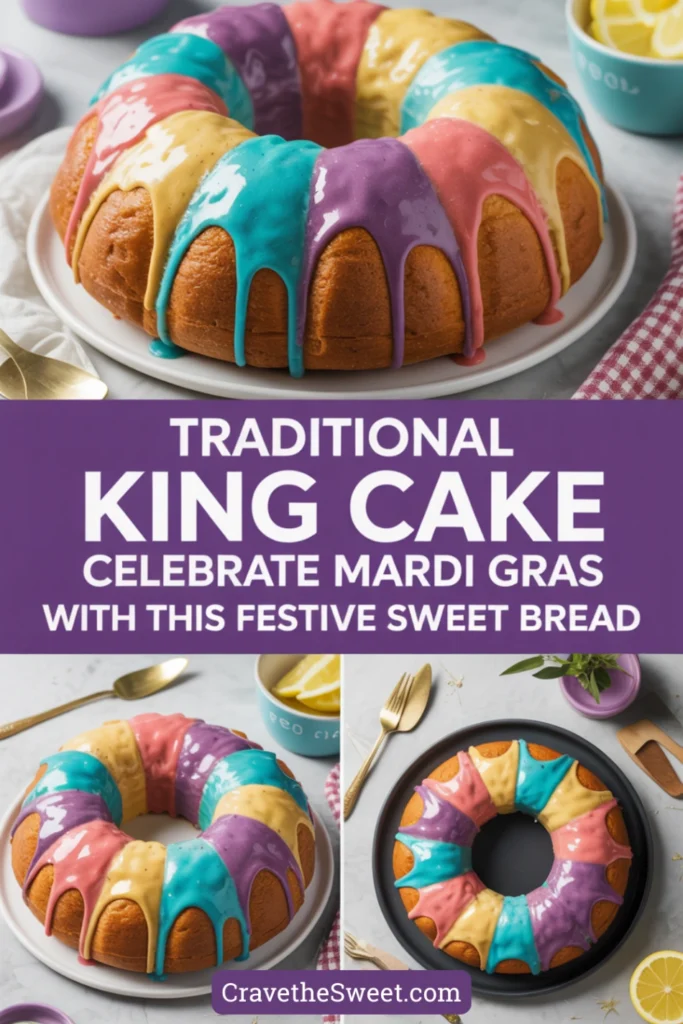
My first Mardi Gras in New Orleans was unforgettable, and the highlight was tasting authentic king cake at a local bakery. The braided sweet bread topped with purple, green, and gold icing was unlike anything I’d tried before—slightly sweet, rich with cinnamon, and full of tradition. When I moved back home, I desperately missed that taste of Mardi Gras, so I decided to learn how to make it myself. After several attempts and phone calls to my New Orleans friends for advice, I finally perfected my technique. Now this king cake recipe has become our family’s tradition every Carnival season. Making it fills my kitchen with the scent of cinnamon and brings a little bit of that New Orleans magic to wherever we are.
Why You’ll Love This King Cake Recipe
This bread is wonderfully rich and slightly sweet with swirls of cinnamon sugar throughout. The dough is soft and tender, similar to brioche but not quite as buttery. What makes this king cake recipe special is the tradition and festivity it brings. The iconic purple, green, and gold colors represent justice, faith, and power—the traditional Mardi Gras colors. The bread itself isn’t overly sweet, which means you can enjoy a generous slice with coffee for breakfast or as a snack. Making king cake at home allows you to control the sweetness and customize the filling. It’s a fun project that brings people together, and hiding the little plastic baby inside adds an element of surprise and tradition. The braided shape looks impressive and professional, yet the technique is simpler than it appears.
What Is King Cake?
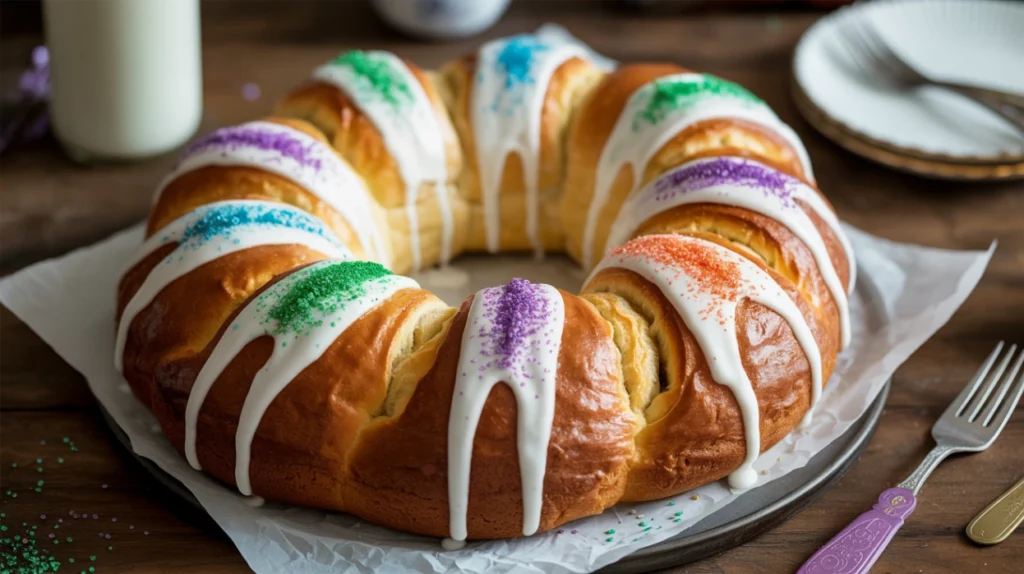
King cake is a traditional sweet bread associated with Mardi Gras and the Carnival season, particularly popular in New Orleans and throughout Louisiana. The cake’s history dates back to medieval Europe and celebrates the Epiphany, or Twelfth Night, which falls on January 6th. The season runs from Epiphany until Fat Tuesday, the day before Lent begins. Traditional king cake is an oval braided bread with cinnamon filling, topped with icing and colored sugar in purple, green, and gold. A small plastic baby is baked inside or inserted after baking, representing baby Jesus. According to tradition, whoever gets the slice with the baby must host the next king cake party or bring the next cake. Modern variations include cream cheese, praline, or fruit fillings, though cinnamon remains the classic. The cake is meant to be shared at parties and gatherings throughout Carnival season.
Common Mistakes to Avoid
The biggest mistake with this king cake recipe is not letting the dough rise long enough. Yeast dough needs time—rushing it results in dense, heavy bread. Let it rise until truly doubled. Another error is using water that’s too hot for the yeast, which kills it. Water should be warm to the touch, around 110°F, not hot. Some people roll the dough too thin when shaping, which makes the filling leak out during baking. Keep it about half an inch thick. Not sealing the edges properly causes the filling to ooze out and burn. Pinch seams firmly. Adding too much filling makes the dough difficult to roll and braid. A thin, even layer works best. Overbaking dries out the bread—it should be golden but still soft. Not letting it cool before icing causes the icing to melt and run off.
How to Know When It’s Done
The king cake is properly baked when it’s golden brown all over with no pale spots. The braided sections should be evenly colored. Tap the bottom—it should sound hollow. The internal temperature should register between 190°F and 200°F on an instant-read thermometer. The bread should feel firm to the touch but not hard. If the top is browning too quickly before the inside is done, tent it loosely with aluminum foil for the last 10 minutes. The filling might bubble out slightly in places, which is normal and adds to the rustic appearance. After baking, let the cake cool on the baking sheet for 10 minutes before transferring to a wire rack. It needs to cool completely, about one hour, before adding icing—warm bread will melt the icing.
What to Serve With King Cake
This king cake recipe creates a bread that’s traditionally served with coffee, especially dark roast or chicory coffee as they do in New Orleans. It’s perfect for breakfast, brunch, or afternoon snacking during Carnival season. The cake is meant to be shared at parties and gatherings, so serve it on a large platter where everyone can pull off pieces. Some people enjoy it with hot chocolate or tea. Fresh fruit on the side adds freshness and balances the sweetness. For authentic New Orleans-style service, pair it with café au lait. The cake is substantial enough to serve as a sweet breakfast alongside eggs and bacon. During Mardi Gras parties, serve it as part of a spread with other traditional foods like jambalaya, gumbo, and beignets.
Storage and Make-Ahead Tips
Store king cake covered at room temperature for up to three days. The bread stays moist due to the filling. If your kitchen is very warm, you can refrigerate it, though this may dry it slightly. Bring to room temperature before serving. The uniced cake freezes well for up to two months—wrap tightly in plastic wrap and foil. Thaw at room temperature and ice just before serving. You can make the dough through the first rise, then refrigerate overnight. Bring to room temperature the next day, shape, and continue with the recipe. The dough can also be shaped, frozen unbaked, and baked from frozen—add 10 to 15 extra minutes to baking time. Don’t freeze iced cake as the icing doesn’t hold up well.
Estimated Nutrition Information
Per slice (based on 16 slices): Approximately 295 calories, 8g fat, 50g carbohydrates, 1g fiber, 26g sugar, 5g protein. This is a sweet bread meant for celebrating special occasions during Carnival season. The moderate portion sizes make it easy to enjoy as part of a balanced celebration.
Recipe Overview
Prep Time: 30 minutes
Cook Time: 30 minutes
Total Time: 3 hours 30 minutes (including rising)
Difficulty: Medium
Servings: 16
Ingredients
For the dough:
- 1/2 cup warm milk (110°F)
- 1/2 cup warm water (110°F)
- 2 and 1/4 teaspoons active dry yeast
- 1/2 cup granulated sugar
- 1/2 cup unsalted butter, melted
- 2 large eggs
- 1 teaspoon salt
- 4 to 4 and 1/2 cups all-purpose flour
For the filling:
- 1/2 cup packed brown sugar
- 2 tablespoons ground cinnamon
- 1/4 cup unsalted butter, softened
For the icing and topping:
- 2 cups powdered sugar
- 3 tablespoons milk
- Purple, green, and gold colored sugar
- 1 small plastic baby (optional)
Step-by-Step Instructions
In a large bowl, combine warm milk, warm water, yeast, and one tablespoon of the sugar. Let sit for five minutes until foamy.
Add the remaining sugar, melted butter, eggs, and salt. Stir to combine. Add four cups of flour and mix until a shaggy dough forms.
Turn the dough onto a floured surface and knead for eight to ten minutes, adding more flour as needed, until smooth and elastic. The dough should be slightly sticky but manageable.
Place in a greased bowl, cover with a damp towel, and let rise in a warm place for one and a half to two hours until doubled in size.
While the dough rises, make the filling by mixing brown sugar and cinnamon in a small bowl.
Punch down the risen dough and turn it onto a floured surface. Roll it into a large rectangle about 22×12 inches and half an inch thick.
Spread the softened butter over the dough, leaving a one-inch border. Sprinkle the cinnamon-sugar mixture evenly over the butter.
Starting from a long edge, roll the dough tightly into a log. Pinch the seam to seal.
Carefully cut the log in half lengthwise, creating two long pieces with the filling exposed. Twist the two pieces together, keeping the cut sides facing up to show the filling.
Form the twisted dough into an oval ring on a parchment-lined baking sheet. Pinch the ends together to seal. Cover loosely and let rise for 45 minutes until puffy.
Preheat your oven to 350°F. Bake for 28 to 32 minutes until golden brown. If browning too quickly, tent with foil.
Let cool on the baking sheet for 10 minutes, then transfer to a wire rack to cool completely.
Make the icing by whisking powdered sugar and milk until smooth. Drizzle over the cooled cake.
While the icing is still wet, sprinkle alternating stripes of purple, green, and gold colored sugar over the cake.
If using, push the plastic baby into the bottom of the cake from underneath.
Let the icing set for 15 minutes before serving.
This king cake recipe brings the spirit of Mardi Gras to your home. The sweet, cinnamon-filled bread topped with festive colors creates a celebration centerpiece that’s as fun to make as it is to share with family and friends.