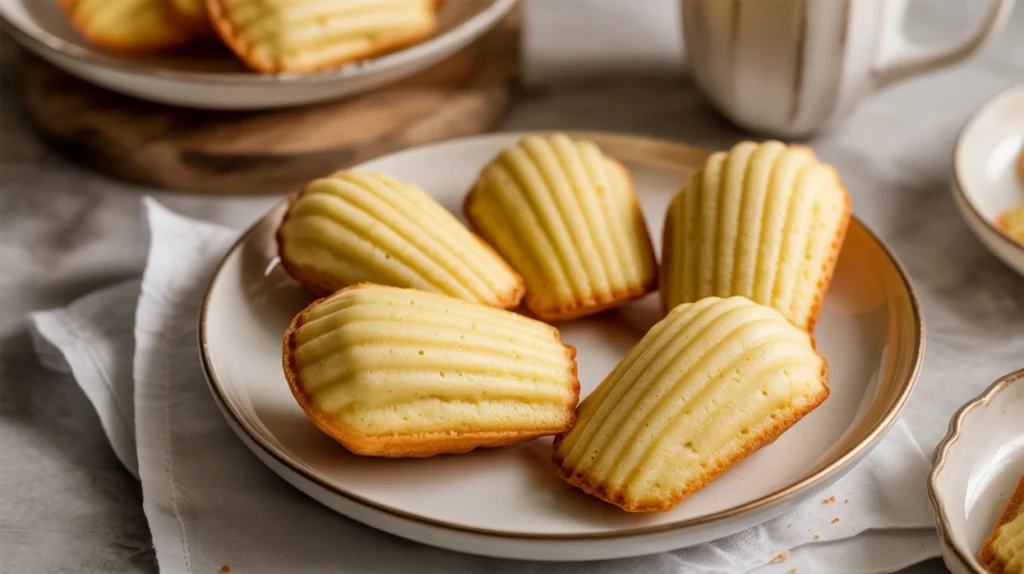

I fell in love with madeleines during my first trip to Paris at a tiny café near Notre Dame. The waitress brought out a plate of these delicate, shell-shaped cakes with my coffee, and I was captivated by their golden exterior and tender, slightly lemony interior. When I asked if they were difficult to make, she laughed and assured me they were one of the simplest French pastries—just eggs, sugar, flour, and butter. Back home, I bought a madeleine pan and tried making them, and she was right. Within an hour, I had a batch of perfect little cakes that transported me right back to that Parisian café. This madeleines recipe has become my go-to when I want to feel fancy without spending hours in the kitchen.
Why You’ll Love This Madeleines Recipe
These cakes are incredibly light and delicate with a subtle sweetness and hint of lemon. The texture is unique—slightly crispy on the outside with that signature bump on top, and tender and cakey inside. What makes this madeleines recipe special is how elegant they look despite being so simple to make. The shell shape is charming and instantly recognizable. They’re perfect for afternoon tea, coffee breaks, or as a light dessert. The batter comes together quickly with just a whisk and bowl—no mixer required. They’re also wonderfully versatile, working equally well for casual snacking or elegant entertaining. The subtle lemon flavor makes them sophisticated without being too sweet. Plus, making madeleines at home costs a fraction of what bakery versions would, and they taste just as good if not better.
What Are Madeleines?
Madeleines are traditional French small cakes with a distinctive shell shape and a small bump on one side. They originated in the Lorraine region of France in the 18th century, with several legends about their creation. The most famous involves a young maid named Madeleine who baked them for a French nobleman. These little cakes became iconic in literature when Marcel Proust wrote about them in his novel, describing how the taste of a madeleine dipped in tea brought back childhood memories. True madeleines have a specific texture—light and spongy like a cake but with edges that are slightly crispy. They’re traditionally flavored with lemon zest and sometimes a hint of vanilla. The signature hump on the back comes from proper technique and pan preparation. They’re meant to be eaten fresh, ideally within a day of baking, though they can last longer if stored properly.
Common Mistakes to Avoid
The biggest mistake with this madeleines recipe is not properly greasing and flouring the madeleine pan. Every ridge of those shell molds needs to be coated or your cakes will stick. Another error is skipping the chilling time for the batter. Resting the batter in the refrigerator for at least an hour (or overnight) is crucial for developing that characteristic hump. Some people overfill the molds, which causes the batter to overflow and lose the shell shape. Fill them about three-quarters full. Not preheating the oven properly affects the rise and that signature bump. The oven must be fully heated. Overbaking makes them dry and tough—madeleines should be golden around the edges but still tender. Using expired leavening agents prevents proper rise. Finally, not removing them from the pan immediately after baking causes them to steam and become soggy.
How to Know When They’re Done
Madeleines are perfectly baked when the edges and signature hump are golden brown while the centers remain pale yellow. They should spring back when lightly touched in the center. The characteristic bump should be pronounced and well-formed on the back. If you gently press on a madeleine, it should feel firm but not hard. The edges might be slightly darker than the center, which is normal and desirable—those crispy edges are part of the appeal. Overbaked madeleines will be uniformly dark brown and feel dry. They typically take 10 to 13 minutes in a 375°F oven, though timing can vary by oven. Watch them carefully during the last few minutes. As soon as they’re done, immediately tap the pan on the counter and turn the madeleines out onto a wire rack to prevent steaming.
What to Serve With Madeleines
This madeleines recipe creates cakes that are traditionally served with tea or coffee, and this pairing is perfect. The delicate lemon flavor complements Earl Grey tea beautifully. They’re also wonderful with espresso or café au lait. For an elegant afternoon tea, arrange them on a tiered stand with scones and finger sandwiches. Some people enjoy dipping them in hot chocolate. Fresh berries on the side add color and freshness. For a fancier presentation, dust them with powdered sugar just before serving. They can be served with lemon curd or raspberry jam for spreading, though they’re delicious plain. Whipped cream or a small scoop of sorbet turns them into a light dessert. They also pair beautifully with champagne or dessert wine for special occasions.
Storage and Freshness Tips
Madeleines are best eaten the day they’re made while still fresh and slightly warm. However, they can be stored in an airtight container at room temperature for up to two days. To refresh day-old madeleines, warm them in a 300°F oven for three to five minutes. The unbaked batter can be covered and refrigerated for up to 24 hours before baking—actually, chilling it overnight often produces better results. Baked madeleines freeze surprisingly well for up to two months. Freeze them in a single layer, then transfer to a freezer bag. Thaw at room temperature for 30 minutes and warm briefly in the oven before serving. Don’t refrigerate baked madeleines as this dries them out. For gifting or parties, make them the morning of or the night before and store in an airtight container.
Estimated Nutrition Information
Per madeleine (based on 24 madeleines): Approximately 75 calories, 3g fat, 11g carbohydrates, less than 1g fiber, 6g sugar, 1g protein. These are relatively light treats, perfect for enjoying with tea without feeling too indulgent. The small size makes portion control easy.
Recipe Overview
Prep Time: 15 minutes
Cook Time: 12 minutes
Total Time: 1 hour 30 minutes (including chilling)
Difficulty: Easy to Medium
Servings: 24 madeleines
Ingredients
For the madeleines:
- 2 large eggs, room temperature
- 2/3 cup granulated sugar
- 1 cup all-purpose flour
- 1 teaspoon baking powder
- Pinch of salt
- Zest of 1 lemon
- 1/2 teaspoon vanilla extract
- 1/2 cup unsalted butter, melted and slightly cooled
- Butter and flour for preparing the pan
- Powdered sugar for dusting (optional)
Step-by-Step Instructions
In a medium bowl, whisk together the eggs and sugar vigorously for about two minutes until the mixture is pale, thick, and forms ribbons when you lift the whisk.
In a separate bowl, sift together the flour, baking powder, and salt. This ensures there are no lumps.
Add the lemon zest and vanilla extract to the egg mixture and stir gently.
Add the flour mixture to the egg mixture in two additions, folding gently with a rubber spatula after each addition. Fold just until no streaks of flour remain—don’t overmix.
Pour the melted butter down the side of the bowl (not directly onto the batter) and fold it in gently but thoroughly. The batter should be smooth and thick.
Cover the bowl with plastic wrap and refrigerate for at least one hour, or up to 24 hours. This chilling step is crucial for developing the signature hump and proper texture.
When ready to bake, preheat your oven to 375°F. Generously butter the madeleine pan, making sure to get into every ridge of the shell molds. Dust with flour, tap out excess.
Remove the chilled batter from the refrigerator. Spoon or pipe the batter into the prepared molds, filling each about three-quarters full. Don’t spread it or press it down—just let it sit in a mound.
Bake for 10 to 13 minutes until the edges are golden brown and the characteristic hump has formed on the back. The centers should still be pale.
Remove from the oven and immediately tap the pan firmly on the counter. Turn the madeleines out onto a wire cooling rack right away to prevent steaming.
Let them cool for a few minutes. They’re best served slightly warm but can also be enjoyed at room temperature.
If desired, dust with powdered sugar through a fine-mesh sieve just before serving.
If baking multiple batches, make sure to re-butter and flour the pan between batches, and let the pan cool slightly before adding more batter.
This madeleines recipe has brought a touch of Parisian elegance to countless afternoons at my home. The delicate, shell-shaped cakes with their golden edges and tender centers prove that French baking doesn’t have to be intimidating—sometimes the simplest recipes create the most memorable treats.