
My grandmother used to make upside down cake every Sunday after church, and the whole house would fill with the smell of caramelized fruit and warm vanilla. I’d watch in amazement as she flipped the cake pan over, revealing those perfectly golden pineapple rings glistening with buttery caramel. When I moved into my first apartment, her upside down cake recipe was one of the first things I asked her to teach me. She sat in my tiny kitchen, patiently guiding me through each step, and when I successfully flipped my first cake without disaster, I felt like I’d inherited a piece of family magic. Now I’m sharing that same magic with you, because this beautiful dessert is far easier than it looks.
Why You’ll Love This Upside Down Cake Recipe
This upside down cake recipe is a showstopper that requires surprisingly little effort. You’ll love how the caramelized topping creates a glossy, restaurant-quality finish that makes people think you spent hours in the kitchen. The moist, tender cake paired with sweet, jammy fruit is comfort food at its finest. Unlike fancy layer cakes that need perfect frosting skills, this dessert is inherently forgiving—the fruit topping hides any imperfections in the cake itself. It comes together with basic pantry ingredients and one simple pan. The dramatic flip at the end makes you feel like a baking champion every single time. Whether you’re hosting a dinner party or just want something special for Sunday dessert, this recipe delivers impressive results without requiring professional techniques. Plus, it’s endlessly adaptable to whatever fruit you have on hand.
What Is Upside Down Cake?
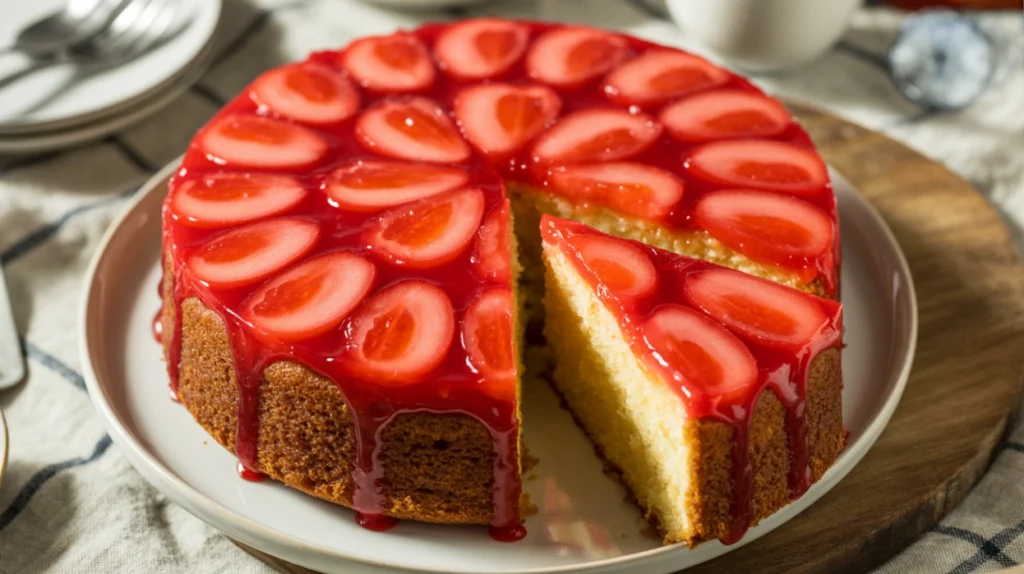
An upside down cake is a classic American dessert where fruit and caramelized sugar form the bottom layer during baking, then become the beautiful top when the cake is inverted after cooking. The most traditional version features pineapple rings with maraschino cherries, but the concept works with peaches, apples, pears, or berries. The magic of this upside down cake recipe lies in the caramelization process—butter and brown sugar melt together in the bottom of the pan, creating a rich, sticky coating that soaks into both the fruit and the cake.
The cake batter itself is typically a simple butter cake, similar to pound cake but slightly lighter. When baked, the batter rises around and over the fruit. After cooling briefly, you flip the entire cake onto a serving plate, revealing a gorgeous glazed fruit topping. The technique became popular in America in the early 1900s, and pineapple upside down cake gained particular fame when canned pineapple became widely available. The beauty of this dessert is that it looks elaborate but follows a straightforward method that even nervous bakers can master.
Common Mistakes to Avoid
Even though this upside down cake recipe is beginner-friendly, a few mistakes can affect your results. The biggest error is using too much liquid in the topping. If you use fresh pineapple or very juicy fruit, pat it dry with paper towels first. Excess moisture prevents proper caramelization and can make your cake soggy. Another common issue is not greasing the pan well enough. Even with nonstick pans, butter or cooking spray ensures the cake releases cleanly during that crucial flip.
Many bakers flip the cake too soon after removing it from the oven. If you flip immediately, the caramel is too liquid and runs off the cake. But if you wait too long, the caramel hardens and glues everything to the pan. The sweet spot is about 5-10 minutes of cooling time. Using a pan that’s too deep is another problem—you want a cake pan that’s 2 inches deep, not a deep casserole dish, so the cake bakes evenly.
Don’t overmix the batter once you add the flour. Overmixing develops gluten and creates a tough, dense cake instead of a tender crumb. Also, skipping the step of tapping the pan before baking can leave air bubbles that create holes in your finished cake. Finally, using cold eggs and butter makes mixing difficult and can result in an uneven texture. Let your ingredients come to room temperature for the best results with this upside down cake recipe.
How to Know It’s Done
Determining doneness is crucial for achieving the perfect texture with any upside down cake recipe. Start checking at the minimum baking time listed. The top of the cake should be golden brown and spring back when lightly pressed in the center. Insert a toothpick or cake tester into the middle—it should come out clean or with just a few moist crumbs, not wet batter.
The edges of the cake will start to pull slightly away from the sides of the pan when it’s ready. You’ll notice the cake has risen evenly and the surface looks set rather than jiggly. Your kitchen will smell incredible with notes of caramel and butter. Listen carefully—you might hear gentle bubbling sounds from the caramelizing sugar around the edges, which is a good sign.
Remember that carryover cooking continues even after removing the cake from the oven, so it’s better to take it out when just barely done rather than overbaking. An overbaked upside down cake becomes dry and crumbly instead of moist and tender. The fruit topping should be bubbling actively around the edges of the pan when you remove it from the oven. Trust your instincts—if it looks golden and smells amazing, it’s probably ready for that cooling period before the big flip.
What to Serve With Upside Down Cake
This versatile upside down cake recipe pairs beautifully with several accompaniments. A dollop of freshly whipped cream is traditional and wonderful—the cool, slightly tangy cream balances the sweet caramelized fruit perfectly. Vanilla ice cream is another classic choice, especially if you serve the cake while it’s still slightly warm. Watching the ice cream melt into the caramel is pure dessert heaven.
For a lighter option, try a spoonful of Greek yogurt or crème fraîche on the side. The tang cuts through the sweetness nicely. Coffee is an excellent beverage pairing—the slight bitterness complements the caramel flavors. Hot tea, especially black tea or chai, also works wonderfully for afternoon service.
During holidays, consider serving it with a drizzle of bourbon caramel sauce or a sprinkle of toasted pecans for extra richness. Fresh mint leaves make a pretty garnish that adds a subtle freshness. Some people love a small glass of dessert wine or even champagne alongside this cake for celebrations. However you choose to serve it, this upside down cake recipe is delicious enough to stand on its own with no accompaniments at all.
Storage Tips
Proper storage keeps your upside down cake delicious for several days. Once the cake has cooled completely, cover it tightly with plastic wrap or place it in an airtight container. Store at room temperature for up to two days. The cake actually tastes even better the next day as the flavors meld together and the caramel soaks further into the cake.
For longer storage, refrigerate the covered cake for up to five days. Bring slices to room temperature before serving, or warm them briefly in the microwave for 15-20 seconds to restore that fresh-baked texture. The cold actually helps the cake stay moist, though the texture is best at room temperature.
You can freeze this upside down cake recipe successfully for up to three months. Wrap individual slices or the whole cake tightly in plastic wrap, then add a layer of aluminum foil. Thaw overnight in the refrigerator or at room temperature for a few hours. The fruit topping may release a bit more liquid after freezing, but the taste remains delicious. For best results, freeze the cake before adding any whipped cream or ice cream accompaniments.
Estimated Nutrition Information
Per serving (based on 10 servings): Approximately 340 calories, 15g fat, 49g carbohydrates, 4g protein, 75mg cholesterol, 220mg sodium. Keep in mind these values vary based on specific ingredients and portion sizes. This upside down cake recipe creates a special treat meant to be enjoyed occasionally as part of a balanced diet.
Recipe Overview
Prep Time: 15 minutes
Cook Time: 40 minutes
Total Time: 55 minutes
Difficulty: Easy
Servings: 10
Ingredients
For the topping:
- 1/4 cup unsalted butter
- 2/3 cup packed brown sugar
- 1 can (20 ounces) pineapple slices, drained
- 10 maraschino cherries
- 1/4 cup chopped pecans (optional)
For the cake:
- 1 1/2 cups all-purpose flour
- 1 1/2 teaspoons baking powder
- 1/4 teaspoon salt
- 1/2 cup unsalted butter, softened
- 3/4 cup granulated sugar
- 2 large eggs, room temperature
- 1 teaspoon vanilla extract
- 1/2 cup whole milk, room temperature
Step-by-Step Instructions
Step 1: Prepare the Pan and Oven
Preheat your oven to 350°F. Take a 9-inch round cake pan or a 10-inch cast iron skillet and place it on the stovetop over medium-low heat. This upside down cake recipe works best in a heavy pan that can go from stovetop to oven.
Step 2: Create the Caramel Base
Add the butter to your pan and let it melt completely. Sprinkle the brown sugar evenly over the melted butter. Stir gently and let it cook for about 2-3 minutes until the mixture bubbles and becomes fragrant. Remove from heat. The sugar and butter will continue melting together as you arrange the fruit.
Step 3: Arrange the Fruit
Pat the pineapple slices dry with paper towels to remove excess juice. Arrange them in a single layer over the brown sugar mixture. Place one slice in the center and arrange the others around it in a circle. Put a maraschino cherry in the center of each pineapple ring. If using pecans, scatter them in the spaces between the pineapple slices.
Step 4: Mix the Dry Ingredients
In a medium bowl, whisk together the flour, baking powder, and salt. Set this aside while you prepare the wet ingredients.
Step 5: Cream Butter and Sugar
In a large mixing bowl, beat the softened butter and granulated sugar together with an electric mixer on medium speed for about 3 minutes, until light and fluffy. This step is important for creating a tender cake texture with this upside down cake recipe.
Step 6: Add Eggs and Vanilla
Add the eggs one at a time, beating well after each addition. Mix in the vanilla extract. The mixture should look smooth and creamy.
Step 7: Combine Everything
Add about one-third of the flour mixture to the butter mixture and beat on low speed until just combined. Pour in half the milk and mix gently. Continue alternating flour mixture and milk, ending with flour. Mix until just combined—don’t overmix. A few small lumps are fine.
Step 8: Assemble and Bake
Pour the batter evenly over the arranged fruit in the pan. Use a spatula to spread it gently to the edges. Tap the pan firmly on the counter a few times to release any air bubbles. Bake for 38-42 minutes, until the top is golden brown and a toothpick inserted in the center comes out clean.
Step 9: The Flip
Remove the pan from the oven and let it cool on a wire rack for exactly 8-10 minutes. Run a knife around the edge to loosen any stuck spots. Place a large serving plate upside down over the pan. Using oven mitts, hold both the pan and plate firmly together and flip quickly in one confident motion. Let the pan sit for a minute, then carefully lift it off. If any fruit sticks, simply place it back on the cake.
Step 10: Serve
Let the cake cool for another 10-15 minutes before slicing. Serve warm or at room temperature with whipped cream or ice cream if desired.
This upside down cake recipe has become my go-to dessert when I want something that looks impressive but doesn’t stress me out. That moment when you lift the pan and reveal the glossy, caramelized fruit always feels like a small miracle. Give it a try—you’ll be amazed at how something so beautiful can be so simple to make.