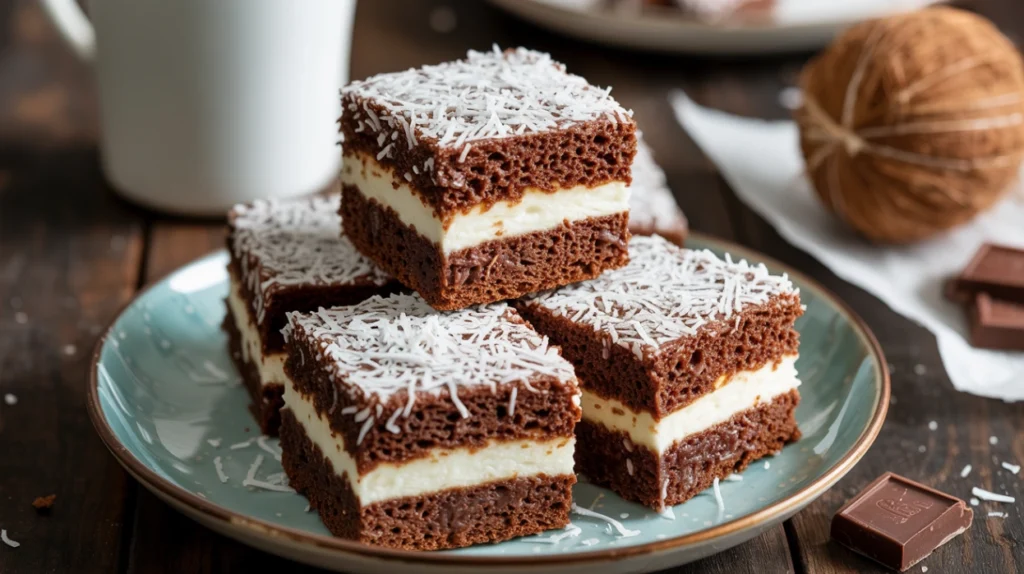
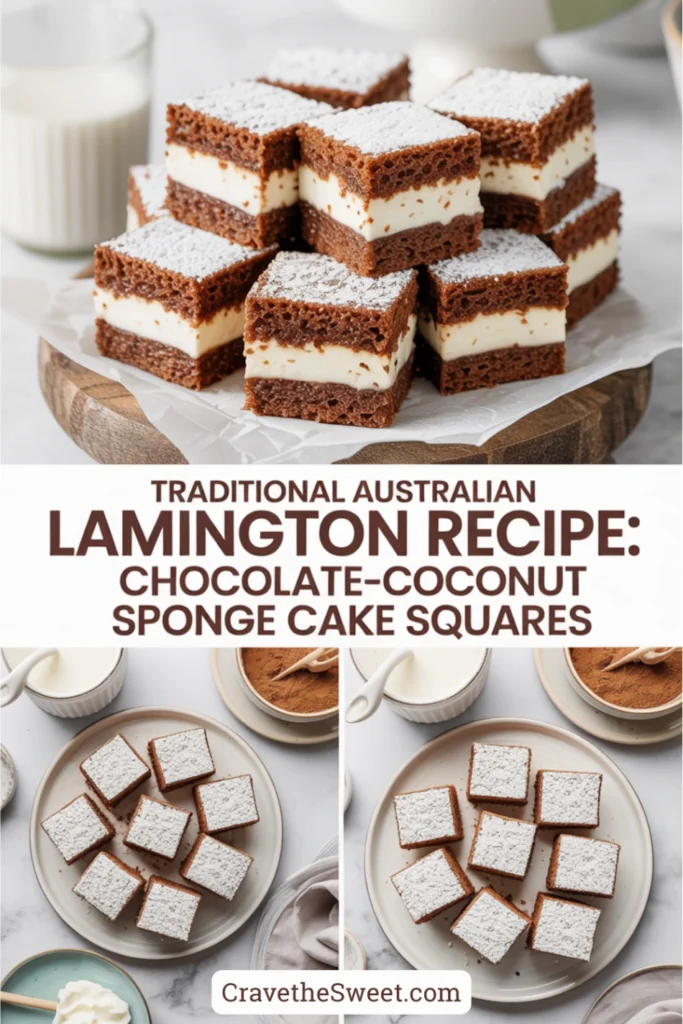
My introduction to lamingtons happened during a potluck when my Australian neighbor brought a plate of these chocolate and coconut-covered squares. I’d never seen anything quite like them—simple sponge cake transformed into something special with chocolate coating and shredded coconut. When I asked for the recipe, she laughed and said every Australian kid grows up making these for school fundraisers. That evening, she walked me through the process in her kitchen, and I was amazed at how straightforward it was. Now, this lamington recipe has become my go-to whenever I need a crowd-pleasing dessert that’s different from the usual brownies and cookies.
Why You’ll Love This Lamington Recipe
These classic Australian treats are surprisingly simple to make yet look impressively elegant on any dessert table. The combination of soft vanilla sponge cake, rich chocolate coating, and sweet coconut creates an irresistible flavor and texture experience. They’re perfect for feeding a crowd since one cake yields sixteen to twenty squares, and they’re easy to eat with your hands at parties or picnics. The recipe is quite forgiving—even if your chocolate coating isn’t perfectly smooth, the coconut covers any imperfections beautifully. Lamingtons can be made a day ahead, actually improving as the cake absorbs some moisture from the chocolate, making them ideal for stress-free entertaining. They’re also endlessly customizable with different cake flavors, fillings like jam or cream, or even white chocolate variations. The nostalgic, retro appeal makes them conversation starters, especially for anyone who’s traveled to Australia or New Zealand. Best of all, they use simple ingredients you probably have on hand and require no special equipment or advanced baking skills.
What Are Lamingtons?
Lamingtons are iconic Australian cakes consisting of squares of sponge cake dipped in chocolate icing and rolled in desiccated coconut. Named after Lord Lamington, a governor of Queensland in the late 1800s, these treats have become a beloved part of Australian food culture. Traditional lamingtons use a light, plain sponge cake cut into squares or rectangles, though some modern versions incorporate butter cake for a richer texture. The chocolate coating is typically made from powdered sugar, cocoa powder, butter, and milk, creating a thin but flavorful shell that soaks slightly into the cake. The final coconut coating adds textural contrast and sweet flavor while keeping your fingers relatively clean when eating them. Many Australians enjoy lamingtons with a layer of jam or whipped cream in the middle, creating “jam lamingtons” or “cream lamingtons.” They’re traditionally served at afternoon tea, fundraising events called “lamington drives,” and celebrations throughout Australia and New Zealand. The simplicity of ingredients combined with the special technique makes them distinctly memorable.
Common Mistakes to Avoid
Several pitfalls can affect the quality of your lamingtons. The most common mistake is using cake that’s too fresh. Day-old or even two-day-old cake is actually better because it’s firmer and less likely to fall apart during dipping. Fresh cake is too soft and crumbly, making the coating process messy and difficult. Another frequent error is making the chocolate icing too thick, which creates a heavy coating that doesn’t soak into the cake properly. The icing should be thin enough to drip slowly from a spoon. Conversely, if it’s too thin, it won’t coat properly and will be too messy. Many beginners try to dip the cake pieces with their hands, which leads to broken cake and chocolate-covered fingers. Use two forks or a dipping tool to handle the pieces. Not having enough coconut prepared and ready is another issue—you need to roll each piece immediately after dipping while the chocolate is still wet. Some people also cut their cake squares too large, making them difficult to coat evenly and awkward to eat. Aim for two-inch squares for best results. Finally, storing them in the refrigerator immediately after making can cause the chocolate to develop condensation, creating a sticky surface.
How to Know They’re Done
Since lamingtons involve already-baked cake, “doneness” refers to proper coating and setting. The chocolate icing should coat each piece completely with no bare cake showing through. When you lift a freshly dipped piece with forks, excess chocolate should drip off slowly and evenly. The coconut should adhere completely to all sides, creating a fuzzy exterior with no chocolate peeking through. After coating, lamingtons need to set for about thirty minutes to an hour at room temperature. They’re ready when the chocolate coating feels dry to the touch and the coconut has adhered firmly. If you press gently, the coating should feel set rather than wet or sticky. The cake inside should remain soft and tender, not dried out. When you bite into a finished lamington, you should experience distinct layers—the soft cake, the thin chocolate coating that’s been partially absorbed, and the sweet coconut exterior. If properly made, they should hold together well when picked up but still be tender when bitten.
What to Serve With Lamingtons
These Australian classics pair beautifully with various beverages and fit many occasions. Hot tea is the most traditional accompaniment, particularly black tea or English Breakfast, making lamingtons perfect for afternoon tea service. Coffee works wonderfully too, especially if you prefer a stronger, less sweet beverage to balance the cake’s sweetness. For a truly Australian experience, serve them with a flat white or long black coffee. Cold milk is another excellent pairing, particularly popular with children. They’re perfect additions to morning or afternoon tea spreads alongside scones, small sandwiches, and other pastries. At potlucks and picnics, arrange them on a platter where their distinctive appearance makes them immediately recognizable and appealing. They’re also wonderful for birthday parties, baby showers, and holiday gatherings. Some people enjoy them slightly warmed, which softens the chocolate coating, while others prefer them at room temperature or even slightly chilled. Fresh berries on the side add color and a tart contrast to the sweet cake.
Storage Tips
Proper storage keeps your lamingtons fresh and maintains their texture. Store them in an airtight container at room temperature for up to three days, separating layers with parchment paper to prevent sticking. The chocolate coating and coconut actually help preserve the cake by creating a protective barrier. Avoid refrigerating them if possible, as the cold can make the chocolate coating sweat when brought back to room temperature and can dry out the cake. However, if your kitchen is very warm or humid, refrigeration might be necessary—just let them come to room temperature before serving for best flavor and texture. Lamingtons freeze exceptionally well, making them perfect for make-ahead entertaining. Freeze them in a single layer on a baking sheet until solid, then transfer to freezer bags or containers, separating layers with parchment paper. They’ll keep frozen for up to three months. Thaw at room temperature for about two hours before serving. The unfilled cake can also be baked, cooled, wrapped well, and frozen for up to three months, then thawed and coated when you’re ready to serve.
Estimated Nutrition Information
Per lamington: Approximately 220 calories, 9g fat, 34g carbohydrates, 24g sugar, 3g protein. These are sweet treats meant for occasional enjoyment rather than everyday consumption.
Recipe Overview
Prep Time: 30 minutes
Cook Time: 25 minutes (for the cake)
Coating Time: 45 minutes
Total Time: 1 hour 40 minutes (plus cooling time)
Difficulty: Moderate
Servings: Makes 16-20 lamingtons
Ingredients
For the sponge cake:
- 4 large eggs, at room temperature
- 3/4 cup granulated sugar
- 1 cup all-purpose flour
- 1/4 cup cornstarch
- 1 teaspoon baking powder
- Pinch of salt
- 1 teaspoon vanilla extract
- 2 tablespoons butter, melted and cooled
For the chocolate coating:
- 4 cups powdered sugar
- 1/2 cup unsweetened cocoa powder
- 4 tablespoons butter, melted
- 1/2 cup milk (plus more if needed)
- 1 teaspoon vanilla extract
For coating:
- 3 cups desiccated coconut (unsweetened shredded coconut)
Step-by-Step Instructions
Start by baking the cake. Preheat your oven to 350°F and grease an 8-inch square baking pan. Line it with parchment paper, leaving overhang on two sides for easy removal.
In a large mixing bowl, beat the eggs with an electric mixer on high speed for about five minutes until thick, pale, and tripled in volume. Gradually add the sugar while continuing to beat, then mix for another two minutes until very thick and fluffy. This aeration is crucial for a light sponge texture.
In a separate bowl, sift together the flour, cornstarch, baking powder, and salt. Gently fold the dry ingredients into the egg mixture in three additions, using a rubber spatula with a folding motion that maintains the airiness. Fold in the vanilla extract and melted butter just until incorporated.
Pour the batter into your prepared pan and smooth the top gently. Bake for twenty-five to thirty minutes until the cake is golden, springs back when lightly touched, and a toothpick inserted in the center comes out clean.
Let the cake cool in the pan for ten minutes, then use the parchment overhang to lift it out onto a wire rack. Cool completely, then wrap in plastic wrap and refrigerate for at least four hours or overnight. This step makes the cake firmer and easier to cut and coat.
When ready to assemble your lamingtons, remove the cake from the refrigerator and cut it into sixteen to twenty squares, approximately two inches each. Arrange them on a wire rack set over a baking sheet to catch drips.
Prepare the chocolate coating by sifting the powdered sugar and cocoa powder into a medium bowl to remove any lumps. Add the melted butter, milk, and vanilla extract. Whisk until completely smooth. The consistency should be like thick cream—thin enough to coat easily but thick enough to cling to the cake. Add more milk, one tablespoon at a time, if it’s too thick.
Spread the desiccated coconut on a large plate or shallow dish.
Now for the fun part of this lamington recipe—coating the cakes. Working with one square at a time, use two forks to dip it completely in the chocolate coating, turning to coat all sides. Let excess chocolate drip off briefly, then immediately place the coated square in the coconut.
Using a spoon or your fingers, sprinkle coconut over all sides, pressing gently to help it adhere. Make sure the entire square is covered with coconut, then transfer it to a clean wire rack or plate. Repeat with remaining squares.
If your chocolate coating gets too thick as you work, add a tiny bit of milk and whisk to thin it. If pieces of cake fall into the chocolate, fish them out to keep the coating smooth.
Let the finished lamingtons sit at room temperature for about thirty minutes to one hour until the coating sets completely. The chocolate should feel dry to the touch and the coconut should be firmly adhered.
Arrange your beautiful lamingtons on a serving platter and enjoy these classic Australian treats! Each bite delivers that perfect combination of tender cake, chocolate richness, and sweet coconut that makes this recipe so beloved. Whether you’re serving them at afternoon tea or packing them for a picnic, these charming squares always impress!