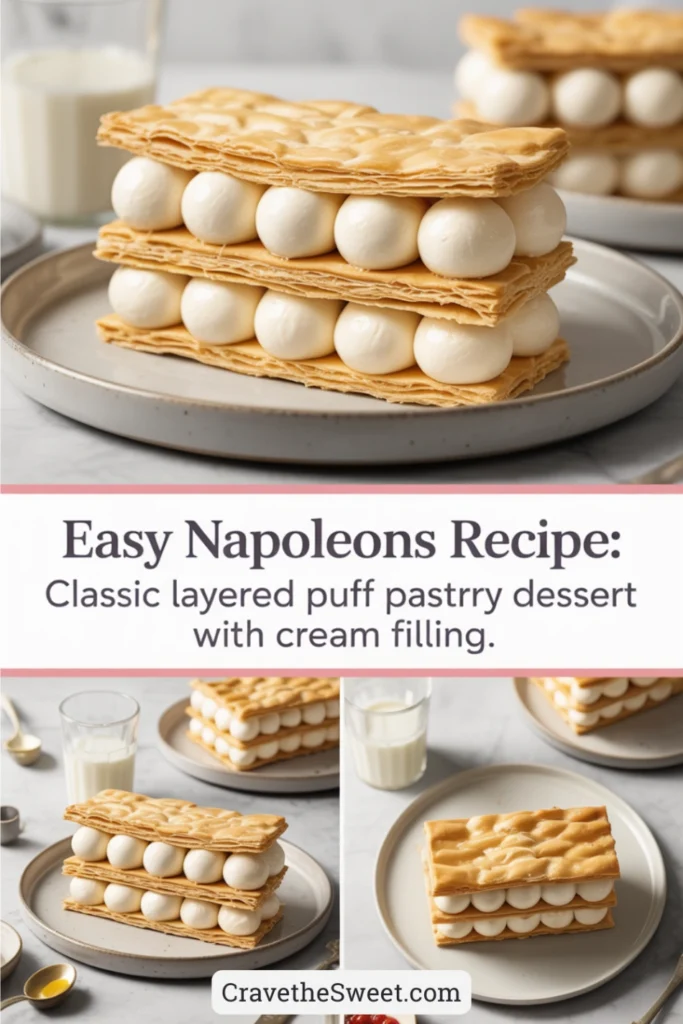
I’ll never forget the first time I successfully made napoleons at home. I’d always been intimidated by these elegant pastries at bakery windows, assuming they required professional skills. One weekend, feeling ambitious, I decided to try using store-bought puff pastry as a shortcut. When I pulled those golden, crispy layers from the oven and assembled them with homemade vanilla cream, I couldn’t believe how professional they looked. My family thought I’d secretly bought them from a bakery. That moment gave me so much confidence in my baking abilities, and this napoleons recipe has been my go-to impressive dessert ever since.
Why You’ll Love This Napoleons Recipe
These stunning layered pastries deliver bakery-quality elegance without requiring advanced pastry-making skills. By using store-bought puff pastry, you skip the most time-consuming step while still achieving those beautiful flaky layers. The combination of crispy pastry and smooth, rich cream creates an incredible textural contrast that feels luxurious and indulgent. Napoleons look incredibly impressive on any dessert table, making them perfect for special occasions, dinner parties, or holiday gatherings. Despite their fancy appearance, the actual assembly is quite straightforward once you understand the technique. The recipe is also versatile—you can make one large napoleon to slice into portions or create individual servings for a more elegant presentation. They’re surprisingly affordable compared to purchasing from a bakery where napoleons often cost six to eight dollars each. The vanilla pastry cream filling is perfectly balanced—sweet but not cloying, with a smooth consistency that complements the buttery pastry beautifully.
What Are Napoleons?
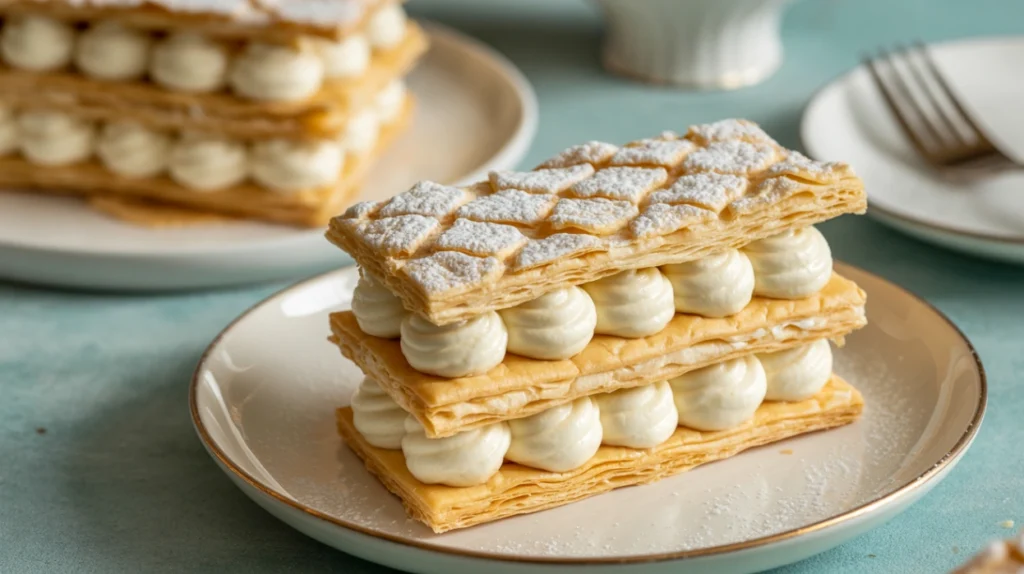
Napoleons are classic French pastries consisting of layers of crispy puff pastry alternating with pastry cream, typically finished with icing on top. The dessert is actually the American name for what the French call “mille feuille,” meaning “thousand leaves,” referring to the many delicate layers in puff pastry. Despite the name, napoleons have no proven connection to Napoleon Bonaparte—the origin of the English name remains a mystery. Traditional napoleons feature three layers of puff pastry with two layers of vanilla pastry cream between them. The top is usually decorated with white icing and chocolate stripes in a distinctive feathered pattern, though simpler versions use just powdered sugar. The key characteristic is that beautiful contrast between the crispy, shattering pastry and the smooth, creamy filling. Well-made napoleons should be light and delicate despite their substantial appearance, with each component perfectly balanced.
Common Mistakes to Avoid
Several common errors can affect the success of your napoleons recipe. The biggest mistake is underbaking the puff pastry. It needs to be deeply golden brown and completely crisp throughout—pale or soft pastry will become soggy when you add the cream. Many people also assemble napoleons too far in advance. While you can prepare components ahead, final assembly should happen within a few hours of serving to maintain the crucial crispy-creamy contrast. Making pastry cream that’s too runny is another issue—it should be thick enough to hold its shape between layers without squeezing out. Some bakers forget to weigh down the puff pastry while baking, resulting in uneven, overly puffy layers that are difficult to stack neatly. Trying to cut napoleons with a regular knife is frustrating—you need a very sharp serrated knife and a gentle sawing motion to avoid crushing the delicate layers. Not letting the pastry cream cool completely before assembly causes it to be too soft and slide around. Finally, some people skip trimming the edges of the baked pastry, which makes for uneven, sloppy-looking final results.
How to Know They’re Done
For the puff pastry component, proper doneness is essential. The pastry should be deeply golden brown, almost amber, on both the top and bottom surfaces. When you lift a piece, it should feel very light and make a hollow sound when tapped. The layers should be visible along the edges, and pressing gently should reveal complete crispness with no soft or doughy spots remaining. Baking typically takes twenty to twenty-five minutes at 400°F, but always rely on appearance rather than time. The pastry cream is done when it thickens dramatically and bubbles in the center. It should coat the back of a spoon thickly, with a finger drawn through it leaving a clear line. After assembly, napoleons are ready to serve after chilling for thirty minutes to let the cream set slightly, making cutting easier. However, they should be served within four hours of assembly for optimal texture—after that, the pastry begins losing its crispness as it absorbs moisture from the cream.
What to Serve With Napoleons
These rich, elegant pastries are substantial enough to stand alone as a complete dessert. However, certain accompaniments enhance the experience. A cup of strong coffee or espresso provides the perfect bitter contrast to the sweet, buttery dessert—this is the classic French way to enjoy them. Black tea, particularly Earl Grey, offers a lighter but still complementary beverage option. For special occasions, champagne or a sweet dessert wine pairs beautifully with the buttery layers. Fresh berries on the side—raspberries, strawberries, or blueberries—add a pop of color and a tart element that cuts through the richness. A light berry coulis or fruit sauce drizzled on the plate creates an elegant restaurant-style presentation. Some people enjoy serving napoleons with a small scoop of vanilla ice cream or a dollop of whipped cream, though the dessert certainly doesn’t need additional richness. Because napoleons are quite rich, portions should be modest—one pastry easily serves six to eight people when cut into slices.
Storage Tips
Napoleons are absolutely best enjoyed fresh, within three to four hours of assembly when the pastry maintains its crispy texture. However, smart component preparation makes last-minute assembly manageable. Bake the puff pastry up to one day ahead and store at room temperature in an airtight container with paper towels to absorb moisture—never refrigerate baked puff pastry as it will soften. The pastry cream can be made up to two days ahead and refrigerated with plastic wrap pressed directly against its surface to prevent skin formation. Once assembled, napoleons don’t store well—the pastry gradually absorbs moisture from the cream and loses crispness. If you have leftovers, refrigerate them covered for up to twenty-four hours, but understand the texture will significantly deteriorate. The pastry becomes soft and chewy rather than crispy and flaky. Never freeze assembled napoleons. You can freeze unbaked puff pastry sheets or cooled pastry cream separately for longer storage, but the complete dessert must be enjoyed fresh.
Estimated Nutrition Information
Per serving (based on 8 servings): Approximately 350 calories, 22g fat, 34g carbohydrates, 16g sugar, 5g protein. This is an indulgent dessert meant for special occasions.
Recipe Overview
Prep Time: 40 minutes
Cook Time: 25 minutes
Cooling Time: 2 hours
Total Time: 3 hours
Difficulty: Moderate
Servings: 6-8
Ingredients
For the pastry:
- 1 package (14-17 ounces) frozen puff pastry, thawed
- Flour for dusting
For the pastry cream:
- 2 cups whole milk
- 1/2 cup granulated sugar
- 1/4 cup cornstarch
- 4 large egg yolks
- 2 tablespoons butter
- 2 teaspoons vanilla extract
- Pinch of salt
For topping:
- 1 cup powdered sugar
- 2-3 tablespoons milk
- 2 ounces semi-sweet chocolate, melted (optional for decoration)
Step-by-Step Instructions
Start by making the pastry cream for this napoleons recipe. Heat the milk in a saucepan over medium heat until steaming but not boiling. Meanwhile, whisk the sugar, cornstarch, and salt in a bowl. Add egg yolks and whisk until pale and thick.
Slowly pour half the hot milk into the egg mixture while whisking constantly to temper the eggs. Pour everything back into the saucepan and cook over medium heat, whisking constantly, until the mixture thickens and bubbles, about five minutes.
Remove from heat and whisk in the butter and vanilla until smooth. Transfer to a bowl, press plastic wrap directly on the surface, and refrigerate until completely cold, at least two hours.
Preheat your oven to 400°F. Line two baking sheets with parchment paper. On a lightly floured surface, roll out the puff pastry sheets to smooth creases and create even rectangles about ten by twelve inches.
Transfer each sheet to a prepared baking sheet. Prick the entire surface thoroughly with a fork to prevent excessive puffing. Place parchment paper on top of each sheet, then place another baking sheet on top to weigh it down.
Bake for twenty to twenty-five minutes until deeply golden brown. Remove the top baking sheets and parchment. The pastry should be crisp and amber-colored. Let cool completely on wire racks.
Once cool, trim the edges with a sharp knife to create neat rectangles. Cut each sheet into three equal pieces lengthwise. You’ll have six strips total—you need three for assembly.
When ready to assemble, whisk the chilled pastry cream until smooth. If very thick, add a tablespoon of milk to make it spreadable. Place one pastry strip on your serving platter.
Spread half the pastry cream evenly over the first strip, about half an inch thick, leaving a small border at the edges. Carefully place a second pastry strip on top, pressing gently.
Spread the remaining cream over the second layer. Top with the final pastry strip, pressing very gently to secure.
For the icing, whisk powdered sugar with milk until smooth and thick but pourable. Spread over the top layer. If desired, drizzle melted chocolate in lines across the white icing, then drag a toothpick through to create the classic feathered pattern.
Refrigerate for thirty minutes to set the cream and icing. To serve, use a very sharp serrated knife with a gentle sawing motion to cut slices without crushing the layers. Wipe the knife between cuts for neat portions.
Your beautiful napoleons are ready to impress! Each slice showcases those gorgeous layers and delivers the perfect combination of crispy pastry and smooth cream that makes this classic dessert so beloved.