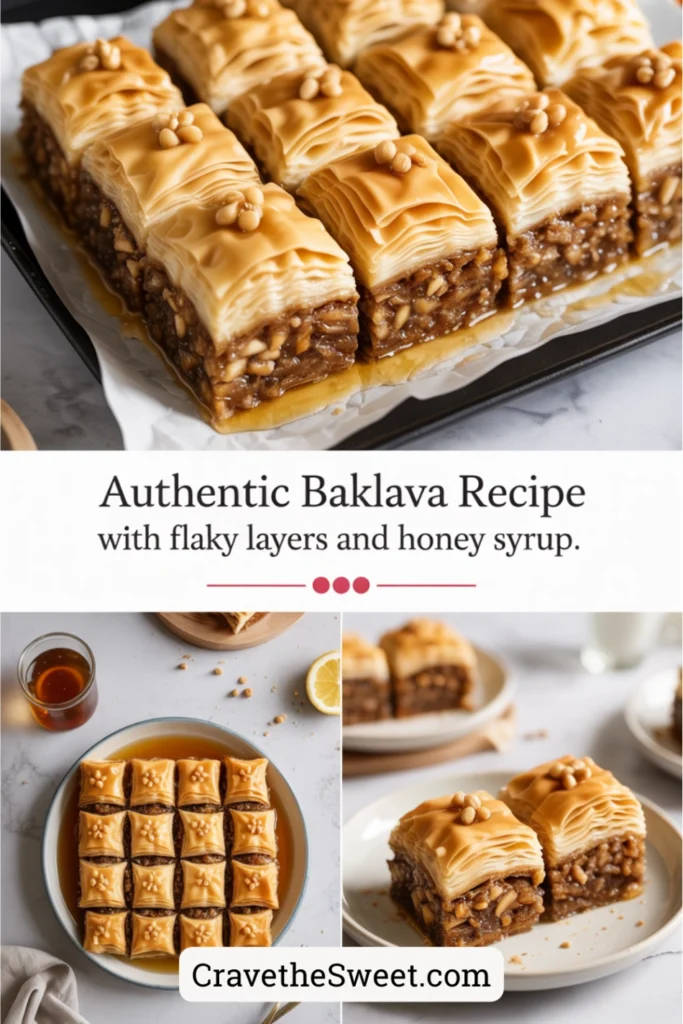
The first time I tasted authentic baklava was at my neighbor’s holiday gathering, and I’ll never forget that moment. The delicate crunch of paper-thin pastry gave way to layers of buttery nuts, all soaked in fragrant honey syrup. I went home that night determined to recreate it, and after a few attempts, I finally mastered this stunning dessert. Now I’m sharing my foolproof method with you.
Why You’ll Love This Recipe
This authentic baklava recipe delivers everything you want in this classic Middle Eastern dessert. The phyllo pastry bakes up incredibly crispy and golden, while the honey syrup keeps every layer perfectly moist without making it soggy. The combination of walnuts and pistachios creates a rich, nutty flavor that’s not overly sweet. Best of all, while baklava looks fancy and impressive, it’s actually quite simple to make at home. You don’t need any special skills—just a little patience and care when handling the delicate phyllo dough.
What Is Baklava?
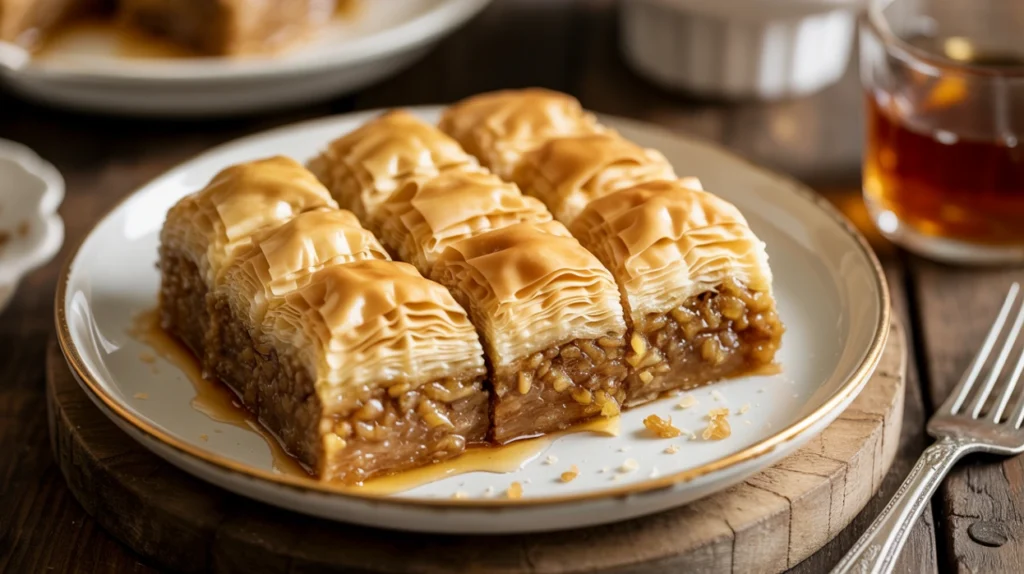
Baklava is a beloved pastry with origins spanning Turkey, Greece, and various Middle Eastern countries. It consists of multiple layers of paper-thin phyllo dough, brushed with melted butter, and filled with chopped nuts. After baking until golden and crispy, the pastry gets drenched in a sweet syrup made from honey, sugar, and water. The syrup soaks into every layer, creating an incredible contrast between the crunchy exterior and the sweet, nutty interior. This dessert has been enjoyed for centuries and remains a staple at celebrations and special occasions.
Common Mistakes to Avoid
The biggest mistake people make is letting the phyllo dough dry out. These delicate sheets turn brittle quickly when exposed to air, so always keep unused sheets covered with a damp towel. Another common error is using too much syrup or pouring it incorrectly—always pour cold syrup over hot baklava or hot syrup over cold baklava to ensure proper absorption. Don’t rush the butter-brushing process either. Each layer needs enough butter to crisp up properly, but not so much that the baklava becomes greasy. Finally, make sure your nuts are finely chopped but not ground into powder. You want small pieces that create distinct layers, not a paste.
How to Know It’s Done
Your baklava is perfectly baked when the top turns a deep golden brown color and the layers look visibly crispy. The edges should be darker than the center, with a beautiful amber hue throughout. You’ll also notice the butter bubbling around the edges of the pan. The phyllo layers should look separated and flaky, not compressed or soggy. After baking, the baklava should feel firm to the touch before you add the syrup. Once you pour the honey syrup over the hot pastry, you’ll hear it sizzle—that’s exactly what you want. Let it absorb completely, which usually takes several hours or overnight.
What to Serve With Baklava
Baklava is quite sweet and rich, so pair it with beverages that can balance its intensity. Strong Turkish coffee or espresso cuts through the sweetness beautifully. Greek coffee is another traditional choice. You can also serve it with hot black tea or mint tea. For a more American approach, try it with a glass of cold milk. If you’re serving baklava as part of a dessert spread, include some fresh fruit like sliced oranges or berries to provide a refreshing contrast. A small scoop of vanilla ice cream on the side creates a wonderful hot-and-cold combination that your guests will love.
Storage Tips
Store your baklava at room temperature, covered loosely with aluminum foil or parchment paper. Never use an airtight container, as this traps moisture and makes the pastry soggy. Properly stored baklava stays fresh for up to two weeks, though it’s usually eaten much faster! The flavors actually improve after a day or two as the syrup fully penetrates every layer. You can refrigerate baklava if your kitchen is very warm, but bring it to room temperature before serving for the best texture and flavor. Baklava also freezes beautifully for up to three months. Freeze individual pieces wrapped in plastic wrap, then thaw at room temperature when ready to enjoy.
Estimated Nutrition Per Serving
Calories: 320 | Total Fat: 18g | Saturated Fat: 7g | Cholesterol: 25mg | Sodium: 150mg | Total Carbohydrates: 38g | Dietary Fiber: 2g | Sugars: 24g | Protein: 5g
Keep in mind that baklava is a special-occasion treat meant to be savored in small portions. The combination of nuts provides healthy fats and protein, while the honey offers natural sweetness.
Recipe Overview
Prep Time: 30 minutes
Cook Time: 50 minutes
Total Time: 1 hour 20 minutes (plus cooling time)
Difficulty: Medium
Servings: 24 pieces
Ingredients
For the Baklava:
- 1 pound phyllo dough, thawed
- 1½ cups unsalted butter, melted
- 2 cups walnuts, finely chopped
- 1 cup pistachios, finely chopped
- ⅓ cup granulated sugar
- 1 tablespoon ground cinnamon
- ¼ teaspoon ground cloves
For the Honey Syrup:
- 1½ cups granulated sugar
- 1 cup water
- ½ cup honey
- 1 cinnamon stick
- 3 whole cloves
- 1 teaspoon vanilla extract
- 1 tablespoon fresh lemon juice
Step-by-Step Instructions
Step 1: Preheat your oven to 350°F. Brush a 9×13-inch baking pan generously with melted butter.
Step 2: In a medium bowl, combine the chopped walnuts, pistachios, sugar, cinnamon, and ground cloves. Mix well and set aside.
Step 3: Unroll the phyllo dough and trim it to fit your pan if necessary. Cover the sheets with a slightly damp kitchen towel to prevent drying.
Step 4: Place one sheet of phyllo in the prepared pan and brush it lightly with melted butter. Repeat this process until you have 8 layers of buttered phyllo.
Step 5: Sprinkle about ⅓ cup of the nut mixture evenly over the phyllo layers.
Step 6: Add two more sheets of phyllo, brushing each with butter. Add another ⅓ cup of nuts. Continue this pattern—two sheets of phyllo with butter, then nuts—until all the nut mixture is used.
Step 7: Finish by layering the remaining phyllo sheets on top, brushing each one with butter. You should end with about 8 layers of phyllo on top.
Step 8: Using a sharp knife, cut the baklava into diamond or square shapes, cutting all the way through to the bottom of the pan. Pour any remaining butter over the top.
Step 9: Bake for 45-50 minutes until the baklava is golden brown and crispy.
Step 10: While the baklava bakes, make the syrup. Combine sugar, water, honey, cinnamon stick, and cloves in a saucepan. Bring to a boil, then reduce heat and simmer for 15 minutes. Remove from heat and stir in vanilla extract and lemon juice. Let the syrup cool completely.
Step 11: When the baklava comes out of the oven, immediately pour the cooled syrup evenly over the hot pastry. You’ll hear it sizzle—this is perfect!
Step 12: Let the baklava sit uncovered at room temperature for at least 4 hours, preferably overnight, to absorb the syrup fully.
Now you have an authentic baklava recipe that’ll impress everyone who tries it. The flaky layers, aromatic nuts, and sweet honey syrup create pure magic. Enjoy!