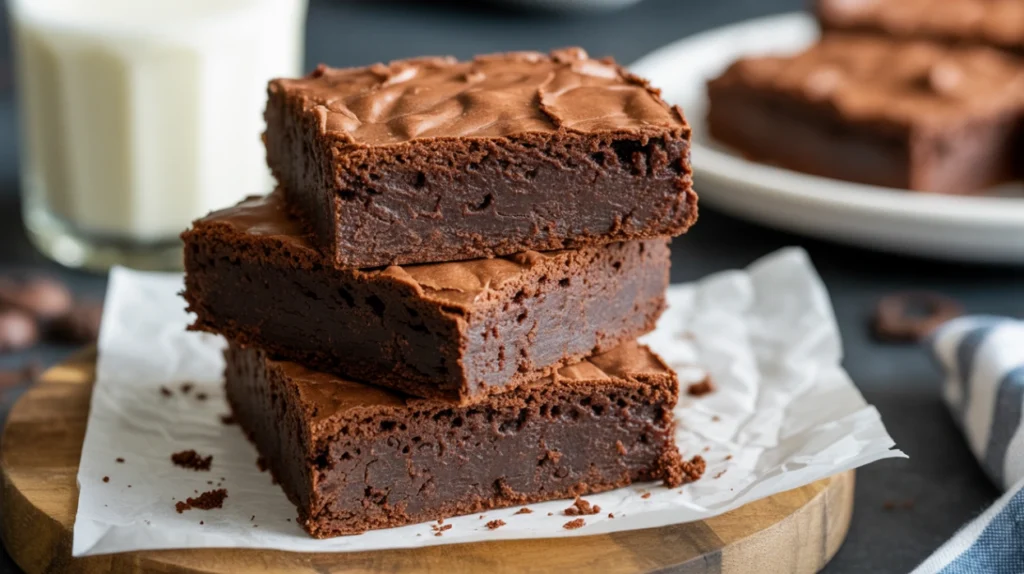
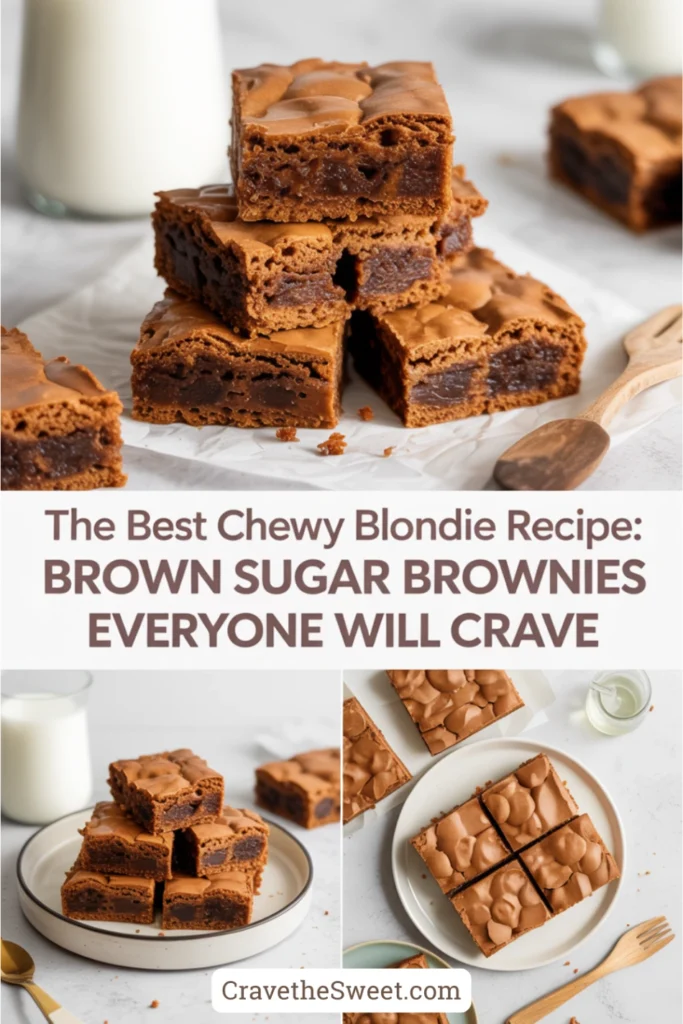
I stumbled upon blondies completely by accident. I was planning to make brownies for a potluck but realized halfway through that I was out of cocoa powder. Rather than running to the store, I decided to just skip the chocolate and see what happened. What came out of the oven that day was a revelation—chewy, buttery bars with deep caramel notes from the brown sugar. My friends at the potluck went crazy for them, asking for the recipe immediately. That’s when I learned these weren’t just failed brownies—they were blondies, a classic treat in their own right. This blondie recipe has since become one of my most requested desserts, proving that sometimes the best discoveries happen when you improvise.
Why You’ll Love This Blondie Recipe
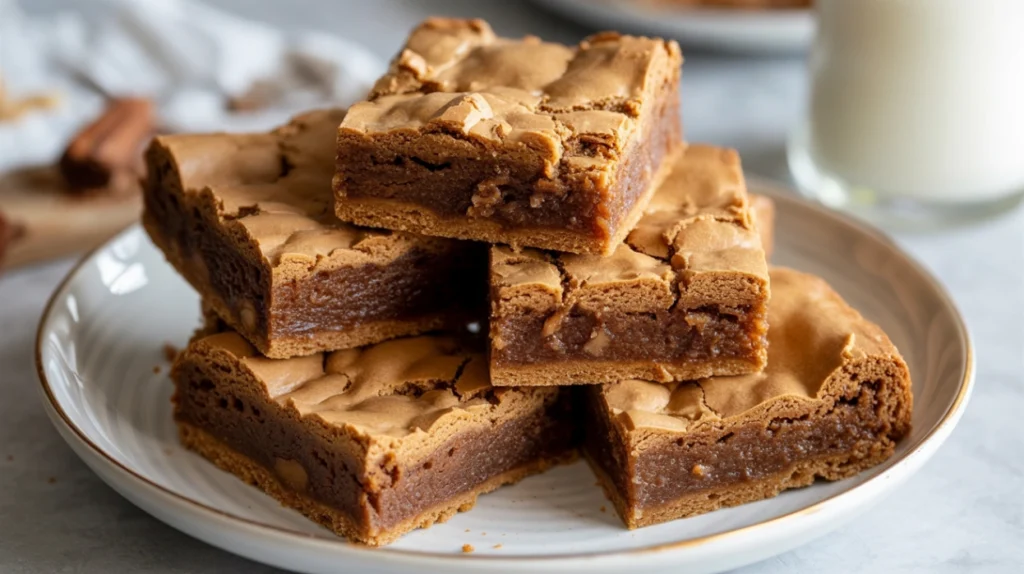
These bars are incredibly addictive with their dense, chewy texture and rich butterscotch flavor. They’re like the best parts of a chocolate chip cookie and a brownie combined into one perfect square. What makes this blondie recipe special is how simple it is—you can make the entire batter in one bowl with just a wooden spoon, no mixer required. They come together faster than cookies since there’s no chilling or shaping involved. The brown sugar creates a deep, caramel-like sweetness that’s less intense than chocolate but just as satisfying. They’re endlessly customizable too—you can add chocolate chips, nuts, butterscotch chips, or dried fruit. Blondies also stay fresh and chewy for days, making them perfect for gifting or making ahead. Everyone loves them, from kids who enjoy the sweet vanilla flavor to adults who appreciate the sophisticated butterscotch notes.
What Are Blondies?
Blondies are dense, chewy bar cookies similar to brownies but made without cocoa powder, giving them a golden or blonde color instead of brown. They’re sometimes called blonde brownies or butterscotch brownies because the prominent brown sugar creates a butterscotch-like flavor. The exact origin is unclear, but blondies appeared in American cookbooks in the late 1800s, actually predating chocolate brownies. The key ingredient that defines blondies is brown sugar, which gives them their characteristic flavor and chewy texture. Unlike brownies that rely on chocolate for richness, blondies get their depth from the molasses in brown sugar and plenty of butter. The texture should be dense and fudgy like brownies but with a lighter color and vanilla-forward flavor. Traditional blondies often include vanilla extract and sometimes butterscotch or chocolate chips, though the base recipe is delicious on its own.
Common Mistakes to Avoid
The most common mistake with this blondie recipe is overmixing the batter. Once you add the flour, stir just until combined. Overmixing develops gluten and creates tough, cake-like blondies instead of dense, chewy ones. Another error is using all white sugar instead of brown sugar. The molasses in brown sugar is essential for that signature butterscotch flavor and chewy texture. Some people overbake blondies, which makes them dry and crumbly. They should look slightly underdone in the center when you remove them from the oven. Not letting them cool completely before cutting is another mistake—warm blondies are too soft to cut cleanly and will fall apart. Rushing the cooling process might be tempting, but patience pays off. Using a pan that’s too large spreads the batter too thin, resulting in crispy blondies instead of chewy ones. Stick to the specified pan size. Finally, not lining your pan with parchment paper makes removal difficult and can lead to stuck, broken blondies.
How to Know When Your Blondies Are Done
The edges should be set and just starting to pull away from the sides of the pan. The center should look slightly underdone with a glossy appearance—it will jiggle just a bit when you gently shake the pan. Insert a toothpick about two inches from the edge—it should come out with a few moist crumbs attached, not wet batter but definitely not clean. If you insert it in the very center, it might look quite wet, and that’s okay. The top should have a shiny, slightly crackled appearance and be lightly golden brown, not pale or dark. An instant-read thermometer inserted in the center should read between 195°F and 200°F. Remember that blondies continue cooking from residual heat after you remove them from the oven, so it’s better to underbake slightly than overbake. They’ll firm up considerably as they cool. Once cooled completely, they should be dense and chewy throughout with no gooey center, though they should remain moist.
What to Serve With Blondies
This blondie recipe creates bars that are wonderful on their own but even better with accompaniments. A cold glass of milk is the classic pairing—the richness of blondies practically demands it. Vanilla ice cream turns them into an impressive dessert, especially if you warm the blondies slightly first. Drizzle them with caramel sauce or hot fudge for extra indulgence. Fresh berries on the side add a tart contrast that cuts through the sweetness nicely. Some people enjoy them with coffee or hot chocolate for an afternoon snack. For a fancy presentation, dust them with powdered sugar or drizzle with a simple vanilla glaze. You can also make ice cream sandwiches by placing a scoop between two blondie squares. They’re perfect alongside other desserts at parties or bake sales. For breakfast treats, spread them with a thin layer of peanut butter or almond butter.
Storage and Make-Ahead Tips
Store your blondies in an airtight container at room temperature for up to five days. They actually improve after a day as the flavors meld together. Layer them with parchment paper if stacking to prevent sticking. You can refrigerate them for up to one week, though they may firm up slightly. Bring them to room temperature before eating for the best texture. Blondies freeze beautifully for up to three months. Wrap individual squares in plastic wrap, then place them all in a freezer-safe container or bag. This makes it easy to grab one whenever you want a treat. Thaw at room temperature for about an hour or microwave for 15 to 20 seconds. You can also freeze the unbaked batter in the pan, wrapped tightly, for up to two months. Bake from frozen, adding about 10 extra minutes to the baking time. The batter can also be made a day ahead and refrigerated, then brought to room temperature before baking.
Estimated Nutrition Information
Per blondie (based on 16 squares): Approximately 215 calories, 10g fat, 30g carbohydrates, less than 1g fiber, 21g sugar, 2g protein. While these are definitely a treat, they’re made with simple, recognizable ingredients. You can reduce the sugar slightly or use part whole wheat flour for a bit more nutrition, though this will change the texture somewhat.
Recipe Overview
Prep Time: 10 minutes
Cook Time: 25 minutes
Total Time: 45 minutes (including cooling)
Difficulty: Easy
Servings: 16 squares
Ingredients
- 1/2 cup unsalted butter, melted
- 1 cup packed light brown sugar
- 1/4 cup granulated sugar
- 1 large egg plus 1 egg yolk
- 2 teaspoons vanilla extract
- 1 and 1/2 cups all-purpose flour
- 1/2 teaspoon baking powder
- 1/4 teaspoon salt
- Optional: 1 cup chocolate chips, butterscotch chips, or chopped nuts
Step-by-Step Instructions
Preheat your oven to 350°F. Line an 8×8-inch baking pan with parchment paper, leaving some overhang on two sides. This creates handles that make removing the blondies easy. Lightly grease the parchment paper.
Melt the butter in a large microwave-safe bowl or on the stovetop. Let it cool for about five minutes—it should be warm but not hot. If it’s too hot, it will cook the eggs when you add them.
Add both the brown sugar and granulated sugar to the melted butter. Whisk vigorously for about one minute until the mixture is smooth and well combined. It should look glossy and thick.
Add the egg, egg yolk, and vanilla extract to the butter mixture. Whisk until everything is completely incorporated and the mixture looks smooth and slightly lighter in color. This should take about 30 seconds of whisking.
In a separate small bowl, whisk together the flour, baking powder, and salt. This ensures even distribution of the leavening and salt throughout the batter.
Add the dry ingredients to the wet ingredients all at once. Using a wooden spoon or rubber spatula, gently fold the flour mixture into the wet ingredients. Stir just until you can’t see any more dry flour. Don’t overmix—a few small lumps are fine. The batter will be thick.
If using chocolate chips, nuts, or other add-ins, fold them in now with just a few strokes. Reserve a handful to sprinkle on top if you like.
Scrape the batter into your prepared pan and spread it evenly with a spatula. It will be quite thick and may require some effort to spread to the edges. The top doesn’t need to be perfectly smooth.
Bake for 24 to 28 minutes. Start checking at 24 minutes. The edges should be set and lightly golden, while the center looks slightly underdone and jiggles just a bit when you shake the pan. A toothpick inserted two inches from the edge should come out with moist crumbs.
Remove from the oven and place the pan on a wire cooling rack. Let the blondies cool completely in the pan for at least one hour. This is crucial—cutting them warm will result in a gooey mess. They need time to set up properly.
Once completely cool, use the parchment paper overhang to lift the entire block of blondies out of the pan and onto a cutting board.
Use a sharp knife to cut into 16 squares, wiping the knife clean between cuts for the neatest edges. For extra clean cuts, you can refrigerate the blondies for 30 minutes before cutting.
Store in an airtight container, and enjoy the chewy, butterscotch goodness.
This blondie recipe has saved me countless times when I need a quick, crowd-pleasing dessert. The chewy texture and deep butterscotch flavor create bars that disappear fast at every gathering, proving that you don’t need chocolate to make an amazing treat.