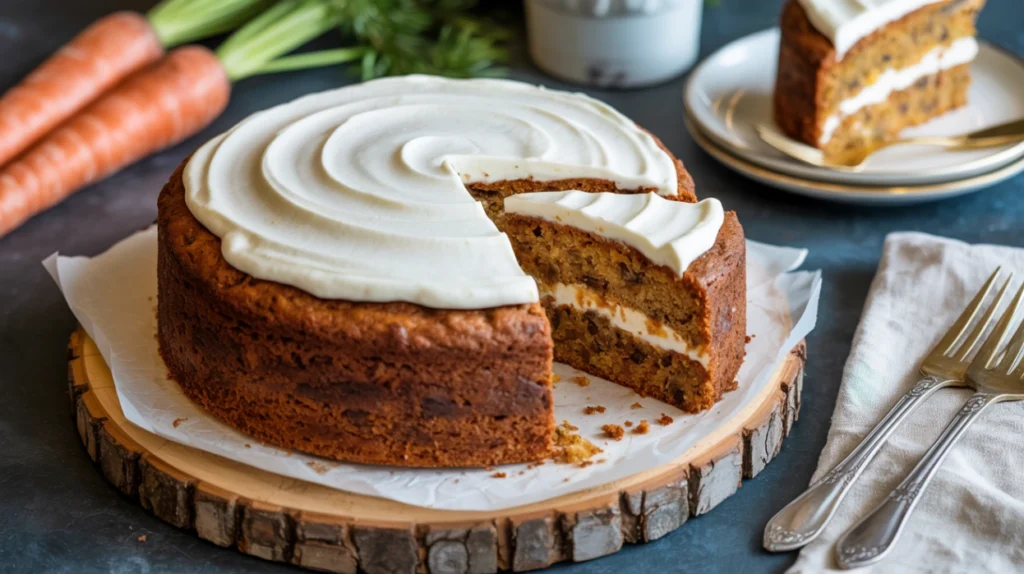
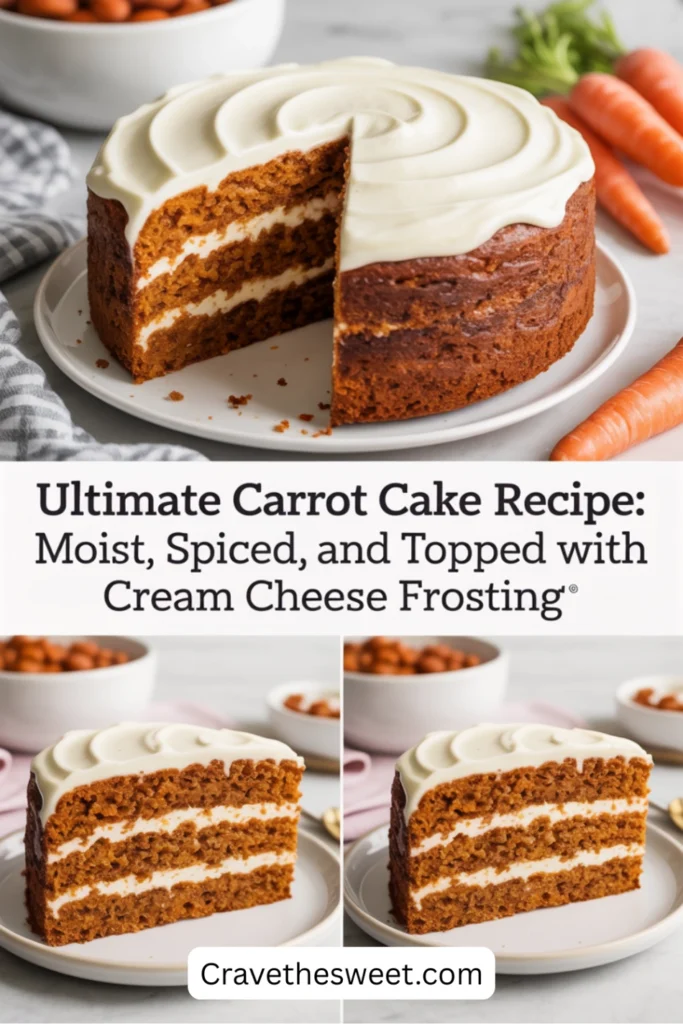
My mom used to hide vegetables in everything when I was growing up, but carrot cake was the one “healthy” dessert I actually begged her to make. I couldn’t believe something with vegetables could taste so incredible—moist, sweet, and packed with warm spices. When I moved into my first apartment, her carrot cake recipe was the first thing I asked for. Now, twenty years later, I’ve perfected every detail, and this cake has become my signature dessert. Friends request it for birthdays, holidays, and random Tuesday nights. Today, I’m sharing this foolproof carrot cake recipe that never fails to impress.
Why You’ll Love This Carrot Cake Recipe
This cake is exceptionally moist and stays that way for days, thanks to the grated carrots and oil in the batter. The combination of cinnamon, nutmeg, and ginger creates a warm, cozy flavor that feels like a hug in cake form. Unlike butter-based cakes, this oil-based recipe is incredibly forgiving and almost impossible to mess up. The cream cheese frosting is tangy and sweet, perfectly balancing the spiced cake layers.
What makes this carrot cake recipe truly special is its versatility. You can add walnuts or pecans for crunch, pineapple for extra moisture, or raisins for bursts of sweetness. The cake works beautifully as a single layer for casual dinners or as a stunning two-layer cake for celebrations. It’s also sneakily nutritious with real carrots providing vitamins and fiber. The best part? Your kitchen will smell absolutely amazing while it bakes, filling your home with the scent of cinnamon and vanilla that makes everyone gather in the kitchen asking when it’ll be ready.
What Is Carrot Cake?
Carrot cake is a spiced cake made with grated carrots, warm spices, and typically topped with cream cheese frosting. It became popular in the United States during the 1960s when health food movements encouraged incorporating vegetables into desserts. The carrots add natural sweetness and moisture while keeping the cake incredibly tender for days.
Traditional carrot cake uses oil instead of butter, which creates a different texture than standard cakes. Oil remains liquid at room temperature, keeping the cake moist and tender even when refrigerated. The spices—usually cinnamon, nutmeg, and sometimes ginger—complement the sweetness of the carrots beautifully. Many recipes include additions like chopped nuts, shredded coconut, crushed pineapple, or raisins for extra texture and flavor.
The signature cream cheese frosting is essential to carrot cake’s identity. The tangy frosting cuts through the sweet, spiced cake perfectly, creating a balanced flavor profile that’s neither too sweet nor too heavy. This carrot cake recipe honors these traditional elements while ensuring consistently perfect results every time you bake it.
Common Mistakes to Avoid
Even though this is a straightforward recipe, certain mistakes can affect your results. The most common error is not grating the carrots finely enough. Large chunks of carrot don’t distribute evenly and can create pockets of moisture that make the cake soggy in spots. Use the small holes on a box grater or the grating attachment on your food processor for the best results.
Another mistake is overmixing the batter. Once you add the flour, mix just until you don’t see any more dry streaks. Overmixing develops gluten, which makes the cake tough and dense instead of tender and light. The batter should look somewhat thick and lumpy—this is perfect.
Many people also skimp on the spices, thinking they can reduce them for a milder flavor. Don’t do this! The spices are what make carrot cake special. Without enough cinnamon, nutmeg, and ginger, you’ll end up with a bland cake that tastes more like plain vegetable bread than dessert.
Using pre-shredded carrots from a bag is tempting but not recommended. They’re often dry and don’t provide the same moisture as freshly grated carrots. The extra five minutes of grating makes a significant difference in the final texture. Also, make sure your carrots are peeled—the skin can add bitterness and an unpleasant texture.
Finally, don’t frost a warm cake. The cream cheese frosting will melt and slide right off, creating a mess instead of a beautiful layered cake. Let your cake layers cool completely, preferably for at least an hour, before applying frosting.
How to Know Your Carrot Cake Is Done
Carrot cake can be tricky to judge because it’s naturally dense and moist. The most reliable test is the toothpick method—insert a toothpick into the center of the cake. It should come out with just a few moist crumbs clinging to it, not wet batter. If you see wet batter, bake for another three to five minutes and test again.
The edges of the cake should start pulling away slightly from the sides of the pan. The top will be golden brown and should spring back slowly when gently pressed with your finger. If your finger leaves a deep indent that doesn’t bounce back, the cake needs more time.
You’ll also notice the cake has risen nicely and the surface looks set rather than jiggly or liquid. The wonderful aroma of cinnamon and spices will fill your kitchen, signaling that the cake is close to done. Typical baking time is 30 to 35 minutes for two 9-inch round pans, or 45 to 55 minutes for a 9 by 13 inch pan.
Remember that carrot cake continues to set as it cools. It’s better to slightly underbake than overbake, as an overbaked carrot cake becomes dry and crumbly. Trust the toothpick test and your instincts—this carrot cake recipe is designed to be forgiving and moist.
What to Serve With Carrot Cake
This rich, spiced cake pairs wonderfully with several beverages and sides. Hot coffee is the classic choice, especially a medium roast that complements the warm spices without overwhelming them. Black tea, particularly chai or Earl Grey, also works beautifully. The tea’s tannins cut through the richness of the cream cheese frosting perfectly.
For a more indulgent pairing, serve small slices of carrot cake with vanilla ice cream. The cold, creamy ice cream melts slightly into the warm spices, creating an incredible combination. Caramel sauce drizzled over both the cake and ice cream takes this to another level entirely.
Fresh whipped cream is a lighter alternative to ice cream and lets the cake’s flavors shine without competition. Some people love carrot cake with a glass of cold milk, which is especially nice if you’re enjoying it as an afternoon snack rather than after dinner.
For brunches or afternoon gatherings, serve this carrot cake recipe alongside fresh fruit—berries, sliced oranges, or apple wedges provide a fresh contrast to the rich cake. Candied pecans or walnuts on the side add extra crunch and make the presentation more elegant. Hot spiced cider in fall or iced tea in summer both complement the cake’s flavor profile wonderfully.
Storage and Make-Ahead Tips
Proper storage keeps your carrot cake fresh and delicious. Because of the cream cheese frosting, this cake must be refrigerated. Cover it loosely with plastic wrap or place it under a cake dome and store in the refrigerator for up to one week. The cake actually improves after a day or two as the flavors continue to develop and the moisture distributes evenly.
For longer storage, you can freeze unfrosted cake layers wrapped tightly in plastic wrap and then aluminum foil for up to three months. Thaw layers in the refrigerator overnight before frosting. You can also freeze frosted cake slices individually—wrap each slice in plastic wrap, then place them in a freezer bag. This makes it easy to grab a single serving whenever you want. Frozen slices should be thawed in the refrigerator for several hours or overnight.
This carrot cake recipe is excellent for make-ahead baking. You can bake the cake layers up to two days in advance, wrap them well, and refrigerate until you’re ready to frost. The frosting can also be made ahead and stored in an airtight container in the refrigerator for up to five days. Let it come to room temperature and give it a quick stir before spreading on the cake.
If your cake starts to dry out, place a slice of bread in the storage container with it overnight. The cake will absorb moisture from the bread and soften up again. Remove the bread before serving.
Estimated Nutrition Information
One slice of this carrot cake recipe with cream cheese frosting (based on 12 servings) contains approximately 480 calories. Each serving provides about 5 grams of protein from the eggs and dairy products, 58 grams of carbohydrates, and 26 grams of fat from the oil, cream cheese, and butter in the frosting.
The sugar content is around 42 grams per slice, which includes both the sugar in the cake and the powdered sugar in the frosting. You’ll get about 2 grams of fiber from the carrots and flour, plus vitamin A from the carrots—approximately 110% of your daily recommended value per slice. Each serving also provides small amounts of calcium, iron, and vitamin C.
The sodium content is roughly 320 milligrams per slice. If you add walnuts or pecans, you’ll increase the protein, healthy fats, and calories by about 50 calories per serving.
These estimates can vary based on specific ingredients and portion sizes. You can reduce calories by using a thinner layer of frosting or making a single-layer cake instead of two layers. However, carrot cake is a special treat meant to be enjoyed occasionally, so there’s no need to feel guilty about savoring every delicious bite.
Recipe Overview
Prep Time: 25 minutes
Bake Time: 35 minutes
Cooling Time: 1 hour
Frosting Time: 15 minutes
Total Time: 2 hours 15 minutes
Difficulty: Easy
Servings: 12
Ingredients
For the cake:
- 2 cups all-purpose flour
- 2 teaspoons baking powder
- 1 and 1/2 teaspoons baking soda
- 1 teaspoon salt
- 2 teaspoons ground cinnamon
- 1/2 teaspoon ground nutmeg
- 1/4 teaspoon ground ginger
- 4 large eggs, room temperature
- 1 and 1/2 cups granulated sugar
- 1 cup vegetable oil
- 1/2 cup unsweetened applesauce
- 2 teaspoons vanilla extract
- 3 cups finely grated carrots (about 4-5 medium carrots)
- 1 cup chopped walnuts or pecans (optional)
For the cream cheese frosting:
- 16 ounces cream cheese, softened
- 1/2 cup unsalted butter, softened
- 4 cups powdered sugar
- 2 teaspoons vanilla extract
- Pinch of salt
Step-by-Step Instructions
Preheat your oven to 350 degrees Fahrenheit. Grease two 9-inch round cake pans with butter or cooking spray, then line the bottoms with parchment paper circles. This ensures easy removal after baking. You can also use a 9 by 13 inch pan if you prefer a single-layer cake.
In a large bowl, whisk together the flour, baking powder, baking soda, salt, cinnamon, nutmeg, and ginger. Make sure the spices are evenly distributed throughout the flour mixture. Set this aside while you prepare the wet ingredients.
In another large bowl, beat the eggs and sugar together with an electric mixer on medium speed for about two minutes until the mixture is light and slightly thickened. The color will lighten from deep yellow to pale yellow as air incorporates.
With the mixer running on low speed, slowly pour in the vegetable oil in a steady stream. Add the applesauce and vanilla extract, mixing until everything is well combined. The batter will look thin and somewhat liquidy—this is exactly right.
Add the dry ingredients to the wet ingredients in three additions, mixing on low speed just until each addition is incorporated. Don’t overmix—stop as soon as you don’t see any more flour streaks. The batter will be thick.
Fold in the grated carrots with a rubber spatula, making sure they’re evenly distributed throughout the batter. If you’re using nuts, fold them in now as well. The carrots will seem like a lot, but they’ll bake down and create that signature moist texture.
Divide the batter evenly between your prepared pans, or pour it all into the 9 by 13 inch pan. Smooth the tops with your spatula. Tap the pans gently on the counter a few times to release any air bubbles.
Bake for 30 to 35 minutes for round pans, or 45 to 55 minutes for a rectangular pan. The cake is done when a toothpick inserted in the center comes out with just a few moist crumbs. The top should be golden brown and spring back when gently touched.
Remove the cakes from the oven and let them cool in the pans for 15 minutes. Run a knife around the edges, then invert onto wire racks. Peel off the parchment paper and let the cakes cool completely before frosting. This takes at least one hour—use this time to make your frosting.
For the cream cheese frosting, beat the softened cream cheese and butter together with an electric mixer on medium speed until smooth and creamy, about two minutes. Make sure there are no lumps.
Reduce the mixer speed to low and gradually add the powdered sugar, one cup at a time. Once all the sugar is incorporated, increase the speed to medium-high and beat for another two minutes until light and fluffy. Mix in the vanilla extract and a pinch of salt.
To assemble, place one cake layer on a serving plate. Spread about one cup of frosting evenly over the top. Place the second layer on top and spread the remaining frosting over the top and sides of the cake. Use an offset spatula for smooth, professional-looking results.
If you’re making a sheet cake, simply spread all the frosting over the cooled single layer. You can garnish with extra chopped nuts, a sprinkle of cinnamon, or even some grated carrot curls for a beautiful presentation.
Refrigerate the cake for at least 30 minutes before slicing to let the frosting set. Cut with a sharp knife, wiping it clean between slices for neat cuts. Serve cold or let slices come to room temperature for about 15 minutes before eating.
This carrot cake recipe delivers perfect results every time—moist, flavorful, and absolutely irresistible. Each slice is packed with warm spices, tender carrots, and that iconic cream cheese frosting that makes carrot cake a timeless favorite.