
I discovered egg tarts during a trip to a neighborhood bakery in San Francisco’s Chinatown years ago. The display case was filled with golden tarts that looked absolutely perfect, and I couldn’t resist buying a few. That first bite—the crispy, flaky shell giving way to smooth, creamy custard—was a revelation. I became obsessed with recreating them at home, and after many attempts and a lot of research, I finally nailed this egg tart recipe that brings bakery-quality results to my kitchen every single time.
Why You’ll Love This Egg Tart Recipe
These delightful pastries strike the perfect balance between impressive and achievable for home bakers. The contrast between the buttery, flaky crust and the silky smooth custard filling is absolutely irresistible. While they look sophisticated and professional, the technique is straightforward once you understand the basics. They’re not overly sweet, making them perfect for breakfast, afternoon tea, or dessert. The custard has a delicate vanilla flavor that lets the egg shine through, creating a rich but not heavy taste. They’re also incredibly versatile—serve them warm from the oven or at room temperature. Making them fresh at home means you can control the sweetness level and ensure the freshest possible ingredients. Plus, there’s something deeply satisfying about pulling a tray of perfectly golden tarts from your own oven.
What Are Egg Tarts?
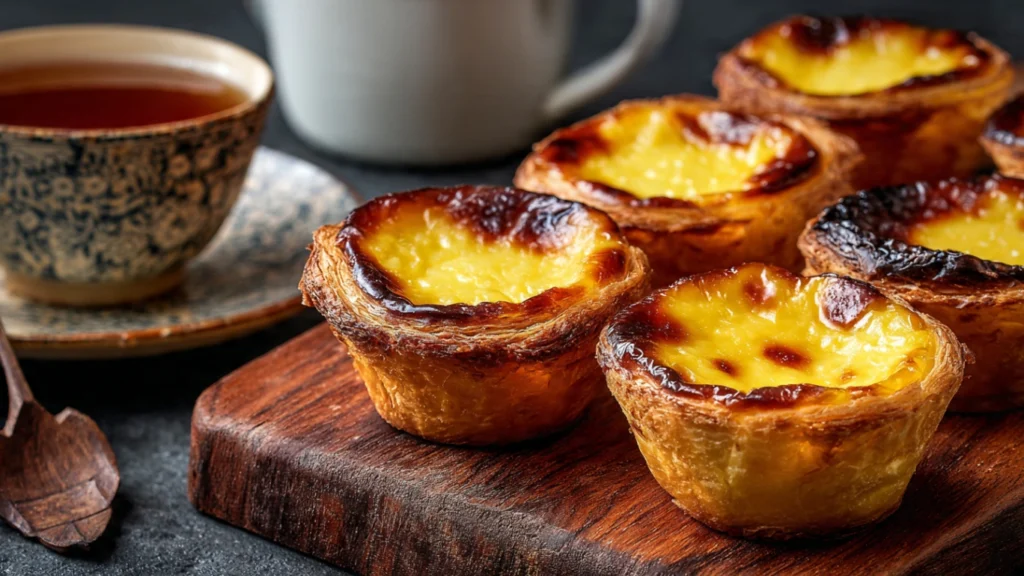
Egg tarts are small pastries consisting of a crispy pastry shell filled with a smooth egg custard. They’re beloved in Portuguese and Chinese cuisines, with slight variations between the two styles. Portuguese egg tarts, also known as pastéis de nata, typically have a caramelized top and use puff pastry, while Chinese egg tarts often feature a cookie-like shortcrust pastry and a paler custard. The filling is made primarily from eggs, milk or cream, and sugar, creating a texture similar to crème brûlée but baked in a portable pastry cup. These tarts became popular in Macau, where Portuguese and Chinese culinary traditions merged, and have since spread worldwide. They’re typically served as a snack or dessert, often enjoyed with tea or coffee. The best egg tarts have a completely smooth custard without any bubbles or cracks, and a crust that shatters delicately when you bite into it.
Common Mistakes to Avoid
Several pitfalls can affect the quality of your egg tarts. The most common mistake is overmixing the custard, which incorporates too much air and creates bubbles during baking. Mix gently and strain the custard to remove any foam. Another frequent error is baking at too low a temperature, which results in a pale, undercooked custard without that beautiful golden top. The oven needs to be quite hot to achieve proper caramelization. Many beginners also fill the tart shells too full, causing the custard to overflow during baking. Fill them only about three-quarters full to allow room for expansion. Using the wrong type of pastry or not blind-baking it properly can result in soggy bottoms. Some people also make the mistake of opening the oven door during baking, which causes temperature fluctuations that can make the custard crack or sink. Finally, not letting the tarts cool slightly before removing them from the pan often leads to broken shells and spilled custard.
How to Know They’re Done
Perfectly baked egg tarts have several telltale signs. The custard should be set around the edges but still have a slight wobble in the center when you gently shake the pan. It will continue to set as it cools, so you don’t want it completely firm in the oven. The top should have golden brown spots, especially around the edges—this caramelization is part of what makes them so delicious. The pastry should be deeply golden and crispy, not pale or soft. If you insert a toothpick into the custard about an inch from the edge, it should come out mostly clean with perhaps just a tiny bit of custard clinging to it. The baking time typically ranges from fifteen to twenty minutes at high heat, but watch them closely near the end as they can go from perfect to overbaked quickly. If the custard puffs up dramatically in the oven, it’s overbaked—it should remain relatively flat with just gentle swelling.
What to Serve With Egg Tarts
These versatile pastries pair beautifully with various beverages and complement many occasions. Hot black tea is traditional and provides a perfect contrast to the rich custard. Coffee, especially espresso or a strong brew, works wonderfully for breakfast or afternoon tea. For a Portuguese-inspired pairing, try them with a café com leite. Oolong or jasmine tea offers a lighter, more delicate accompaniment that doesn’t overwhelm the subtle flavors. They’re perfect on a brunch spread alongside fresh fruit, yogurt, and other pastries. At afternoon tea, serve them with finger sandwiches, scones, and small cakes for an elegant presentation. For dessert, they’re lovely with a small glass of port wine or dessert wine. Fresh berries on the side add a nice pop of color and a tart contrast to the sweet custard. They’re also wonderful on their own as a midday snack with nothing more than a good cup of tea or coffee.
Storage Tips
Egg tarts are best enjoyed fresh and warm, but proper storage helps maintain their quality if you have leftovers. Once completely cooled, store them in an airtight container in the refrigerator for up to three days. The pastry will soften somewhat in the fridge, but you can restore some crispness by reheating. To reheat, place them in a 350°F oven for about eight to ten minutes until warmed through and the pastry crisps up again. Avoid microwaving as this makes the pastry soggy. You can freeze baked egg tarts for up to one month. Freeze them in a single layer until solid, then transfer to a freezer bag. Reheat from frozen in a 350°F oven for twelve to fifteen minutes. For best results, I recommend making only what you’ll eat within a day or two, as the texture is truly superior when fresh. The unbaked pastry shells can be prepared ahead and frozen separately, which allows you to make fresh custard and bake them whenever you want warm tarts.
Estimated Nutrition Information
Per tart: Approximately 180 calories, 10g fat, 18g carbohydrates, 8g sugar, 4g protein. These are rich treats best enjoyed in moderation as part of a balanced diet.
Recipe Overview
Prep Time: 30 minutes
Cook Time: 20 minutes
Total Time: 50 minutes
Difficulty: Moderate
Servings: Makes 12 tarts
Ingredients
For the pastry shells:
- 1 sheet frozen puff pastry, thawed
- All-purpose flour for dusting
For the custard filling:
- 3 large egg yolks
- 1 large whole egg
- 1/3 cup granulated sugar
- 1 cup whole milk
- 1/2 cup heavy cream
- 1 teaspoon vanilla extract
- Pinch of salt
Step-by-Step Instructions
Preheat your oven to 425°F. This high temperature is essential for achieving that beautiful caramelized top on your egg tarts. Grease a 12-cup muffin tin thoroughly with butter or cooking spray.
Start by preparing the pastry shells. On a lightly floured surface, roll out the puff pastry sheet slightly to smooth any creases. Using a round cookie cutter about four inches in diameter, cut out twelve circles. Gently press each circle into a muffin cup, allowing the pastry to come up the sides. Don’t worry if they’re not perfectly even—that’s part of their charm. Place the muffin tin in the refrigerator while you prepare the custard.
For the custard filling, combine the egg yolks, whole egg, and sugar in a medium bowl. Whisk gently until just combined and the sugar begins to dissolve. You want to mix thoroughly but not vigorously—avoid incorporating too much air.
In a small saucepan, heat the milk and cream over medium heat until it just begins to steam and tiny bubbles form around the edges. Don’t let it boil. Remove from heat immediately.
Very slowly pour about half of the hot milk mixture into the egg mixture, whisking constantly. This process, called tempering, prevents the eggs from scrambling. Once incorporated, pour this mixture back into the saucepan with the remaining milk.
Add the vanilla extract and salt, stirring gently to combine. Pour the entire custard mixture through a fine-mesh strainer into a large measuring cup or pitcher with a spout. This removes any bits of cooked egg and creates that signature silky-smooth texture. Let the custard sit for a few minutes, then use a spoon to skim off any foam or bubbles from the surface.
Remove the muffin tin from the refrigerator. Carefully pour the custard into each pastry shell, filling them about three-quarters full. The custard will puff slightly as it bakes, so don’t overfill.
Place the muffin tin in the preheated oven and bake for eighteen to twenty minutes. Watch carefully toward the end—you want the custard to develop those characteristic golden-brown spots on top, which means the sugars are caramelizing. The edges should be set, but the center should still wobble just slightly when you gently shake the pan.
Remove from the oven and let the tarts cool in the pan for about five minutes. This allows the custard to set further and makes them easier to remove. Carefully run a knife around the edge of each tart and lift them out onto a cooling rack.
Serve your egg tarts warm or at room temperature. They’re absolutely delicious either way, with that perfect combination of flaky pastry and creamy custard that makes this egg tart recipe so special!