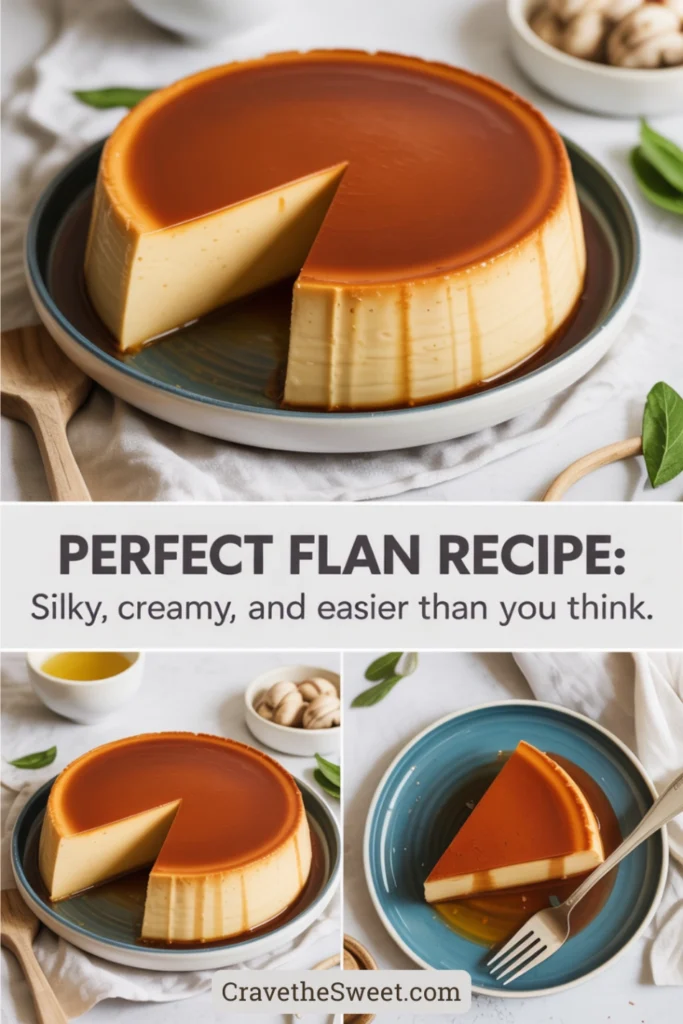
I fell in love with flan at a small Mexican restaurant during college. The silky custard with its golden caramel sauce was unlike anything I’d tasted before—smooth, sweet, and utterly elegant. When I asked the owner if it was difficult to make, she laughed and said it was actually one of the easiest desserts in her kitchen. Skeptical but intrigued, I searched for recipes and attempted my first flan that weekend. To my amazement, she was right. Despite looking fancy and tasting sophisticated, flan was surprisingly straightforward. This flan recipe has become my signature dessert for dinner parties, and guests are always shocked when I tell them how simple it really is.
Why You’ll Love This Flan Recipe
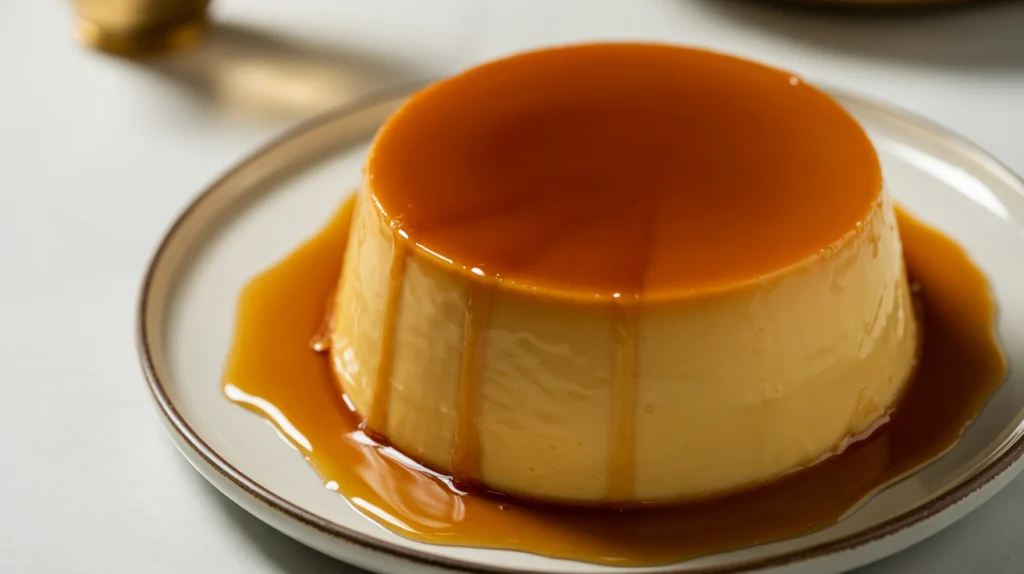
This dessert is incredibly luxurious with its silky texture and rich caramel flavor. The custard practically melts on your tongue, and the homemade caramel sauce adds a sophisticated bittersweet note that balances the sweetness perfectly. What makes this flan recipe special is how impressive it looks with minimal effort. When you unmold it and that glossy caramel cascades down the sides, everyone assumes you’re an expert pastry chef. The flavor is elegant and not overly sweet, making it the perfect ending to a heavy meal. It’s also naturally gluten-free, which works perfectly for guests with dietary restrictions. You can make it entirely ahead of time, which eliminates any last-minute stress when entertaining. Despite its fancy reputation, flan requires just a handful of simple ingredients and basic techniques that anyone can master.
What Is Flan?
Flan is a creamy custard dessert with a layer of soft caramel on top, popular throughout Latin America, Spain, and the Philippines. The dessert has European origins dating back to ancient Rome, though the caramel-topped version we know today became popular in Spain during medieval times. Traditional flan consists of eggs, milk, sugar, and vanilla baked in a water bath until set, then inverted to reveal the caramel topping. The texture should be silky and smooth, similar to crème brûlée but without the crispy sugar top. Latin American versions often use sweetened condensed milk and evaporated milk, creating an even richer, creamier custard. The caramel is made by melting sugar until it turns golden and liquid, then pouring it into the baking dish where it hardens. During baking, it becomes a luscious sauce that coats the custard when you flip it over.
Common Mistakes to Avoid
The biggest mistake with this flan recipe is cooking the caramel too dark. It should be a rich amber color, not dark brown, or it will taste bitter. Watch it carefully during the last minute as it can go from perfect to burnt quickly. Another error is not straining the custard mixture before baking. Straining removes any lumps or bits of cooked egg, ensuring that silky texture. Some people skip the water bath, but this is crucial—it provides gentle, even heat that prevents the eggs from curdling. The water should come about halfway up the sides of the flan pan. Not letting the flan cool completely before unmolding is another mistake. It needs to be thoroughly chilled and set, or it will fall apart when you flip it. Using too high an oven temperature cooks the custard too quickly, creating air bubbles and a grainy texture. Low and slow is essential. Finally, getting impatient and trying to unmold it immediately causes the caramel to be too thick and sticky rather than flowing nicely.
How to Know When Your Flan Is Done
The flan is ready when the edges are set but the center still jiggles slightly when you gently shake the pan. It should move as one cohesive mass, not ripple with liquid waves. The surface should look set and no longer shiny or wet. Insert a knife about two inches from the edge—it should come out clean or with just a slight film of custard. Don’t test the very center as it will still be slightly soft. The internal temperature should be between 170°F and 175°F if using an instant-read thermometer. Remember that flan continues cooking from residual heat after you remove it from the oven, so slightly underdone is better than overdone. An overdone flan will have visible holes or a curdled texture and will weep liquid when unmolded. The top might also crack. Once baked, the flan needs to cool to room temperature, then refrigerate for at least four hours or overnight until completely cold and firmly set.
What to Serve With Flan
This flan recipe creates a dessert that’s perfect on its own, but certain accompaniments enhance the experience. Fresh berries, especially strawberries or raspberries, provide a tart contrast to the sweet caramel. Sliced mango or papaya adds a tropical touch. A small dollop of whipped cream is optional but delicious. Some people enjoy a light dusting of cinnamon on top. Coffee is the traditional beverage pairing—the slight bitterness balances the sweetness beautifully. For special occasions, serve it with a small glass of dessert wine, coffee liqueur, or brandy. Toasted coconut flakes sprinkled on top add nice texture and flavor. Fresh mint leaves make an elegant garnish. At Mexican restaurants, flan is often served with a few cookies or biscotti on the side. Keep portions moderate—flan is rich, and a little goes a long way.
Storage and Make-Ahead Tips
Flan is actually best when made ahead, making it ideal for entertaining. You can prepare it up to three days in advance. Keep it refrigerated in its baking dish, covered with plastic wrap. Wait to unmold it until a few hours before serving. Once unmolded, it will keep in the refrigerator for up to two days, though it’s best served within a day of unmolding. Store any leftover flan covered in the refrigerator for up to five days. The texture may weep slightly as it sits, but it still tastes delicious. Flan doesn’t freeze well—the texture becomes grainy and separated after thawing. The caramel can be made several hours ahead and left at room temperature until you’re ready to add the custard. If you’re transporting flan, keep it in its baking dish and unmold it at your destination for the best presentation.
Estimated Nutrition Information
Per serving (based on 8 servings): Approximately 285 calories, 10g fat, 42g carbohydrates, 0g fiber, 40g sugar, 8g protein. Flan provides protein and calcium from the eggs and milk. While it’s definitely a dessert, it’s less heavy than many other sweet treats and the portions are reasonable.
Recipe Overview
Prep Time: 15 minutes
Cook Time: 55 minutes
Total Time: 5 hours (including cooling and chilling)
Difficulty: Medium
Servings: 8
Ingredients
For the caramel:
- 1 cup granulated sugar
- 1/4 cup water
For the custard:
- 1 can (14 ounces) sweetened condensed milk
- 1 can (12 ounces) evaporated milk
- 1 cup whole milk
- 5 large eggs
- 1 tablespoon vanilla extract
- Pinch of salt
Step-by-Step Instructions
Preheat your oven to 325°F. You’ll need a round 9-inch cake pan or flan mold and a larger baking dish that the flan pan fits inside with room around the edges.
Make the caramel first. In a medium saucepan, combine the sugar and water over medium heat. Stir just until the sugar dissolves, then stop stirring completely. Let it cook undisturbed, occasionally swirling the pan gently.
Watch carefully as the mixture bubbles and turns golden. After about 8 to 12 minutes, it will become a rich amber color. Immediately remove from heat—it will continue darkening from residual heat.
Quickly pour the hot caramel into your flan pan, tilting and rotating the pan to coat the bottom evenly. Work fast as the caramel hardens quickly. Set aside to cool while you make the custard.
In a blender, combine the sweetened condensed milk, evaporated milk, whole milk, eggs, vanilla extract, and salt. Blend on medium speed for about one minute until smooth and well combined. You can also whisk by hand in a large bowl, but blending creates a smoother texture.
Pour the custard mixture through a fine-mesh strainer into the caramel-lined pan. This removes any lumps or chalaza (the white strings from eggs) for a perfectly smooth flan.
Place the flan pan inside your larger baking dish. Carefully pour hot water into the larger dish until it reaches about halfway up the sides of the flan pan. This water bath is crucial for even, gentle cooking.
Carefully transfer to the oven and bake for 50 to 60 minutes. The flan is done when the edges are set but the center still jiggles slightly like gelatin.
Remove from the oven and carefully lift the flan pan out of the water bath. Let it cool on a wire rack to room temperature, about one hour.
Once cooled to room temperature, cover with plastic wrap and refrigerate for at least four hours, though overnight is ideal. The flan needs to be completely cold and firmly set.
To unmold, run a thin knife around the edge of the pan to loosen the flan. Place a serving plate with a raised edge over the pan—you want a plate that can catch the caramel sauce.
Hold the plate and pan together firmly and quickly flip them over. Gently shake or tap the pan—you should hear the flan release with a slight sucking sound. Lift off the pan slowly.
The caramel will flow over the top and pool around the flan beautifully. If any caramel remains in the pan, scrape it out and spoon it over the flan.
Slice with a sharp knife, wiping it clean between cuts. Serve chilled with plenty of that delicious caramel sauce spooned over each slice.
This flan recipe has become my most reliable dessert for impressing guests. The combination of creamy custard and bittersweet caramel creates an elegant ending to any meal that looks far more complicated than it actually is.