
Growing up, I thought fruit cake was just something people joked about at Christmas—dense, dry bricks that got passed around as gag gifts. Then my neighbor invited me over for tea and served a slice of her homemade fruit cake, and everything changed. It was incredibly moist, packed with jewel-toned fruit, and had this wonderful spiced flavor that wasn’t too sweet. She told me the secret was soaking the fruit in rum for weeks and wrapping the finished cake to let the flavors develop. Now, this fruit cake recipe has become my holiday tradition, and I start preparing it in November so it’s perfect by Christmas.
Why You’ll Love This Fruit Cake Recipe
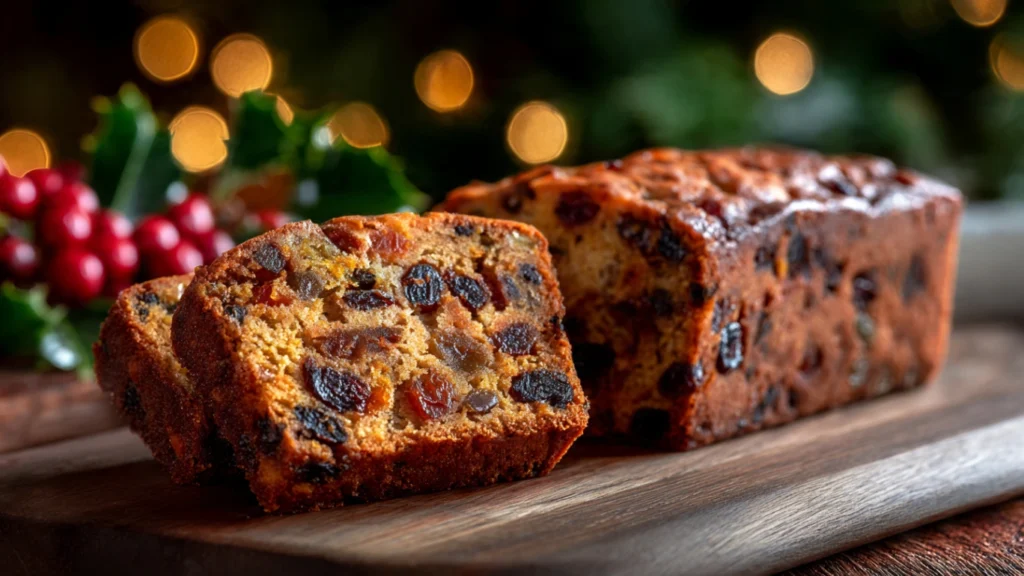
This fruit cake recipe produces a genuinely delicious cake that will convert even the biggest skeptics. Unlike the dry, overly candied versions that give fruit cake a bad reputation, this recipe creates a moist, flavorful cake with just the right balance of fruit, nuts, and spice. The dried and candied fruits soak in rum or juice beforehand, which keeps them plump and adds incredible depth of flavor. The cake itself is dense but tender, never dry or crumbly. It stores beautifully and actually improves with age as the flavors meld together over time. You can customize the fruit and nut mixture to your preferences, making it as traditional or modern as you like. Plus, the cake makes an impressive homemade gift that shows real thought and effort.
What Is Fruit Cake?
Fruit cake is a dense, rich cake loaded with dried fruits, candied fruits, and nuts, typically spiced with cinnamon, nutmeg, and other warm spices. This fruit cake recipe creates a traditional version that’s been popular for centuries, especially during holidays and special celebrations. The cake gets its moisture from both the batter and the soaked fruits, which release their flavors during baking. Traditional fruit cakes often contain alcohol like rum, brandy, or whiskey, which acts as a preservative and adds complex flavor notes. The high fruit and nut content means there’s actually more mix-ins than batter, creating a compact texture that slices cleanly. Properly made fruit cake can last for months or even years when stored correctly, making it a popular choice for gift-giving and special occasions that require advance preparation.
Common Mistakes to Avoid
The biggest mistake with this fruit cake recipe is using low-quality candied fruit. Those neon-colored fruit mixes often taste artificial and create an overly sweet cake. Choose natural-colored candied fruits or use all dried fruits like raisins, cranberries, apricots, and figs for better flavor.
Another error is not properly preparing the fruits. They need to be chopped to relatively uniform sizes and soaked in liquid for at least several hours, preferably overnight or longer. Dry fruit will absorb moisture from the cake batter during baking, resulting in a dry finished product.
Overbaking is a common problem that creates a dry, crumbly cake. Because fruit cake is dense, it bakes at a lower temperature for a longer time than regular cakes. Use an oven thermometer to ensure accurate temperature.
Skipping the pan preparation leads to sticking nightmares. Line your pan completely with parchment paper and grease it well. The high sugar content in fruit cake makes it particularly prone to sticking.
Not wrapping the cake properly after baking prevents proper aging. Fruit cake needs to be wrapped in cheesecloth soaked in alcohol or juice, then wrapped tightly in plastic wrap and foil to develop its full flavor.
Finally, slicing the cake too soon doesn’t allow the flavors to meld. Let it age for at least one week, though three to four weeks is ideal.
How to Know When Your Cake Is Done
A properly baked fruit cake should be deep golden brown on top and pulling slightly away from the pan edges. The surface should feel firm to a gentle touch, not soft or spongy.
Insert a long skewer or toothpick into the center of the cake. It should come out clean or with just a few dry crumbs attached. Because of all the fruit, you might hit a piece of fruit that makes it seem wet, so test in several spots.
The cake should feel relatively firm throughout when you press gently on the surface. There shouldn’t be any soft, sunken areas that indicate underbaking.
This fruit cake recipe typically requires 2.5 to 3 hours of baking at 275°F. The low temperature ensures the cake bakes through without the edges burning. Start checking around the 2.5-hour mark.
If the top is browning too quickly before the center is done, tent the cake loosely with aluminum foil to prevent over-browning while the interior finishes baking.
The cake will firm up considerably as it cools, so don’t worry if it seems slightly soft when first removed from the oven.
What to Serve With Fruit Cake
This fruit cake recipe creates a rich dessert that’s traditionally served in thin slices with tea or coffee. The strong beverages complement the sweet, dense cake perfectly.
A small glass of the same liquor used to soak the cake makes an elegant adult pairing. Rum, brandy, or whiskey all work beautifully.
Aged cheddar cheese is a traditional British accompaniment that creates a sweet-and-savory combination. The sharp cheese cuts through the sweetness surprisingly well.
Cream cheese or mascarpone spread lightly on each slice adds richness and helps balance the sweetness. This is especially nice if your fruit cake leans toward the drier side.
For a more indulgent presentation, serve slices with a dollop of vanilla ice cream or lightly sweetened whipped cream.
Hot spiced cider or mulled wine makes a wonderful holiday beverage pairing that echoes the warm spices in the cake.
Fresh fruit like sliced pears or apples provides a light, fresh contrast to the rich, dense cake.
Storage Tips
This fruit cake recipe produces a cake that stores exceptionally well and actually improves with age. Wrap the completely cooled cake first in cheesecloth that’s been soaked in rum, brandy, or fruit juice. Squeeze out excess liquid but keep it damp.
Next, wrap tightly in plastic wrap, then aluminum foil. Store in an airtight container at room temperature in a cool, dark place.
Every week or two, unwrap the cake and brush it with additional alcohol or juice, then rewrap. This keeps it moist and develops deeper flavors.
Properly stored fruit cake will keep for 3-6 months at room temperature, or up to one year in the refrigerator. Some people age their fruit cakes for years.
For shorter storage without alcohol, wrap the cake tightly and store at room temperature for up to 2 weeks, or refrigerate for up to 2 months.
Fruit cake also freezes well for up to one year. Wrap tightly in plastic wrap and foil before freezing. Thaw overnight in the refrigerator before serving.
Never store fruit cake in an airtight container without wrapping it first, as moisture can lead to mold growth despite the alcohol content.
Estimated Nutrition (Per Slice, 16 Servings)
Calories: 365 | Total Fat: 12g | Saturated Fat: 6g | Cholesterol: 55mg | Sodium: 135mg | Total Carbohydrates: 62g | Dietary Fiber: 3g | Sugars: 45g | Protein: 5g
Note: Nutritional values are approximate and vary based on specific fruits, nuts, and ingredients used.
Recipe Overview
Prep Time: 30 minutes (plus soaking time)
Cook Time: 2 hours 45 minutes
Total Time: 3 hours 15 minutes (plus aging time)
Difficulty: Medium
Servings: 16 slices
Ingredients
For Soaking the Fruit:
- 2 cups mixed dried fruits (raisins, currants, cranberries, chopped apricots)
- 1 cup candied cherries, halved
- 1 cup candied citrus peel or candied pineapple
- ¾ cup dark rum, brandy, or orange juice
- Zest of 1 orange
- Zest of 1 lemon
For the Cake:
- 1½ cups all-purpose flour
- 1 teaspoon baking powder
- ½ teaspoon salt
- 1 teaspoon ground cinnamon
- ½ teaspoon ground nutmeg
- ¼ teaspoon ground cloves
- ¾ cup unsalted butter, softened
- 1 cup packed brown sugar
- 4 large eggs, room temperature
- ¼ cup molasses
- 1 teaspoon vanilla extract
- 1½ cups chopped pecans or walnuts
For Feeding the Cake:
- Additional rum, brandy, or juice for brushing
Step-by-Step Instructions
Step 1: Combine all dried fruits, candied fruits, orange zest, and lemon zest in a large bowl. Pour rum or juice over the fruit and stir well. Cover and let soak at room temperature for at least 12 hours or up to 3 days, stirring occasionally.
Step 2: Preheat oven to 275°F. Grease a 9-inch round cake pan or loaf pan thoroughly. Line the bottom and sides with parchment paper, then grease the parchment.
Step 3: In a medium bowl, whisk together flour, baking powder, salt, cinnamon, nutmeg, and cloves. Set aside.
Step 4: In a large mixing bowl, cream butter and brown sugar together with an electric mixer on medium speed for 3-4 minutes until light and fluffy.
Step 5: Add eggs one at a time, beating well after each addition. Mix in molasses and vanilla extract until fully combined.
Step 6: Add the flour mixture to the butter mixture and stir with a wooden spoon just until combined. Don’t overmix.
Step 7: Drain the soaked fruit mixture, reserving any liquid for later use. Add the drained fruit and chopped nuts to the batter. Fold everything together until the fruit and nuts are evenly distributed throughout the batter.
Step 8: Spoon the thick batter into the prepared pan, pressing down firmly to eliminate air pockets. Smooth the top with a spatula.
Step 9: Bake for 2 hours 45 minutes to 3 hours, checking at the 2.5-hour mark. The cake is done when a skewer inserted in the center comes out clean and the top is deep golden brown.
Step 10: Cool the cake in the pan on a wire rack for 30 minutes, then carefully remove from pan and cool completely on the rack, about 2 hours.
Step 11: Once completely cool, brush the cake all over with rum, brandy, or juice. Soak a piece of cheesecloth in the liquid, squeeze out excess, and wrap the cake completely.
Step 12: Wrap the cheesecloth-covered cake tightly in plastic wrap, then aluminum foil. Store in an airtight container at room temperature. Feed the cake with additional liquid once a week for at least 2 weeks before serving.
Slice thin and enjoy this traditional holiday treat!