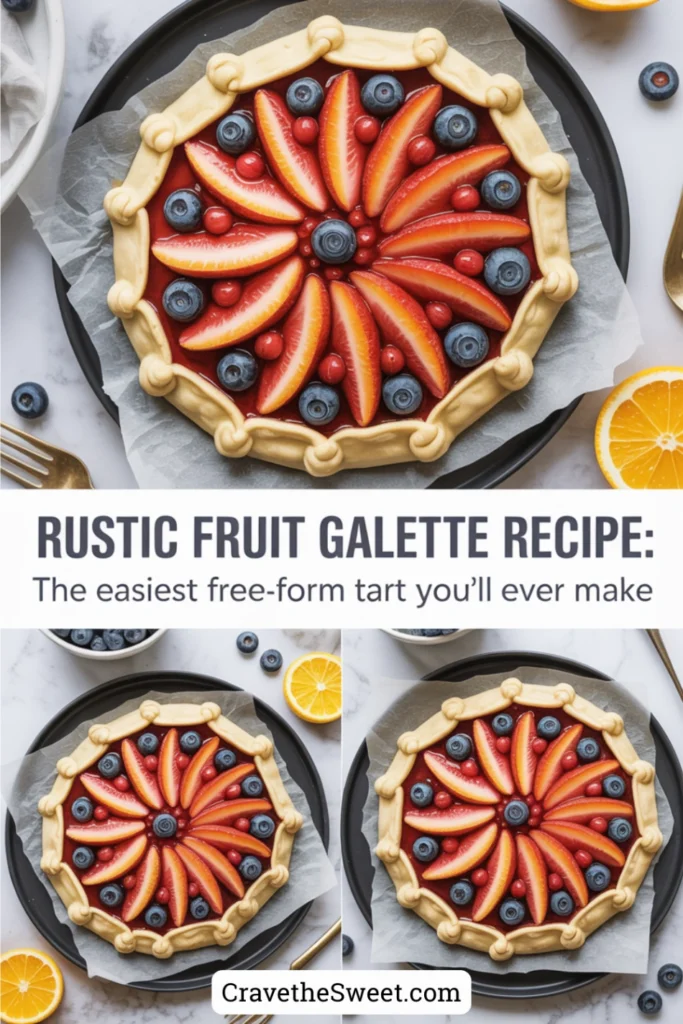
I used to avoid making pies because I could never get the edges to look perfect or the bottom crust to bake through properly. Then a friend introduced me to galettes, calling them “the lazy baker’s pie.” I was skeptical until she showed me how you simply roll out dough, pile fruit in the center, fold up the edges however they fall, and bake. No pie dish, no crimping, no stress about perfection. When I made my first galette with summer peaches, I was shocked at how beautiful it looked with its rustic, imperfect edges. It tasted incredible too—the crust was flaky and golden, and the fruit was perfectly caramelized. This galette recipe has since become my favorite way to showcase seasonal fruit without any of the fussiness of traditional pie.
Why You’ll Love This Galette Recipe
This dessert is beautifully rustic with its free-form shape and caramelized fruit filling. The crust is buttery and flaky, perfectly complementing whatever fruit you choose. What makes this galette recipe wonderful is how forgiving it is. There’s no such thing as an ugly galette—the imperfect, folded edges are the whole point and part of its charm. It’s much faster than making pie since there’s no pie dish to line or intricate crimping required. You can use any seasonal fruit, making it perfect year-round. The open top allows the fruit to caramelize beautifully, creating intense flavor. It’s easier to slice and serve than traditional pie, and the ratio of crust to filling is perfect in every bite. Whether you’re a beginner or experienced baker, this recipe delivers impressive results with minimal stress.
What Is a Galette?
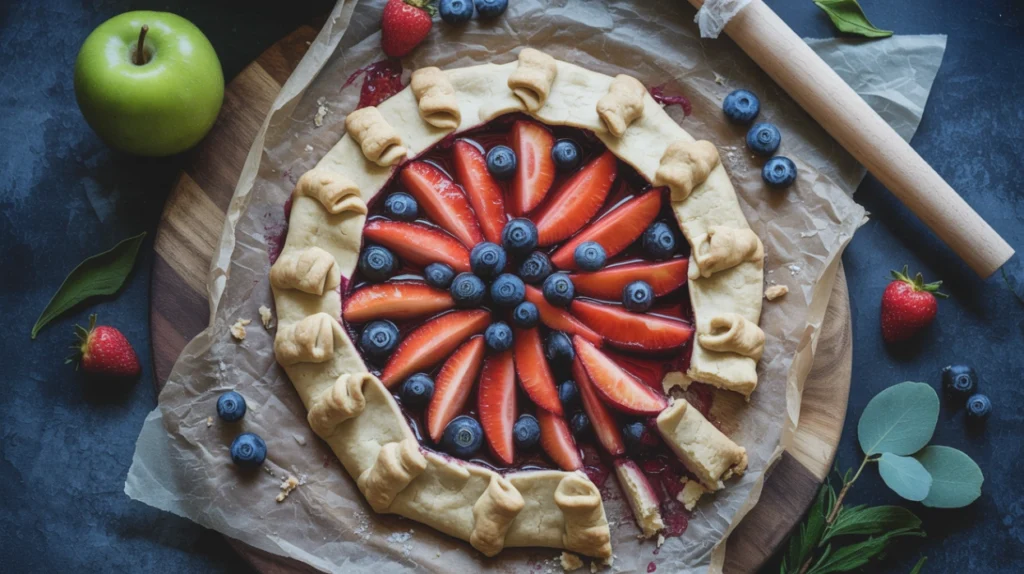
A galette is a French free-form tart made by rolling out pastry dough, adding filling to the center, then folding the edges up and over the filling, leaving the center exposed. The word “galette” simply means flat round cake in French. Unlike structured pies in dishes, galettes are baked directly on a baking sheet, giving them their signature rustic appearance. The dough can be flaky pie crust or a sturdier pastry dough. Sweet galettes typically feature fresh fruit like berries, peaches, apples, or plums with sugar and sometimes a touch of flour or cornstarch to thicken the juices. Savory galettes use vegetables, cheese, or meat. The beauty of galettes is their adaptability and forgiving nature—no two look exactly alike, and that’s exactly how they should be. They’re meant to look homemade and rustic rather than polished and perfect.
Common Mistakes to Avoid
The biggest mistake with this galette recipe is using dough that’s too warm, which makes it difficult to fold and causes butter to leak during baking. Keep the dough cold. Another error is overfilling the galette. Too much fruit makes the edges unable to contain the juices, causing leaks and soggy bottoms. Leave a good border of dough. Not using enough sugar or adding thickener to juicy fruits creates a watery filling. Some people roll the dough too thin, which tears easily and doesn’t provide structure. Aim for about one-eighth inch thickness. Baking at too low a temperature results in pale, undercooked crust. High heat is essential for golden, flaky pastry. Not brushing the crust with egg wash misses an opportunity for beautiful golden color and sparkle from coarse sugar.
How to Know When It’s Done
The galette is perfectly baked when the crust is deeply golden brown all over, including the bottom edges where you can see them. The fruit should be bubbling and caramelized, with visible juices that have thickened. If you gently lift an edge with a spatula, the bottom should be golden and crispy, not pale or soft. The folded edges should be flaky and crisp with visible layers. Any sugar sprinkled on top should be caramelized and sparkly. The fruit in the center should look tender and jammy. If using apples or pears, they should be easily pierced with a knife. Let the galette cool for at least 20 minutes before slicing—this allows the juices to set slightly and makes slicing cleaner. It’s best served warm but not piping hot.
What to Serve With It
This galette recipe creates a dessert that’s wonderful alone or enhanced with simple accompaniments. Vanilla ice cream melting over a warm slice is absolutely perfect. Whipped cream adds lightness and richness. A dollop of crème fraîche or Greek yogurt provides tangy contrast to sweet fruit. For breakfast or brunch, serve it with coffee or tea. Fresh berries on the side complement berry galettes nicely. A drizzle of caramel sauce works beautifully with apple galettes. Some people enjoy it with sharp cheddar cheese, especially apple galettes. Dust with powdered sugar for an elegant finish. It pairs wonderfully with espresso or dessert wine.
Storage Tips
Store leftover galette loosely covered at room temperature for up to two days, or refrigerate for up to four days. The crust will soften slightly when stored but can be crisped up by reheating in a 350°F oven for 10 minutes. The unbaked dough can be refrigerated for up to three days or frozen for three months. Thaw frozen dough overnight in the refrigerator before rolling. You can assemble the galette and freeze it unbaked—bake directly from frozen, adding 10 extra minutes to the baking time. Fully baked galettes don’t freeze well as the texture changes.
Estimated Nutrition Information
Per slice (based on 8 slices): Approximately 285 calories, 14g fat, 38g carbohydrates, 2g fiber, 18g sugar, 3g protein. The nutritional values vary based on the fruit used. The fresh fruit provides vitamins and fiber while the buttery crust makes it an indulgent treat.
Recipe Overview
Prep Time: 20 minutes
Cook Time: 40 minutes
Total Time: 1 hour 20 minutes (including chilling)
Difficulty: Easy
Servings: 8
Ingredients
For the crust:
- 1 and 1/4 cups all-purpose flour
- 1 tablespoon granulated sugar
- 1/2 teaspoon salt
- 1/2 cup cold unsalted butter, cut into small cubes
- 3-4 tablespoons ice water
For the filling:
- 3 cups sliced fruit (peaches, apples, berries, plums)
- 1/3 cup granulated sugar (adjust based on fruit sweetness)
- 2 tablespoons all-purpose flour or cornstarch
- 1/2 teaspoon cinnamon (optional)
- 1 tablespoon lemon juice
For finishing:
- 1 egg beaten with 1 tablespoon water
- 2 tablespoons coarse sugar
Step-by-Step Instructions
Make the dough by combining flour, one tablespoon sugar, and salt in a large bowl. Add cold butter cubes and use a pastry cutter or your fingers to work it into the flour until the mixture resembles coarse crumbs with some pea-sized pieces remaining.
Drizzle three tablespoons ice water over the mixture and stir with a fork. Add more water one tablespoon at a time if needed until the dough just comes together when pressed.
Turn the dough onto a work surface, shape it into a disk, wrap in plastic, and refrigerate for at least 30 minutes.
Preheat your oven to 400°F. Line a baking sheet with parchment paper.
Prepare your fruit—wash, peel if needed, and slice. In a bowl, toss fruit with one-third cup sugar, flour, cinnamon if using, and lemon juice. Let it sit while you roll the dough.
On a lightly floured surface, roll the chilled dough into a 12-inch circle about one-eighth inch thick. It doesn’t need to be perfectly round. Transfer to your prepared baking sheet.
Pile the fruit mixture in the center, leaving a two to three-inch border. Spread the fruit evenly but don’t spread it all the way to the edges.
Fold the border of dough up and over the fruit, pleating as you go around the galette. The folds don’t need to be even—rustic is the goal. Press gently to seal any cracks.
Brush the crust with egg wash and sprinkle with coarse sugar.
Bake for 38 to 45 minutes until the crust is deeply golden and the fruit is bubbling.
Let cool on the baking sheet for 20 minutes before slicing and serving.
This galette recipe has freed me from pie anxiety and opened up a world of easy, beautiful fruit desserts. The rustic charm combined with flaky crust and jammy fruit creates something special without the stress of perfection.