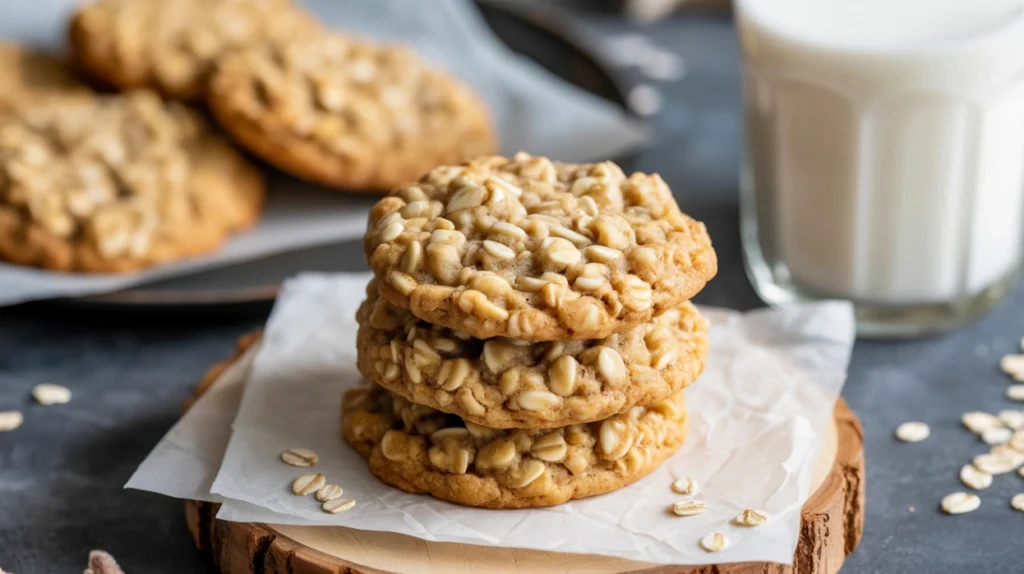

The smell of oatmeal cookies baking takes me straight back to my grandmother’s kitchen. Every Sunday afternoon, she’d pull out her recipe card covered in butter stains and faded pencil notes, and we’d make a double batch together. She taught me that the secret to perfect oatmeal cookies wasn’t just following the recipe—it was understanding when to pull them from the oven while they still looked slightly underdone. Those cookies would come out soft and chewy, staying that way for days in her cookie jar. When she passed away, that recipe card became one of my most treasured possessions. This oatmeal cookie recipe is exactly as she made it, with just a few notes I’ve added over the years. It produces cookies that are chewy, full of warm cinnamon flavor, and studded with raisins—everything an oatmeal cookie should be.
Why You’ll Love This Oatmeal Cookie Recipe
These cookies are perfectly chewy with crispy edges and soft centers. The combination of oats, cinnamon, and brown sugar creates deep, warm flavor that’s comforting and satisfying. What makes this oatmeal cookie recipe special is its reliability—it works every single time without fail. The cookies stay soft for days if stored properly, unlike some oatmeal cookies that turn hard and dry. The dough comes together easily in one bowl with just a spoon or hand mixer. These cookies are also incredibly versatile. You can add raisins, chocolate chips, nuts, dried cranberries, or keep them plain. They’re perfect for lunch boxes, after-school snacks, or midnight cookie cravings. The recipe makes a large batch, which is great for feeding families or sharing with friends. They also freeze beautifully, so you can always have homemade cookies on hand.
What Makes Great Oatmeal Cookies?
Oatmeal cookies are classic American cookies made with rolled oats, flour, butter, sugar, eggs, and warm spices like cinnamon. They became popular in the early 1900s when oats were promoted as a healthy breakfast food. The oats give these cookies a heartier texture than regular cookies and add a slightly nutty flavor. The best oatmeal cookies have a perfect balance—chewy in the middle with slightly crispy edges. The oats should be visible and add texture without making the cookies too dense. Brown sugar is essential for that soft, chewy texture and caramel-like flavor. Traditional versions include raisins, though many variations exist with chocolate chips, nuts, coconut, or dried fruit. The cookies should be thick rather than flat and crispy, with warm spice notes that complement rather than overpower the oat flavor.
Common Mistakes to Avoid
The biggest mistake with this oatmeal cookie recipe is using quick oats instead of old-fashioned rolled oats. Quick oats are too fine and create a mushy texture. Always use old-fashioned rolled oats. Another error is overmixing the dough once the flour is added, which develops too much gluten and makes cookies tough. Mix just until combined. Some people don’t cream the butter and sugars long enough. This step incorporates air and creates that chewy texture, so cream for at least three minutes. Using melted butter instead of softened butter changes the texture completely—you want softened butter that holds its shape but yields to gentle pressure. Overbaking is probably the most common mistake. The cookies should look slightly underdone when you remove them—they’ll continue cooking on the hot baking sheet. Baking them until they’re completely brown makes them hard and dry. Not letting them cool on the baking sheet for a few minutes causes them to break apart when you try to move them.
How to Know When They’re Done
Oatmeal cookies are perfectly baked when the edges are golden brown and set while the centers still look slightly soft and pale. This is the key to chewy cookies—they should look almost underdone in the middle when you remove them from the oven. The edges will have taken on color and will feel firm if you gently press them, while the center yields slightly to pressure. If you wait until the entire cookie is golden brown, they’ll be overbaked and hard once they cool. The cookies will continue cooking from residual heat after removal, so timing is crucial. They typically take 10 to 12 minutes in a 350°F oven, but start checking at 10 minutes. Different ovens vary, so watch closely. After removing from the oven, let the cookies sit on the baking sheet for five minutes—they’ll firm up during this time and be easy to transfer to a cooling rack without breaking.
What to Serve With Oatmeal Cookies
This oatmeal cookie recipe creates cookies that pair perfectly with a glass of cold milk—it’s the classic combination for good reason. They’re also wonderful dunked in coffee or tea, especially for breakfast or afternoon snacks. Hot apple cider is a perfect fall pairing that complements the cinnamon in the cookies. For a dessert presentation, serve them warm with a scoop of vanilla ice cream. The cookies are substantial enough to enjoy on their own as a snack or light breakfast. They’re perfect for packing in lunch boxes—they travel well and don’t crumble easily. For kids’ parties, set out cookies with milk in small glasses for an easy, crowd-pleasing treat. They also pair beautifully with fresh fruit like apple slices or grapes. During the holidays, arrange them on a cookie platter with other varieties for a festive spread.
Storage and Freezing Tips
Store baked oatmeal cookies in an airtight container at room temperature for up to one week. To keep them extra soft, add a slice of bread to the container—the cookies will absorb moisture from the bread. Replace the bread slice every couple of days. If cookies do become hard, microwave them for 10 seconds to soften. The cookie dough freezes excellently for up to three months. Scoop the dough into balls, freeze on a baking sheet until solid, then transfer to a freezer bag. Bake from frozen, adding one to two extra minutes to the baking time. You can also freeze baked cookies for up to three months—layer them with parchment paper in an airtight container. Thaw at room temperature for about 30 minutes. For gift-giving, pack cookies in tins or boxes lined with parchment paper. They ship well and make wonderful homemade gifts.
Estimated Nutrition Information
Per cookie (based on 36 cookies): Approximately 145 calories, 6g fat, 22g carbohydrates, 1g fiber, 13g sugar, 2g protein. The oats provide some fiber and whole grains, making these slightly more nutritious than regular cookies. They’re still treats, but the oats add substance and staying power. Using raisins instead of chocolate chips reduces fat content slightly.
Recipe Overview
Prep Time: 15 minutes
Cook Time: 12 minutes
Total Time: 30 minutes (plus cooling time)
Difficulty: Easy
Servings: 36 cookies
Ingredients
For the cookies:
- 1 cup unsalted butter, softened
- 1 cup packed light brown sugar
- 1/2 cup granulated sugar
- 2 large eggs, room temperature
- 1 teaspoon vanilla extract
- 1 and 1/2 cups all-purpose flour
- 1 teaspoon baking soda
- 1 teaspoon ground cinnamon
- 1/2 teaspoon salt
- 3 cups old-fashioned rolled oats
- 1 cup raisins (or chocolate chips, or a combination)
- Optional: 1/2 cup chopped walnuts or pecans
Step-by-Step Instructions
Preheat your oven to 350°F. Line two large baking sheets with parchment paper or silicone baking mats. Don’t skip this step—it prevents sticking and promotes even browning.
In a large mixing bowl, beat the softened butter with both sugars using an electric mixer on medium speed. Beat for three to four minutes until the mixture is light, fluffy, and pale in color. This step is crucial for achieving the right texture, so don’t rush it. The mixture should look almost whipped.
Add the eggs one at a time, beating well after each addition. Make sure each egg is fully incorporated before adding the next. Add the vanilla extract and beat until combined.
In a separate medium bowl, whisk together the flour, baking soda, cinnamon, and salt. Make sure there are no lumps and the spices are evenly distributed throughout the flour.
Add the flour mixture to the butter mixture all at once. Using a wooden spoon or the mixer on low speed, stir just until the flour disappears. Don’t overmix—you want to see no streaks of flour, but stop as soon as you reach that point. Overmixing makes tough cookies.
Add the oats and raisins (and nuts if using) to the dough. Stir with a wooden spoon until everything is evenly distributed throughout the dough. The dough will be thick and somewhat stiff.
Using a cookie scoop or two spoons, drop rounded tablespoons of dough onto your prepared baking sheets. Space them about two inches apart as they’ll spread during baking. For uniform cookies, use a cookie scoop—a medium scoop (about 1.5 tablespoons) works perfectly.
Gently flatten each dough ball slightly with your palm or the bottom of a glass. They shouldn’t be flat, just slightly pressed down. This helps them bake more evenly.
Bake one sheet at a time on the center rack for 10 to 12 minutes. The cookies are done when the edges are golden brown and set while the centers still look slightly soft and pale. They should not be uniformly brown—if they are, they’re overbaked.
Remove from the oven and let the cookies cool on the baking sheet for exactly five minutes. This is important—they’ll firm up during this time and moving them too soon will cause them to break.
After five minutes, use a spatula to transfer the cookies to a wire cooling rack to cool completely. They’ll continue to firm up as they cool but will remain soft and chewy in the center.
Let the baking sheets cool completely between batches, or use additional sheets. Placing dough on a hot pan causes the cookies to spread too much and bake unevenly.
Once completely cool, store in an airtight container. They’re delicious warm from the oven but also wonderful at room temperature.
Tips for Perfect Cookies Every Time
For extra soft cookies, slightly underbake them and remove when the centers look very pale. For crispier cookies, bake an extra one to two minutes until more uniformly golden. If your cookies spread too much, chill the dough for 30 minutes before baking. If they don’t spread enough, make sure your butter was properly softened, not cold. Room temperature eggs incorporate better into the batter—let them sit out for 30 minutes before baking. You can make the dough ahead and refrigerate it for up to three days before baking. For best results, use a light-colored baking sheet—dark sheets absorb more heat and can overbrown the bottoms.
This oatmeal cookie recipe has been bringing comfort and joy to my family for generations. The perfectly chewy texture, warm cinnamon flavor, and satisfying oats create a cookie that’s both homey and special, perfect for any occasion from casual snacking to holiday celebrations.