
Classic Pineapple Upside Down Cake Recipe: A Retro Dessert That Never Goes Out of Style
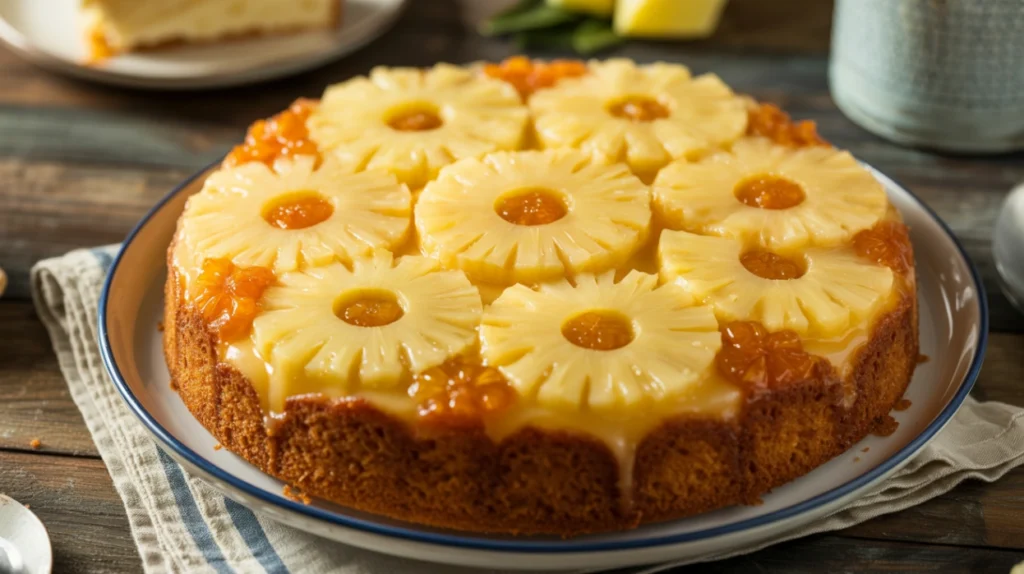
My grandmother made pineapple upside down cake for every special occasion, and I was mesmerized watching her flip the hot cake onto a platter to reveal those perfect circles of caramelized pineapple and glossy maraschino cherries. When she passed away, I inherited her cast iron skillet along with a handwritten card with her recipe. The first time I made it in that same skillet, I felt connected to her in the sweetest way. This pineapple upside down cake recipe is exactly as she made it—simple, reliable, and absolutely delicious. It’s a dessert that never fails to bring smiles and compliments, no matter how many modern cakes come and go.
Why You’ll Love This Pineapple Upside Down Cake Recipe
This cake is pure nostalgic comfort with its buttery caramel layer, juicy pineapple, and tender cake. The combination of textures and flavors is perfect—sticky-sweet fruit on top with a moist, vanilla-scented cake underneath. What makes this pineapple upside down cake recipe special is how impressive it looks with minimal effort. When you flip it over, you get that gorgeous caramelized topping that looks like you spent hours decorating. The cake itself is incredibly moist thanks to the fruit juices that soak into it during baking. It’s also wonderfully versatile—serve it warm for a cozy dessert or at room temperature for picnics and potlucks. The recipe uses simple pantry ingredients and comes together quickly. Kids love the sweet pineapple and cherries, while adults appreciate the sophisticated caramelized flavors. It’s also naturally portion-controlled when cut into wedges.
What Is Pineapple Upside Down Cake?
Pineapple upside down cake is a classic American cake where pineapple rings and cherries are arranged in the bottom of a pan with butter and brown sugar, then topped with cake batter and baked. After baking, the cake is inverted onto a serving plate, revealing a beautiful caramelized fruit topping. The dessert became wildly popular in the 1920s when canned pineapple became widely available in the United States. Dole and other pineapple companies promoted the recipe heavily, often printing it on their cans. The traditional version uses a cast iron skillet, which distributes heat evenly and creates excellent caramelization. The butter and brown sugar melt together during baking to form a sticky caramel sauce that soaks into the cake and glazes the fruit. While pineapple is classic, the technique works with other fruits like peaches or cherries.
Common Mistakes to Avoid
The biggest mistake with this pineapple upside down cake recipe is not draining the pineapple well enough. Excess juice makes the topping soggy instead of caramelized. Pat the rings dry with paper towels before arranging them in the pan. Another error is using too much or too little butter and sugar in the bottom of the pan. The right ratio creates a perfect caramel—too much makes it greasy, too little leaves it dry. Some people forget to let the cake cool before flipping it, which causes the topping to slide off or the cake to break. Wait at least 10 minutes. Using a pan that’s too large spreads the batter too thin, resulting in a dry cake. A 9 or 10-inch pan works best. Not greasing the sides of the pan can cause sticking issues when you try to flip it. Finally, overbaking dries out the cake. Check for doneness early and remember that the cake continues cooking from residual heat after removing from the oven.
How to Know When Your Cake Is Done
The cake should be golden brown on top and pulling away slightly from the edges of the pan. When you gently press the center, it should spring back without leaving an indentation. Insert a toothpick into the center of the cake—it should come out clean or with just a crumb or two attached. You might hit pineapple, so test in a few spots. The edges will look set and slightly darker than the center. The cake should smell wonderful with notes of caramel and vanilla. If using an instant-read thermometer, the internal temperature should be around 200°F to 205°F. Don’t worry if you see some bubbling brown sugar mixture around the edges—that’s the caramel forming and it’s supposed to be there. Once done, let the cake cool in the pan for exactly 10 to 15 minutes before flipping. This cooling time allows the caramel to set slightly so it won’t all run off when you flip it.
What to Serve With Pineapple Upside Down Cake
This pineapple upside down cake recipe creates a dessert that’s delicious on its own, but certain additions make it even better. A dollop of whipped cream is classic and adds a light, creamy contrast to the rich caramel. Vanilla ice cream melting into the warm cake is absolutely heavenly. Some people enjoy it with a scoop of coconut ice cream for a tropical twist. For breakfast or brunch, serve slices with fresh whipped cream and coffee. A drizzle of extra caramel sauce takes it over the top for special occasions. Fresh mint leaves make a pretty garnish that adds a pop of color. The cake pairs beautifully with coffee, tea, or even a glass of sweet dessert wine. For a tropical theme party, serve it with coconut whipped cream and toasted coconut flakes on top.
Storage and Reheating Tips
Store your pineapple upside down cake loosely covered at room temperature for up to two days or refrigerated for up to five days. The cake stays moist beautifully thanks to the fruit. If refrigerating, bring it to room temperature before serving or warm it slightly. To reheat individual slices, microwave for 15 to 20 seconds or warm in a 300°F oven for about 10 minutes. The cake can be frozen for up to two months, though the texture of the pineapple may change slightly. Wrap it tightly in plastic wrap and foil before freezing. Thaw overnight in the refrigerator. The cake actually tastes even better the next day as the flavors meld together and the caramel soaks deeper into the cake. Store it with the pineapple side up if possible to prevent the topping from getting squished.
Estimated Nutrition Information
Per slice (based on 8 servings): Approximately 385 calories, 16g fat, 58g carbohydrates, 1g fiber, 42g sugar, 4g protein. While this is definitely an indulgent dessert, pineapple does provide some vitamin C. The portion sizes are reasonable, making it a satisfying treat without excessive guilt.
Recipe Overview
Prep Time: 15 minutes
Cook Time: 40 minutes
Total Time: 65 minutes (including cooling)
Difficulty: Easy
Servings: 8
Ingredients
For the topping:
- 1/4 cup unsalted butter
- 2/3 cup packed light brown sugar
- 7-8 pineapple rings (canned, drained well)
- 7-8 maraschino cherries, drained and patted dry
For the cake:
- 1 and 1/2 cups all-purpose flour
- 1 and 1/2 teaspoons baking powder
- 1/4 teaspoon salt
- 1/2 cup unsalted butter, softened
- 3/4 cup granulated sugar
- 2 large eggs
- 1 teaspoon vanilla extract
- 1/2 cup whole milk
Step-by-Step Instructions
Preheat your oven to 350°F. Choose either a 9-inch cast iron skillet or a 9-inch round cake pan for baking.
Make the topping first. Melt the quarter cup of butter in your chosen pan over medium heat on the stovetop. If using a cake pan, melt the butter in a small saucepan instead.
Once melted, remove from heat and sprinkle the brown sugar evenly over the butter. If using a cake pan, pour the butter into it first, then add the sugar. Spread it evenly across the bottom.
Arrange the pineapple rings in a single layer over the brown sugar mixture. Place one ring in the center and arrange the others around it. You should fit about seven rings comfortably.
Place a cherry in the center of each pineapple ring. You can also tuck additional cherries in the spaces between rings if desired. Set the pan aside while you make the cake batter.
In a medium bowl, whisk together the flour, baking powder, and salt. Set aside.
In a large bowl, beat the softened butter and granulated sugar with an electric mixer on medium-high speed until light and fluffy, about three minutes.
Add the eggs one at a time, beating well after each addition. Add the vanilla extract and mix until combined.
With the mixer on low speed, add half the flour mixture and mix just until incorporated. Add the milk and mix, then add the remaining flour mixture. Mix just until no streaks of flour remain. Don’t overmix.
Carefully spoon the batter over the pineapple and cherries in the pan. Spread it gently and evenly with a spatula, being careful not to disturb the fruit arrangement.
Bake for 38 to 45 minutes until the cake is golden brown and a toothpick inserted in the center comes out clean. The cake should spring back when lightly pressed.
Remove from the oven and let cool in the pan on a wire rack for exactly 10 to 15 minutes. This timing is important—too short and it falls apart, too long and it sticks.
Run a knife around the edge of the pan to loosen the cake. Place a serving plate upside down over the pan. Using oven mitts, hold the plate and pan together and quickly flip them over.
Carefully lift off the pan. If any pineapple or cherries stick to the pan, simply remove them and place them back on the cake. The warm caramel will help them stick.
Let the cake cool for at least 10 more minutes before slicing. Serve warm or at room temperature.
This pineapple upside down cake recipe brings back wonderful memories every time I make it. The gorgeous caramelized fruit topping and tender cake create a dessert that’s as delicious as it is beautiful.