
My grandmother made rugelach every year for the holidays, and the whole house would smell like butter, cinnamon, and toasted walnuts. As a kid, I’d watch her roll the cream cheese dough into perfect circles, spread the filling, then cut and roll each little crescent with practiced ease. She made it look effortless. Years after she passed away, I found her handwritten recipe card tucked into an old cookbook, and I decided to try making them myself. My first batch wasn’t as perfect as hers, but that first bite brought back such vivid memories that I got a little teary. Now, this rugelach recipe has become my own holiday tradition, connecting me to my grandmother with every batch I bake.
Why You’ll Love This Rugelach Recipe
These tender, flaky pastries deliver an incredible combination of buttery dough and sweet, nutty filling that’s absolutely irresistible. The cream cheese dough is surprisingly easy to work with and creates a texture that’s both tender and flaky, quite different from typical cookies. Each bite offers layers of flavor—the slightly tangy dough, sweet jam, crunchy nuts, and warm cinnamon. They look impressive and bakery-worthy but are actually quite manageable for home bakers with a bit of patience. The dough can be made ahead and refrigerated for up to three days or frozen for months, making these perfect for stress-free holiday baking. They’re also endlessly customizable with different fillings like chocolate, apricot preserves, or dried fruit. Making rugelach connects you to centuries of Jewish baking tradition, creating something meaningful as well as delicious. They freeze beautifully after baking, so you can make big batches and have them ready whenever you need a special treat.
What Is Rugelach?
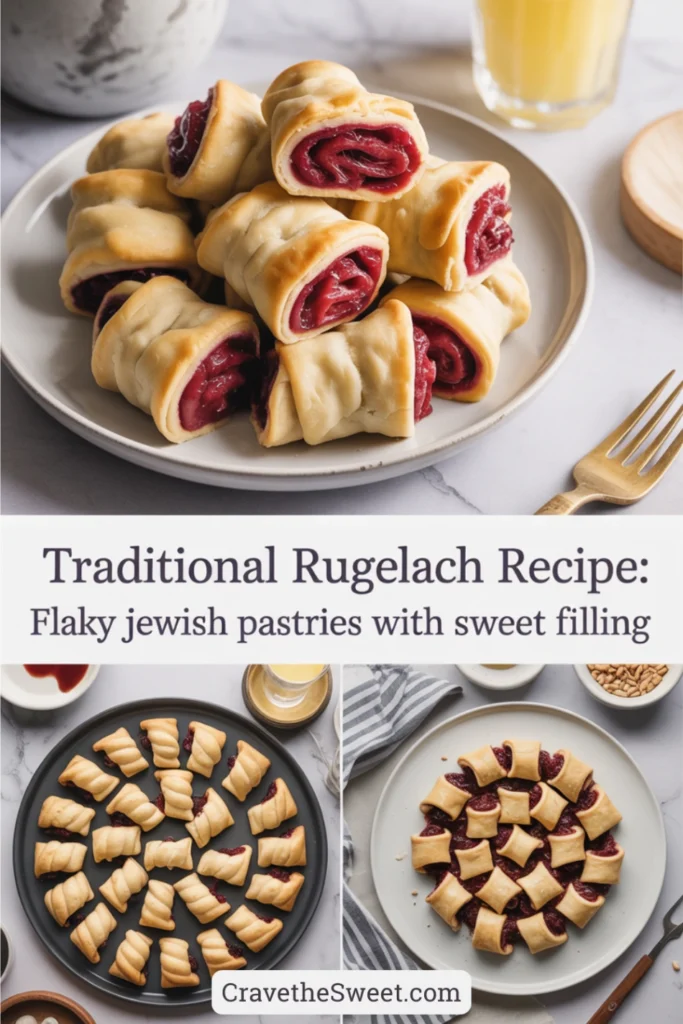
Rugelach are traditional Jewish pastries made with a tender cream cheese dough rolled around sweet fillings, then shaped into crescents. The name comes from the Yiddish word for “little twists” or “little horns,” referring to their distinctive crescent shape. Traditional Eastern European versions used a yeast-based dough, but the cream cheese version that became popular in America creates a richer, more tender pastry. The classic filling combines cinnamon, sugar, nuts (usually walnuts), and fruit preserves (typically apricot or raspberry). The dough itself is enriched with butter, cream cheese, and sometimes sour cream, creating a texture that’s simultaneously flaky and tender. Rugelach have deep cultural significance in Jewish cuisine, often served during holidays like Hanukkah and Purim, though they’re enjoyed year-round. While they originated in Eastern Europe, they’ve become beloved throughout the Jewish diaspora and beyond. Well-made rugelach should be tender enough to bite through easily while still maintaining distinct, flaky layers.
Common Mistakes to Avoid
Several pitfalls can affect the quality of your rugelach. The most common mistake is not chilling the dough long enough, which makes it too soft to roll and shape properly. The dough needs at least two hours in the refrigerator, and overnight is even better. Working with warm dough is frustrating and creates messy, misshapen pastries. Another frequent error is overfilling the triangles, which causes filling to leak out during baking and makes rolling difficult. Use restraint—a light hand with filling actually produces better results. Not rolling the crescents tightly enough creates loose, unimpressive spirals instead of neat packages. Some bakers skip the egg wash, which results in pale, dull-looking rugelach instead of beautifully golden, glossy ones. Using the wrong type of jam is another issue—preserve with large fruit chunks works better than smooth jelly, which tends to run. Not leaving enough space between pastries on the baking sheet causes them to bake together as filling bubbles out. Finally, removing them from the pan too soon causes them to fall apart, while waiting too long makes them stick as the sugar hardens.
How to Know They’re Done
Perfectly baked rugelach have several telltale characteristics. They should be golden brown all over, with the bottoms being slightly darker than the tops—check by lifting one with a spatula. The dough should look dry and baked, not shiny or doughy. Some of the filling will likely bubble out during baking, and these spots should be caramelized and golden brown rather than pale or burnt. The pastries should feel firm when gently pressed and should have expanded slightly from their raw size. The total baking time typically ranges from twenty to twenty-five minutes at 350°F, but always rely on appearance rather than time. The egg wash should have created a beautiful glossy, golden finish. When you remove them from the oven, they’ll smell incredible—buttery and cinnamony with hints of caramel from the baked filling. Let them cool on the baking sheet for about five minutes until the caramelized filling sets slightly, making them easier to transfer without breaking or leaving filling stuck to the pan.
What to Serve With Rugelach
These sweet pastries pair beautifully with various beverages and suit many occasions. Hot coffee is traditional and provides a perfect complement to the sweet, rich pastry—they’re ideal for breakfast or afternoon coffee breaks. Hot tea, particularly black tea or chai, offers another classic pairing. For holiday gatherings, serve them on a platter with other cookies and desserts as part of a dessert buffet. They’re perfect for brunch alongside fresh fruit, bagels, and other baked goods. Cold milk works wonderfully for a simpler, more casual pairing. Some people enjoy them with hot chocolate during winter holidays. At Jewish celebrations, they’re often served alongside other traditional sweets like mandelbrot and hamantaschen. Package them in decorative tins or boxes as thoughtful homemade gifts during holiday seasons. They’re substantial enough to serve as a light dessert after dinner with fresh berries on the side. For afternoon tea service, arrange them with scones and finger sandwiches for an elegant spread.
Storage Tips
Rugelach store exceptionally well, making them perfect for advance baking. Once completely cool, store them in an airtight container at room temperature for up to five days. They’ll maintain their texture beautifully without becoming soggy or dried out. Layer them with parchment paper to prevent sticking from any jammy filling that’s oozed out. For longer storage, freeze them in airtight containers or freezer bags for up to three months. They thaw quickly at room temperature, taking only about thirty minutes to be ready to serve. You can also freeze the unbaked shaped rugelach on a baking sheet until solid, then transfer to freezer bags. Bake directly from frozen, adding just a few minutes to the baking time—this is perfect for having fresh-baked rugelach whenever you want them. The dough itself freezes beautifully for up to three months wrapped tightly in plastic wrap and placed in a freezer bag. Thaw overnight in the refrigerator before rolling and filling. Some bakers prefer to make big batches and freeze them in portions, ensuring they always have rugelach ready for unexpected guests.
Estimated Nutrition Information
Per rugelach: Approximately 130 calories, 7g fat, 15g carbohydrates, 8g sugar, 2g protein. These are rich treats meant for special occasions and moderate portions.
Recipe Overview
Prep Time: 30 minutes
Chill Time: 2 hours
Cook Time: 25 minutes
Total Time: 3 hours
Difficulty: Moderate
Yield: Makes about 32 rugelach
Ingredients
For the dough:
- 8 ounces cream cheese, softened
- 1 cup unsalted butter, softened
- 1/4 cup granulated sugar
- 1/4 teaspoon salt
- 2 cups all-purpose flour
For the filling:
- 1/2 cup apricot or raspberry preserves
- 1 cup finely chopped walnuts or pecans
- 1/2 cup granulated sugar
- 2 teaspoons ground cinnamon
- Optional: 1/2 cup mini chocolate chips or raisins
For assembly:
- 1 egg beaten with 1 tablespoon water for egg wash
- 2 tablespoons granulated sugar for sprinkling
Step-by-Step Instructions
Begin this rugelach recipe by making the dough. In a large bowl, beat the softened cream cheese and butter with an electric mixer on medium speed until completely smooth and creamy, about two minutes. There should be no lumps remaining.
Add the sugar and salt, beating until well combined. Gradually add the flour, mixing on low speed just until the dough comes together. Don’t overmix or the pastries will be tough.
Divide the dough into four equal portions. Shape each portion into a flat disk, wrap tightly in plastic wrap, and refrigerate for at least two hours or up to three days. The dough must be well-chilled to roll properly.
While the dough chills, prepare the filling. In a small bowl, mix together the chopped nuts, sugar, and cinnamon. Set aside. Stir the preserves to make them spreadable.
When ready to shape the rugelach, preheat your oven to 350°F and line two baking sheets with parchment paper. Remove one disk of dough from the refrigerator and let it sit for about five minutes to soften slightly—it should be cold but not rock-hard.
On a lightly floured surface, roll the disk into a circle about ten to eleven inches in diameter and about one-eighth inch thick. Spread about two tablespoons of preserves thinly over the entire surface, leaving a small border around the edge.
Sprinkle about one-quarter of the nut-sugar-cinnamon mixture evenly over the preserves. Press down gently with your hands to help everything adhere.
Using a pizza cutter or sharp knife, cut the circle into eight equal wedges, like cutting a pizza. Starting from the wide end of each wedge, roll toward the point, creating a crescent shape. Place each rugelach point-side down on the prepared baking sheet, spacing them about two inches apart.
Repeat with the remaining three dough disks and filling ingredients.
Brush each rugelach generously with the egg wash, making sure to coat all visible surfaces. Sprinkle lightly with granulated sugar.
Bake for twenty to twenty-five minutes, rotating the pans halfway through, until the rugelach are golden brown all over. Some filling will bubble out—this is normal and creates delicious caramelized bits.
Let the rugelach cool on the baking sheets for five minutes to allow the filling to set, then carefully transfer them to a wire rack using a spatula. The caramelized filling can be sticky, so work gently.
Let cool completely before serving or storing. Your homemade rugelach are ready to enjoy! These tender, flaky pastries filled with sweet nuts and jam represent generations of Jewish baking tradition and are guaranteed to become a beloved recipe in your own family.