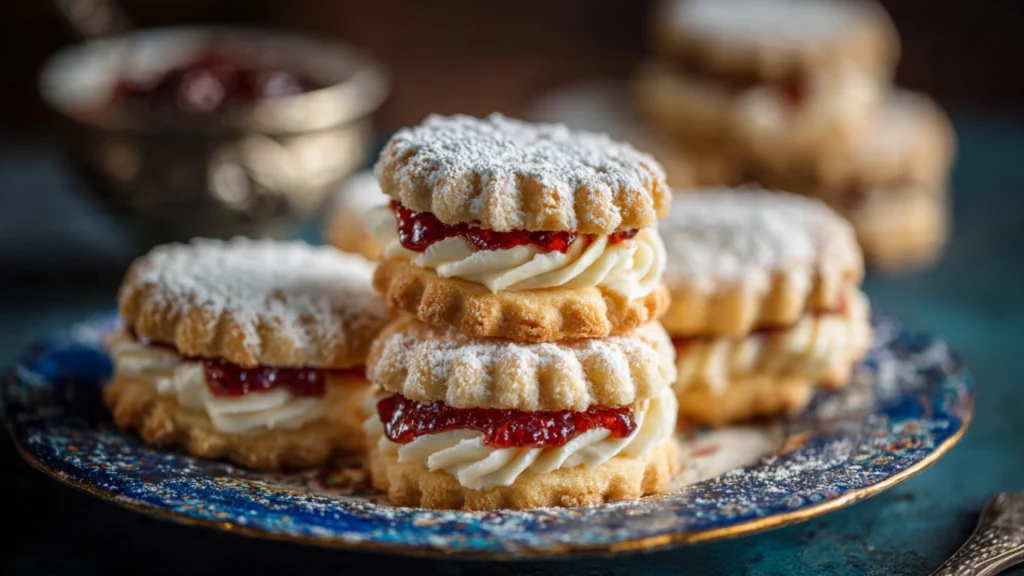

My British friend introduced me to Viennese whirls during afternoon tea at her house, and I was instantly charmed by these delicate sandwich cookies with their distinctive ridged swirls. She explained they were quintessentially British despite the “Viennese” name, popular in Britain since the early 1900s. The combination of buttery, melt-in-your-mouth cookies, sweet jam, and fluffy buttercream was absolutely divine. When she told me they were actually quite simple to make with a piping bag, I had to try them. My first batch wasn’t as pretty as hers, but they tasted heavenly. Now this viennese whirls recipe is my favorite way to feel fancy without spending hours in the kitchen.
Why You’ll Love This Viennese Whirls Recipe
These elegant British cookies deliver incredible buttery flavor with a texture that literally melts in your mouth. Despite looking professionally made, they require just basic ingredients you likely have in your pantry. The piped swirl design isn’t just decorative—it creates ridges that catch extra buttercream and jam, making every bite perfectly balanced. They’re naturally portioned, making them ideal for tea parties, cookie exchanges, or gift-giving. The dough is very forgiving and doesn’t require chilling or complicated techniques. You can customize the flavors by using different jams—raspberry is traditional, but strawberry, apricot, or blackberry work beautifully. These cookies stay fresh for several days and actually improve slightly after a day as the flavors meld. Making them at home costs a fraction of what you’d pay for imported British biscuits. Most importantly, they’re genuinely impressive—guests always assume they’re much harder to make than they actually are.
What Are Viennese Whirls?
Viennese whirls are traditional British sandwich cookies made with an extremely tender, buttery shortbread-like dough that’s piped into swirl shapes, baked until pale golden, then sandwiched with buttercream and jam. Despite their name suggesting Austrian origin, they’re actually a British creation that became popular in the early twentieth century. The name likely comes from the Viennese-style pastries that were fashionable in Europe at the time. The cookies have a distinctive appearance with ridged edges from being piped through a star tip, and they’re traditionally quite pale rather than deeply browned. The texture is extraordinarily delicate and crumbly, almost dissolving on your tongue. Classic Viennese whirls use a simple vanilla buttercream and raspberry or strawberry jam, though variations exist. They’re smaller and more refined than American sandwich cookies, typically about two inches in diameter. These cookies represent the elegance of British baking traditions and remain popular teatime treats throughout the UK.
Common Mistakes to Avoid
Several pitfalls can affect the success of your viennese whirls recipe. The most common mistake is overbaking them—these cookies should remain very pale, just barely golden on the edges. Any significant browning makes them too crispy and dry instead of tender and melt-in-your-mouth. Another frequent error is making the dough too thick or too thin by adding flour or liquid, which affects the pipe-ability and texture. The consistency should be thick enough to hold piped shapes but soft enough to squeeze through the piping bag without excessive effort. Using the wrong piping tip is problematic—you need a large star tip to create those signature ridges. Some people make the buttercream too stiff or too loose, affecting how well it sandwiches the cookies. Not letting the cookies cool completely before filling causes the buttercream to melt and slide. Making the cookies too large creates giant sandwiches that are awkward to eat, while too small makes them fiddly and breaks easily. Finally, storing them incorrectly causes them to lose their delicate texture or makes the jam leak.
How to Know They’re Done
Determining doneness for Viennese whirls requires a light touch since they should remain quite pale. The cookies are done when they’re just set and very lightly golden only on the edges and bottom, while the tops remain mostly pale cream-colored. If they’re browning on top, they’ve gone too far. They should look dry and set rather than shiny or wet. When you gently touch the top, they should feel firm but still delicate. The ridges from piping should be clearly defined and not melted together. Total baking time typically ranges from twelve to fifteen minutes, but watch them carefully near the end as they can go from perfect to overbaked quickly. They’ll be very fragile when first removed from the oven and need to cool on the baking sheet for five minutes to firm up before moving to a wire rack. Once completely cool, they should be crispy on the outside but still have a slight tender give rather than being rock-hard throughout. This delicate texture is the hallmark of properly made Viennese whirls.
What to Serve With Viennese Whirls
These refined British cookies are perfect for afternoon tea service, which is their traditional setting. Serve them with hot black tea—Earl Grey, English Breakfast, or Lady Grey are all excellent choices. The slightly tangy jam and sweet buttercream pair beautifully with tea’s slight bitterness. Coffee also works well, particularly a light roast or cappuccino. For a full afternoon tea spread, arrange them on a tiered stand with cucumber sandwiches, scones, and other small pastries. They’re elegant enough for wedding showers, baby showers, or ladies’ luncheons. Children love them too, making them perfect for birthday parties served with milk or juice. At holiday gatherings, arrange them on a platter with other cookies for variety. Package them in decorative tins or boxes as thoughtful homemade gifts. They’re also lovely with champagne or prosecco at celebrations, as their delicate sweetness doesn’t overwhelm sparkling wine. Serve them on vintage china or pretty plates to enhance their refined, old-fashioned charm.
Storage Tips
Proper storage maintains the delicate texture of Viennese whirls. Once assembled and completely set, store them in an airtight container at room temperature for up to five days, layering them with parchment paper to prevent sticking. The buttercream filling keeps them shelf-stable if your kitchen isn’t too warm, but in very warm conditions, refrigerate them. If refrigerated, let them come to room temperature before serving for best texture and flavor—about thirty minutes. The unfilled cookies can be stored in an airtight container at room temperature for up to one week, then filled fresh when needed. This approach ensures the crispiest cookies and freshest buttercream. Freeze unfilled cookies in airtight containers for up to three months, separating layers with parchment paper. Thaw at room temperature before filling. Don’t freeze assembled Viennese whirls as the buttercream and jam can become watery and the cookies soggy when thawed. These delicate cookies don’t travel particularly well due to their tender nature, so if gifting, package them carefully with plenty of cushioning.
Estimated Nutrition Information
Per Viennese whirl: Approximately 180 calories, 11g fat, 19g carbohydrates, 12g sugar, 1g protein. These are indulgent treats meant for occasional enjoyment in moderation.
Recipe Overview
Prep Time: 25 minutes
Cook Time: 15 minutes
Cooling/Assembly Time: 45 minutes
Total Time: 1 hour 25 minutes
Difficulty: Easy to Moderate
Yield: Makes about 12 sandwich cookies
Ingredients
For the cookies:
- 1 cup unsalted butter, softened
- 1/2 cup powdered sugar
- 1 1/2 cups all-purpose flour
- 1/2 cup cornstarch
- 1 teaspoon vanilla extract
- Pinch of salt
For the filling:
- 1/2 cup unsalted butter, softened
- 1 1/2 cups powdered sugar
- 1 teaspoon vanilla extract
- 1-2 tablespoons milk or cream
- 1/4 cup raspberry or strawberry jam
Step-by-Step Instructions
Preheat your oven to 325°F and line two large baking sheets with parchment paper. This lower temperature is important for keeping the cookies pale and tender.
In a large mixing bowl, cream the softened butter and powdered sugar together with an electric mixer on medium-high speed for about three minutes until very light, fluffy, and pale. This creaming creates the delicate texture that defines this viennese whirls recipe.
Add the vanilla extract and mix briefly to incorporate. Sift together the flour, cornstarch, and salt. Add to the butter mixture and mix on low speed just until combined. Don’t overmix or the cookies will be tough.
The dough should be soft and pipeable but still hold its shape. If it seems too stiff, beat in a teaspoon of milk. If too soft, refrigerate for ten minutes.
Transfer the dough to a piping bag fitted with a large star tip. Pipe swirls onto the prepared baking sheets, making circles about two inches in diameter. Space them about two inches apart. You can pipe simple rosettes or more elaborate swirls.
Bake for twelve to fifteen minutes until just set and very lightly golden only on the edges and bottoms. The tops should remain quite pale. Don’t overbake.
Let the cookies cool on the baking sheets for five minutes—they’re very fragile when hot. Then carefully transfer to wire racks to cool completely, about thirty minutes.
While the cookies cool, make the buttercream. Beat the softened butter until creamy. Gradually add the powdered sugar, beating until light and fluffy. Add the vanilla and milk, beating until smooth and spreadable.
Once the cookies are completely cool, match them into pairs of similar size. Spread or pipe buttercream on the flat side of one cookie. Add a small dollop of jam in the center of the buttercream. Top with the matching cookie, flat side down, pressing gently.
Repeat with all cookie pairs. Let them sit for about fifteen minutes to allow the buttercream to set slightly before serving.
Your elegant Viennese whirls are ready to enjoy! These buttery, melt-in-your-mouth cookies with their sweet filling bring a touch of British teatime elegance to any occasion. Serve them with a pot of hot tea and feel transported to a proper English afternoon tea!