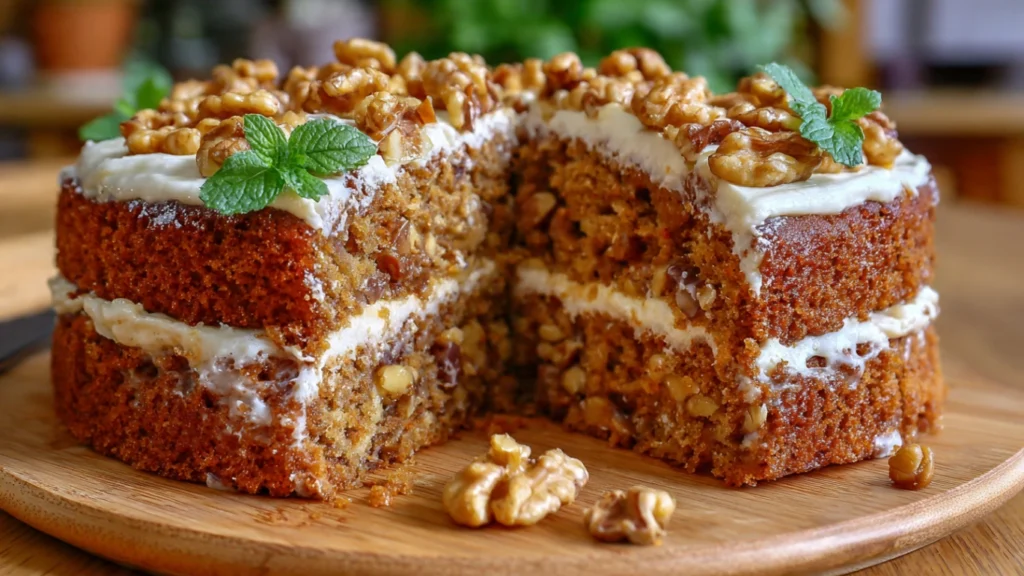
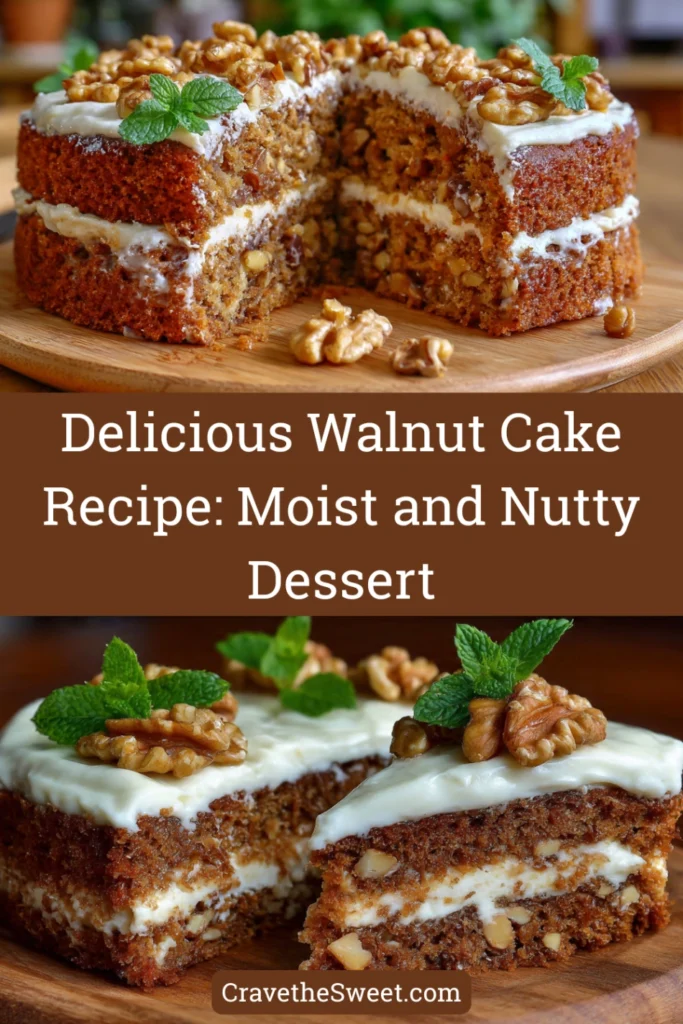
My Austrian friend brought walnut cake to our book club meeting, and I couldn’t believe how moist and flavorful it was. Unlike typical American cakes loaded with frosting, this elegant dessert let the rich, earthy walnuts shine through. When I asked for the recipe, she explained it was a traditional European-style cake her grandmother made, with ground walnuts replacing most of the flour. I was skeptical that it would work, but when I tried this walnut cake recipe at home, I was amazed at how the nuts created an incredibly tender, moist crumb. Now it’s my go-to cake when I want something sophisticated yet comforting, perfect with afternoon coffee or as an elegant dinner party dessert.
Why You’ll Love This Walnut Cake Recipe
This walnut cake recipe creates a sophisticated dessert with rich, nutty flavor and incredibly moist texture that stays fresh for days. The ground walnuts provide natural oils that keep the cake tender while adding depth and complexity you can’t get from regular flour-based cakes. It’s less sweet than typical American cakes, which many adults appreciate, and the subtle sweetness allows the walnut flavor to really shine. The recipe is naturally gluten-reduced since ground walnuts replace most of the flour, making it suitable for many people with gluten sensitivities. Despite its elegant appearance and complex flavor, the technique is straightforward with no complicated steps or special equipment needed. The cake has a beautiful, rustic appearance that doesn’t require elaborate decorating—a simple dusting of powdered sugar makes it look bakery-perfect. Best of all, it pairs wonderfully with coffee or tea and works equally well as a breakfast cake or elegant dessert.
What Is Walnut Cake?
Walnut cake is a European-style cake where finely ground walnuts replace most or all of the flour, creating a dense, moist texture with pronounced nutty flavor. This walnut cake recipe produces what’s sometimes called a torte, featuring a tender, close-crumbed texture that’s denser than American layer cakes but not heavy. The cake has roots in Central European baking traditions, particularly popular in Austria, Germany, and Eastern Europe where nuts have long been used in desserts. The walnuts are typically ground to a fine meal, almost powder-like, which allows them to function like flour while adding their distinctive earthy, slightly bitter flavor. Good walnut cake should be moist without being oily, with a delicate crumb that holds together well when sliced. The natural oils in walnuts keep the cake tender for several days, making it perfect for advance preparation. Unlike cakes relying on buttercream or heavy frostings, walnut cake’s appeal comes from its own inherent richness and flavor.
Common Mistakes to Avoid
The biggest mistake with this walnut cake recipe is using stale or rancid walnuts. Walnuts have high oil content and go rancid quickly, especially when stored improperly. Always taste your walnuts before baking—they should taste fresh and slightly sweet, not bitter or off.
Grinding the walnuts too finely into paste rather than meal creates an oily, dense cake. Pulse them in a food processor until they resemble coarse flour, but stop before they turn into nut butter.
Not beating the eggs and sugar long enough means the cake won’t have proper structure. This cake relies on well-beaten eggs for lift since there’s minimal flour, so beat for at least 5 minutes until thick and pale.
Adding all the dry ingredients at once deflates the batter. Fold them in gently in portions to preserve the air you’ve incorporated into the eggs.
Overbaking makes this naturally moist cake dry. Because it’s so dense, it’s better to slightly underbake than overbake. The cake continues cooking as it cools.
Using a pan that’s too small makes the cake too thick and difficult to bake evenly. Use the recommended 9-inch pan for proper results.
Finally, cutting the cake while warm causes it to crumble. Wait until completely cool—the texture improves and slicing becomes much easier.
How to Know When Your Cake Is Done
A properly baked walnut cake should be golden brown on top with no pale spots. The surface should look set and slightly domed, not wet or jiggly.
Insert a toothpick into the center of the cake. It should come out with just a few moist crumbs attached—not wet batter, but not completely clean either. This indicates perfect doneness.
The edges should pull away slightly from the pan sides, which shows the cake has set and is ready to come out.
When you press the center lightly with your finger, it should spring back slowly. If your finger leaves a deep indentation that doesn’t bounce back, it needs more time.
This walnut cake recipe typically requires 35-40 minutes at 350°F. Start checking at 32 minutes, as oven temperatures vary and this cake can go from perfect to overdone quickly.
The cake will smell wonderfully nutty and toasted when it’s done. That rich, toasted walnut aroma is a good indicator.
After cooling for 10 minutes in the pan, the cake should release easily when you run a knife around the edges. If it’s sticking badly, it may not be fully baked.
What to Serve With Walnut Cake
This walnut cake recipe creates a dessert that’s perfect with strong coffee or espresso. The slight bitterness of coffee complements the earthy walnuts beautifully and is the traditional European pairing.
Lightly sweetened whipped cream adds richness without overwhelming the delicate walnut flavor. A dollop on each slice is all you need.
Fresh berries, especially raspberries or strawberries, provide a tart contrast that balances the rich, nutty cake. Arrange a few around each slice.
A drizzle of honey or maple syrup enhances the natural sweetness and adds a luxurious touch. Just a small amount elevates the whole experience.
Vanilla ice cream turns this into a more indulgent plated dessert. The cold creaminess against the dense, nutty cake is wonderful.
Hot tea, particularly Earl Grey or English Breakfast, makes an excellent pairing for afternoon tea service. This cake fits perfectly into that elegant tradition.
A small glass of dessert wine like Moscato or Port pairs beautifully for special occasions, echoing European traditions.
Storage Tips
Store your walnut cake tightly wrapped in plastic wrap at room temperature for up to 4 days. The high oil content in the walnuts keeps it moist longer than regular cakes.
This cake actually tastes better the day after baking as the flavors meld and develop. Don’t worry if it seems less impressive fresh from the oven.
For longer storage, refrigerate the wrapped cake for up to one week. Bring it to room temperature before serving for the best flavor and texture.
This walnut cake recipe freezes exceptionally well for up to 2 months. Wrap tightly in plastic wrap, then aluminum foil. Thaw overnight in the refrigerator.
Individual slices can be wrapped separately for easy single servings throughout the week. This makes it perfect for portion control.
Never frost this cake before storing, as the moisture from frosting will make it soggy. If you want to glaze it, do so just before serving.
If the cake seems slightly dry after storage, warm individual slices briefly in the microwave for 10-15 seconds to restore softness.
Estimated Nutrition (Per Slice, 10 Servings)
Calories: 285 | Total Fat: 19g | Saturated Fat: 3g | Cholesterol: 75mg | Sodium: 95mg | Total Carbohydrates: 24g | Dietary Fiber: 2g | Sugars: 17g | Protein: 7g
Note: Nutritional information is approximate and based on using standard ingredients.
Recipe Overview
Prep Time: 20 minutes
Cook Time: 38 minutes
Total Time: 2 hours (including cooling)
Difficulty: Easy
Servings: 10 slices
Ingredients
- 2 cups walnut halves (about 8 ounces)
- 4 large eggs, separated
- ¾ cup granulated sugar
- 1 teaspoon vanilla extract
- ½ cup all-purpose flour
- 1 teaspoon baking powder
- ¼ teaspoon salt
- Powdered sugar for dusting
Step-by-Step Instructions
Step 1: Preheat your oven to 350°F. Grease a 9-inch round cake pan thoroughly and line the bottom with parchment paper. Grease the parchment as well.
Step 2: Spread the walnuts on a baking sheet and toast them in the preheating oven for 8-10 minutes until fragrant. Let them cool completely before proceeding.
Step 3: Place the cooled walnuts in a food processor. Pulse until they’re finely ground, resembling coarse flour or meal. Don’t over-process or they’ll turn into nut butter. Set aside.
Step 4: In a large bowl, beat the egg yolks and sugar with an electric mixer on high speed for 5-6 minutes until very thick, pale, and fluffy. The mixture should form ribbons when you lift the beaters.
Step 5: Beat in the vanilla extract until just combined.
Step 6: In a separate clean bowl, beat the egg whites with clean beaters on high speed until stiff peaks form. The whites should stand straight up when you lift the beaters.
Step 7: In a small bowl, whisk together the flour, baking powder, and salt. Add the ground walnuts and stir to combine.
Step 8: Gently fold about one-third of the walnut-flour mixture into the egg yolk mixture using a large spatula. Use broad, sweeping motions from the bottom up to preserve air.
Step 9: Add another third of the walnut mixture and fold gently until just combined. Don’t overmix or you’ll deflate the batter.
Step 10: Add the final third of the walnut mixture and fold until no streaks remain. Then add about one-third of the beaten egg whites and fold gently to lighten the batter.
Step 11: Add the remaining egg whites and fold very gently until just combined. A few white streaks are okay—it’s better to undermix slightly than to deflate all the air you’ve incorporated.
Step 12: Pour the batter into the prepared pan and smooth the top. Bake for 35-40 minutes until golden brown and a toothpick inserted in the center comes out with just a few moist crumbs. Cool in the pan for 10 minutes, then turn out onto a wire rack to cool completely. Dust with powdered sugar before serving.
Enjoy this elegant European-style cake that’s perfect any time of day!