The first time I made coconut custard at home, I was looking for a dessert that felt a little different from the usual vanilla treats. I had some coconut milk in the kitchen and decided to turn it into a creamy baked dessert. The result was so smooth, fragrant, and comforting that it quickly became one of my favorite simple desserts.
What I love most about coconut custard is how easy it is to make. The ingredients are basic, the preparation does not require special skills, and the gentle coconut flavor makes every spoonful feel tropical and comforting at the same time.
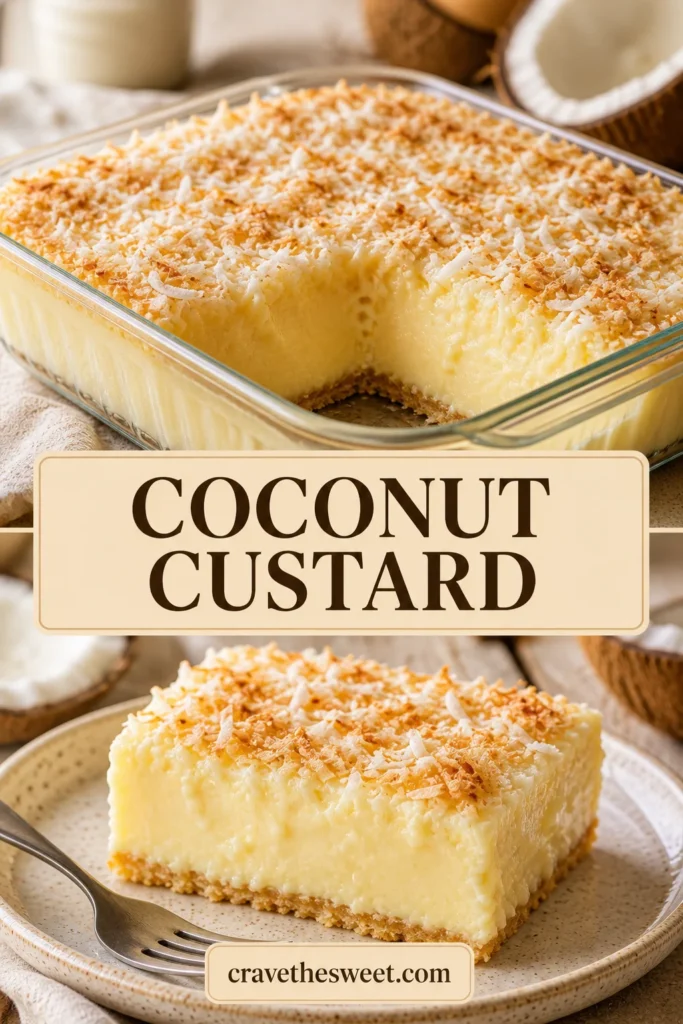
This coconut custard is creamy in the center with a delicate golden top. It can be served warm, chilled, or at room temperature, making it a flexible dessert for family dinners, holidays, afternoon treats, or special gatherings.
Why You’ll Love It
There are many reasons this coconut custard deserves a place in your dessert collection.
First, it has a wonderfully creamy texture. Eggs help the custard set while coconut milk gives it a rich, smooth consistency.
The flavor is another reason to love it. Coconut adds a naturally sweet and tropical taste without requiring a long list of ingredients.
This recipe is also beginner-friendly. You simply combine the ingredients, pour the mixture into a baking dish, and bake it gently in a water bath.
The dessert can be made ahead of time, which is especially helpful when you are preparing a larger meal.
You can also customize your coconut custard. Add toasted coconut on top, a little lime zest, fresh berries, or a drizzle of caramel sauce.
Whether you serve it after dinner or enjoy a small portion with afternoon coffee, this creamy dessert is comforting and satisfying.
What Is It?
Coconut custard is a creamy dessert made with eggs, milk or coconut milk, sugar, and coconut flavor.
The eggs are gently cooked in the oven, causing the mixture to thicken and set. Coconut milk gives the custard its signature tropical flavor and creamy consistency.
Unlike a cake or cookie, coconut custard has a soft texture that almost melts in your mouth.
The dessert can be baked in one larger dish or divided into individual ramekins.
A water bath is often used when baking custard because it surrounds the dish with gentle, even heat. This helps prevent the eggs from cooking too quickly.
The finished coconut custard should be smooth, creamy, and lightly golden on top.
Common Mistakes
Making coconut custard is simple, but a few mistakes can affect the final texture.
Using very high heat: Custard needs gentle heat. High temperatures can cause the eggs to overcook.
Skipping the water bath: A water bath provides gentle, even heat and helps reduce the chance of curdling.
Overmixing: Whisk the ingredients until combined, but avoid creating too many bubbles.
Using cold ingredients: Room-temperature ingredients can combine more smoothly.
Overbaking: The custard should have a gentle wobble in the center when it comes out of the oven.
Cutting it immediately: Give the dessert time to cool and set before serving.
Using unsweetened coconut without adjusting sugar: If you change the type of coconut product, check the sweetness and adjust the sugar according to your preference.
How to Know It’s Done
Knowing when coconut custard is ready is easier than it may seem.
The edges should look set, while the center should still have a slight jiggle.
The surface should appear mostly smooth and lightly golden.
You can gently shake the baking dish. If the entire dessert moves like liquid, it needs more time. If only the center moves slightly, it is usually ready.
Avoid waiting for the center to become completely firm in the oven. Custard continues to cook and set from residual heat after it comes out.
If you use a kitchen thermometer, the center should generally reach around 170–175°F (77–79°C).
Allow the coconut custard to cool gradually before refrigerating it.
What to Serve With It
Coconut custard tastes wonderful on its own, but simple toppings can make it even more special.
Fresh berries provide a bright contrast to the creamy coconut flavor. Strawberries, blueberries, raspberries, and blackberries are all good choices.
Toasted coconut flakes are an easy topping that adds both flavor and crunch.
You can also add sliced mango or pineapple for an extra tropical combination.
A small drizzle of caramel sauce adds richness and sweetness.
For a lighter presentation, top each serving with a little whipped cream and toasted coconut.
Coffee and tea also pair beautifully with coconut custard. Their warm, slightly bitter flavors balance the sweetness of the dessert.
Storage Tips
Allow the coconut custard to cool completely before storing it.
Cover the baking dish tightly with plastic wrap or transfer individual portions into airtight containers.
Keep the custard refrigerated.
For the best texture and flavor, enjoy it within about three days.
Do not leave the finished dessert at room temperature for a long time because it contains eggs and dairy.
If you are preparing the coconut custard ahead of time, you can make it the day before serving. In fact, chilling overnight gives it plenty of time to set.
Avoid freezing custard because freezing and thawing can cause the smooth texture to become watery or grainy.
Estimated Nutrition
Nutrition will vary depending on the exact ingredients and serving size.
One serving of coconut custard may contain approximately:
- Calories: 280–330
- Carbohydrates: 30–35g
- Protein: 6–7g
- Fat: 15–19g
- Saturated Fat: 11–14g
- Sugar: 25–29g
- Sodium: 100–150mg
These values are estimates and may change depending on the coconut milk, milk, sugar, eggs, and toppings used.
Recipe Overview
- Prep Time: 15 minutes
- Cook Time: 45–55 minutes
- Cooling Time: 30 minutes
- Chill Time: 2 hours
- Total Time: About 3 hours 10 minutes
- Difficulty: Easy
- Servings: 8
Ingredients
For this creamy coconut custard recipe, you will need:
- 1 can full-fat coconut milk, about 13.5 ounces
- 1 cup whole milk
- ¾ cup granulated sugar
- 4 large eggs
- 2 large egg yolks
- 1 teaspoon vanilla extract
- ½ teaspoon coconut extract, optional
- ¼ teaspoon salt
- ½ cup shredded unsweetened coconut
- 2 tablespoons toasted coconut, optional for topping
Full-fat coconut milk gives the dessert a richer texture and stronger coconut flavor.
Whole milk balances the richness and helps create a smooth custard.
The combination of whole eggs and extra egg yolks gives the dessert structure while keeping the center creamy.
Coconut extract is optional, but it can provide a stronger coconut flavor if you want a more pronounced tropical taste.
Step-by-Step Instructions
1. Preheat the Oven
Preheat your oven to 325°F (165°C).
Place a large baking dish inside the oven if you prefer to add the hot water after placing the custard dish inside.
Prepare an 8-inch round or square baking dish by lightly greasing it.
You can also use eight small ramekins for individual portions.
2. Warm the Coconut Milk
Pour the coconut milk and whole milk into a medium saucepan.
Heat over medium-low heat until the mixture becomes warm and steamy.
Do not bring it to a boil.
Remove the saucepan from the heat.
The purpose of warming the milk is to help dissolve the sugar and combine the ingredients smoothly.
3. Whisk the Eggs
In a large mixing bowl, whisk together the eggs, egg yolks, and sugar.
Whisk gently until the mixture becomes smooth.
Try not to create a large amount of foam because too many air bubbles can affect the appearance of the finished custard.
4. Add the Vanilla and Salt
Add the vanilla extract, coconut extract if using, and salt.
Stir gently until combined.
The salt helps balance the sweetness and allows the coconut flavor to stand out.
5. Temper the Eggs
Slowly pour a small amount of the warm coconut milk mixture into the egg mixture while whisking constantly.
Continue adding the warm liquid gradually.
This step is important because it gently raises the temperature of the eggs without scrambling them.
Once most of the warm milk has been incorporated, slowly pour the egg mixture back into the saucepan.
6. Add the Coconut
Stir in the shredded coconut.
For an especially smooth custard, you can leave the shredded coconut out of the mixture and use toasted coconut only as a topping.
For more coconut texture, keep it in the recipe.
7. Strain the Custard
Place a fine-mesh strainer over a clean bowl.
Pour the mixture through the strainer.
This removes any small pieces of cooked egg and creates a smoother coconut custard.
If you added shredded coconut, some of it may remain in the strainer. That is perfectly fine.
8. Pour Into the Baking Dish
Pour the strained custard into the prepared baking dish.
If you see bubbles on the surface, gently tap the dish against the counter or skim the bubbles away with a spoon.
A smooth surface helps create a beautiful finished dessert.
9. Prepare the Water Bath
Place the baking dish inside a larger roasting pan.
Carefully pour hot water into the larger pan until it reaches about halfway up the sides of the custard dish.
Be careful not to splash water into the custard.
The water bath provides gentle heat and helps the dessert cook evenly.
10. Bake
Carefully place the pan in the oven.
Bake for approximately 45–55 minutes.
The exact baking time depends on the depth and shape of your dish.
Begin checking around 45 minutes.
The edges should be set while the center should still have a gentle wobble.
11. Remove From the Water Bath
Once the coconut custard is ready, carefully remove the baking dish from the hot water bath.
Use oven mitts because the water and pan will be very hot.
Place the custard on a cooling rack.
12. Cool
Allow the dessert to cool at room temperature for about 30 minutes.
The custard will continue setting as it cools.
Do not cut or scoop it while it is extremely hot.
13. Refrigerate
Cover the cooled custard and place it in the refrigerator.
Chill for at least 2 hours.
For the best texture, you can refrigerate it overnight.
The longer chilling time allows the custard to become firm enough to serve neatly while remaining creamy.
14. Add Toppings
Just before serving, sprinkle toasted coconut over the top.
You can also add fresh berries, sliced mango, whipped cream, or a drizzle of caramel sauce.
Keep the toppings simple so the coconut flavor remains the star.
15. Serve
Spoon or slice the chilled coconut custard into individual portions.
If you baked it in ramekins, simply serve each ramekin individually.
For a larger dish, use a sharp knife to create clean portions.
Serve chilled or allow the dessert to sit at room temperature for a few minutes before serving.
Helpful Tips for the Best Results
Use full-fat coconut milk for the creamiest texture. Light coconut milk can work, but the finished dessert may not be as rich.
Shake the coconut milk can well before opening it so the thick and liquid portions are properly combined.
Do not boil the milk mixture. Gentle warming is all you need.
When tempering the eggs, pour the warm liquid slowly while whisking. This is one of the most important steps for preventing scrambled eggs.
Straining the custard may seem optional, but it makes a noticeable difference in smoothness.
The water bath is also important. It protects the custard from direct, intense heat and helps create a creamy texture.
If the top begins to brown too quickly, loosely cover the baking dish with foil during the final part of baking.
For a stronger coconut flavor, add coconut extract. For a more delicate flavor, use only coconut milk and vanilla.
Toasted coconut makes an excellent topping. Simply spread shredded coconut on a baking sheet and toast it briefly until lightly golden. Watch it carefully because coconut can burn quickly.
Fresh fruit is another wonderful addition. Mango and pineapple are especially delicious with the tropical flavor of coconut.
You can also turn this recipe into individual desserts. Divide the mixture between ramekins and reduce the baking time, checking for doneness earlier.
If you want a slightly more elegant presentation, serve each portion with whipped cream, toasted coconut, and a few fresh berries.
Coconut custard is one of those desserts that feels special without requiring complicated techniques. The creamy filling, gentle coconut flavor, and silky texture make it perfect for both everyday treats and celebrations.
The most important thing is to bake it gently and give it enough time to cool and set. Once you get comfortable with the process, you can experiment with different toppings and flavors to make the dessert your own.
Whether served chilled after dinner or enjoyed as a quiet afternoon treat, homemade coconut custard is a simple and comforting dessert. With creamy coconut milk, rich eggs, sweet vanilla, and toasted coconut on top, every spoonful offers a delicious combination of smooth texture and tropical flavor.