There are days when I want fresh homemade bread but do not want to wait for dough to rise. That is exactly when this no yeast bread recipe comes to the rescue. It is one of those simple recipes that feels almost too easy the first time you make it. You mix a few basic ingredients, shape the dough, put it in the oven, and soon your kitchen smells like freshly baked bread.
I especially love making no yeast bread when I need something warm to serve with dinner. There is no waiting for yeast to activate and no long rising time. The dough comes together quickly, making this a wonderful choice for beginners.
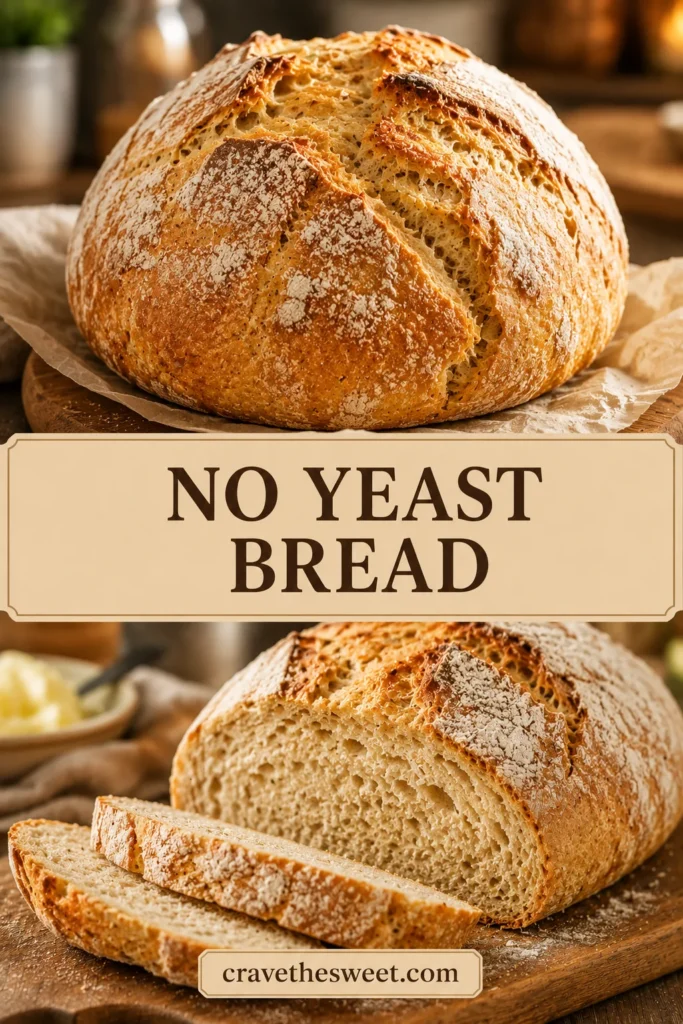
This no yeast bread has a tender center, lightly crisp outside, and a simple homemade flavor. It is delicious warm with butter and can also be served with soup, stew, eggs, or your favorite spreads. If you have never baked bread before, this is a great place to start.
Why You’ll Love It
There are plenty of reasons to keep this no yeast bread recipe in your regular kitchen routine.
The biggest advantage is speed. Traditional bread often needs time for the dough to rise, but this recipe skips that step completely. That means you can go from mixing bowl to fresh bread in much less time.
The ingredients are also simple. You probably already have most of them in your pantry or refrigerator.
Another benefit is that this recipe is beginner-friendly. You do not need to know how to work with yeast, proof dough, or perform complicated bread-making techniques.
The texture is also wonderful. The outside develops a light golden crust while the inside stays tender and soft. It is slightly more dense than traditional yeast bread, but that makes it hearty and satisfying.
You can also add different herbs, cheeses, or seasonings to customize your loaf.
What Is It?
No yeast bread is bread made without traditional baker’s yeast. Instead of relying on yeast to create a long fermentation and rise, this recipe uses baking powder as the main leavening ingredient.
Baking powder reacts with moisture and heat to create bubbles in the dough, helping the bread rise while it bakes.
Because there is no yeast, you do not need to wait for the dough to double in size. The dough can be mixed, shaped, and baked almost immediately.
This makes no yeast bread especially useful when you need a quick homemade side dish.
The finished loaf is best served warm. It has a tender crumb, mild flavor, and golden crust. You can enjoy it plain or add herbs, cheese, garlic, or seeds for extra flavor.
Common Mistakes
Although no yeast bread is simple, a few mistakes can affect the final result.
Overmixing the dough: Once the ingredients come together, stop mixing. Too much mixing can make the bread tough.
Adding too much flour: The dough should be soft and slightly sticky. Too much flour can make the finished loaf dry and heavy.
Using old baking powder: Baking powder loses strength over time. If it is too old, your bread may not rise properly.
Making the loaf too thick: A very thick loaf may take longer to bake in the center. Keep the shape relatively even.
Skipping the oven preheat: The bread needs a fully heated oven for the baking powder to work properly.
Cutting it immediately: Fresh bread needs a few minutes to settle. Cutting it while extremely hot can make the center appear gummy.
Overbaking: Too much time in the oven can dry out the loaf. Remove it when the crust is golden and the center is fully cooked.
How to Know It’s Done
Knowing when no yeast bread is fully baked is important.
The crust should be golden brown and feel firm when lightly pressed.
Insert a toothpick or thin skewer into the center. It should come out clean or with a few moist crumbs. If there is wet batter or sticky dough attached, the loaf needs more baking time.
You can also gently tap the bottom of the loaf. It should sound somewhat hollow.
Because ovens vary, start checking near the end of the recommended baking time.
If the top becomes too dark while the center still needs time, loosely cover the loaf with aluminum foil and continue baking.
Once it is finished, let the bread cool on a wire rack for at least 10–15 minutes before slicing.
What to Serve With It
This no yeast bread is extremely versatile and works with both sweet and savory foods.
For breakfast, serve warm slices with butter, honey, jam, peanut butter, or scrambled eggs.
At lunch, use it as a side for soup or salad. It is especially delicious with tomato soup, creamy vegetable soup, or chicken soup.
For dinner, serve slices alongside roasted chicken, grilled vegetables, baked fish, or hearty stew. The bread is perfect for soaking up flavorful sauces.
You can also toast leftover slices and top them with avocado, cheese, eggs, or roasted vegetables.
For a simple snack, spread a warm slice with butter and sprinkle it with a little cinnamon sugar.
If you want a savory version, add garlic powder, dried herbs, and shredded cheese to the dough before baking.
Storage Tips
Allow your no yeast bread to cool completely before storing it.
Place the cooled loaf in an airtight container, bread bag, or resealable bag. Keep it at room temperature and enjoy it within a couple of days for the best texture.
Because homemade bread does not contain the same preservatives as many packaged loaves, it can become stale relatively quickly.
For longer storage, slice the bread and freeze the pieces in a freezer-safe bag. Place parchment paper between slices if you want to remove individual pieces easily.
When ready to eat, thaw the bread at room temperature or place a frozen slice directly in the toaster.
You can also refresh leftover bread in a warm oven for several minutes. This helps restore some of its original texture.
Estimated Nutrition
The nutrition will vary depending on the exact ingredients and serving size.
One slice of no yeast bread may contain approximately:
- Calories: 170–200
- Carbohydrates: 28–32g
- Protein: 4–5g
- Fat: 5–7g
- Fiber: 1–2g
- Sugar: 2–3g
- Sodium: 250–350mg
These values are estimates and can change depending on the milk, butter, flour, and other ingredients used.
Recipe Overview
- Prep Time: 10 minutes
- Cook Time: 35–40 minutes
- Total Time: 45–50 minutes
- Difficulty: Easy
- Servings: 10 slices
Ingredients
For this easy no yeast bread recipe, you will need:
- 3 cups all-purpose flour
- 1 tablespoon baking powder
- 1 teaspoon salt
- 1 tablespoon granulated sugar
- 1 cup whole milk
- 1 large egg
- ¼ cup melted butter
- 2 tablespoons olive oil
- 1 teaspoon garlic powder, optional
- 1 teaspoon dried Italian herbs, optional
For a richer loaf, you can use whole milk. If you prefer a lighter version, regular milk also works well.
The sugar provides a subtle sweetness and helps with browning. Butter adds richness, while olive oil helps keep the bread tender.
The garlic and herbs are optional, so leave them out if you want a simple, neutral loaf.
Step-by-Step Instructions
1. Preheat the Oven
Start by preheating your oven to 375°F (190°C).
Grease a standard loaf pan with a little butter or oil. You can also line it with parchment paper for easier removal.
Preparing the pan first means your dough will be ready to bake as soon as it is mixed.
2. Mix the Dry Ingredients
Add the flour, baking powder, salt, and sugar to a large bowl.
If you are making a savory version, add the garlic powder and dried herbs.
Whisk everything together until evenly combined.
This step helps distribute the baking powder throughout the flour so the bread rises evenly.
3. Combine the Wet Ingredients
In a separate bowl, whisk together the milk, egg, melted butter, and olive oil.
Make sure the melted butter has cooled slightly before adding it to the egg.
Whisk until the mixture looks smooth.
4. Make the Dough
Slowly pour the wet ingredients into the dry ingredients.
Use a wooden spoon or rubber spatula to mix everything together.
Stir only until there are no large areas of dry flour.
The dough should be thick, soft, and slightly sticky.
Do not continue mixing once the ingredients are combined.
5. Transfer to the Pan
Spoon the dough into the prepared loaf pan.
Use a spatula to gently smooth the top.
Do not press the dough down too firmly.
If desired, brush the top with a little melted butter or olive oil before baking.
6. Add Optional Toppings
For extra flavor, sprinkle the top with dried herbs, grated Parmesan, sesame seeds, or a little shredded cheese.
You can also leave the top plain for a simple golden loaf.
7. Bake the Bread
Place the loaf pan in the preheated oven.
Bake for approximately 35–40 minutes.
The exact time will depend on the shape of your pan and your oven.
Watch the top as it bakes. It should become golden brown and firm.
8. Check the Center
Insert a toothpick into the center of the loaf.
If it comes out clean or with a few crumbs, the bread is ready.
If you see wet batter, continue baking for another 5 minutes and check again.
The center is the most important part to check because the outside can look finished before the inside is fully baked.
9. Cool the Loaf
Remove the no yeast bread from the oven.
Let it rest in the pan for about 10 minutes.
Then carefully transfer it to a wire rack.
Allow it to cool for another 10–15 minutes before slicing.
This short cooling period helps the crumb become firmer and easier to cut.
10. Slice and Serve
Use a serrated knife to slice the bread.
Serve it warm with butter, honey, jam, soup, or your favorite meal.
For a savory finish, brush the warm slices with garlic butter.
For a sweeter option, spread them with butter and fruit preserves.
Helpful Tips for the Best Results
The most important tip for making no yeast bread is to avoid overmixing. The moment the flour is incorporated, stop stirring.
Measure the flour carefully. If you scoop flour directly from the bag and pack it into the measuring cup, you may accidentally use too much. Spoon it into the cup and level the top for a more accurate measurement.
Make sure your baking powder is fresh. If you are unsure whether it still works, place a little in hot water. It should bubble actively.
You can make this bread more flavorful by adding shredded cheddar, Parmesan, rosemary, thyme, garlic, or black pepper.
For a slightly rustic loaf, sprinkle oats or seeds over the top before baking.
If you prefer individual portions, divide the dough into small pieces and bake them as quick bread rolls instead of one large loaf. Adjust the baking time because smaller pieces will cook faster.
Do not expect no yeast bread to have exactly the same texture as traditional yeast bread. It will be more compact, but it should still be tender, flavorful, and satisfying.
This recipe is especially useful when you want homemade bread without waiting for dough to rise. It is quick enough for a busy weekday and simple enough for someone baking bread for the first time.
Once you make it successfully, you can experiment with different flavors and toppings. Keep a basic loaf on hand for breakfast, turn it into toast for lunch, or serve warm slices beside a comforting dinner.
Homemade no yeast bread proves that you do not always need complicated techniques or long preparation times to enjoy something fresh from the oven. With a few simple ingredients and less than an hour, you can create a warm, golden loaf that is perfect for sharing.