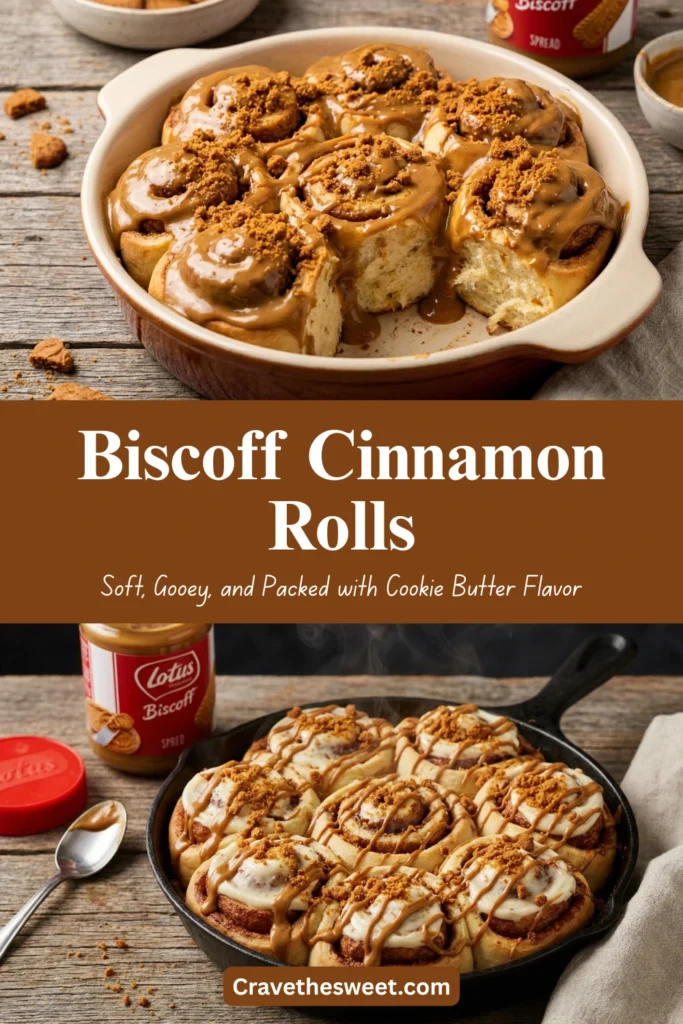
There’s a Sunday morning that lives rent-free in my head. My kitchen smelled like brown sugar and warm spices, and I had a jar of Biscoff cookie butter sitting on the counter just begging to be used. I’d made cinnamon rolls plenty of times before, but that day I decided to swap out the usual filling and try something different. The result? The most insanely delicious biscoff cinnamon rolls I’ve ever tasted. My family devoured the entire pan before noon. No leftovers. Not even one roll.
If you’ve never thought about combining Biscoff with classic cinnamon rolls, today is your lucky day.
Why You’ll Love These Biscoff Cinnamon Rolls
These rolls are everything you want in a morning treat — soft, pillowy dough wrapped around a rich, caramelized Biscoff filling, and then drizzled with a sweet Biscoff glaze that melts right into every swirl. They’re beginner-friendly, don’t require a stand mixer, and use ingredients that are easy to find at any grocery store. Whether you’re baking for a holiday brunch, a weekend treat, or just because you deserve something amazing, this recipe delivers every single time.
What Are Biscoff Cinnamon Rolls?
Biscoff cinnamon rolls are a fun twist on the classic American cinnamon roll. Instead of the traditional cinnamon-sugar butter filling, these use Biscoff cookie butter — a creamy, spiced spread made from crushed Lotus Biscoff cookies. The flavor is warm, slightly caramelized, and deeply spiced with hints of cinnamon, ginger, and cardamom. When baked inside a soft yeast dough and finished with a Biscoff cream cheese glaze, the result is something truly magical. Think of it as your favorite cinnamon roll’s more sophisticated, European-inspired cousin.
Common Mistakes to Avoid
Using milk that’s too hot. When activating yeast, your milk should feel warm — like bathwater, around 110°F. Too hot and it kills the yeast. Too cold and the yeast won’t activate at all.
Skipping the second rise. Once your rolls are cut and placed in the pan, they need time to puff up again before baking. Don’t rush this step or your biscoff cinnamon rolls will come out dense and tough.
Overfilling with cookie butter. It’s tempting to pile it on, but too much filling causes the rolls to unravel while baking. A generous, even spread is all you need.
Rolling the dough too thin. Aim for about a quarter-inch thickness. Too thin and the rolls won’t have that satisfying pillowy texture after baking.
How to Know When They’re Done
Your biscoff cinnamon rolls are ready when the tops are golden brown and the center of the middle roll looks set — not wet or doughy. A kitchen thermometer is your best friend here: the internal temperature should read about 190°F. If the tops brown too quickly, loosely tent the pan with foil and continue baking. The rolls will also pull slightly away from the sides of the pan when done.
What to Serve With Biscoff Cinnamon Rolls
These rolls are incredible on their own, but if you want to make it a full brunch spread, pair them with:
- A hot cup of black coffee or a creamy latte — the bitterness balances the sweetness perfectly
- Fresh fruit like sliced strawberries or banana for a light contrast
- Scrambled eggs and crispy bacon if you want something savory to balance out the sweetness
- A cold glass of whole milk, which is always the classic cinnamon roll companion
Storage Tips
Room temperature: Store leftover biscoff cinnamon rolls in an airtight container at room temperature for up to 2 days.
Refrigerator: They keep well in the fridge for up to 5 days. Reheat individual rolls in the microwave for about 20–25 seconds to bring back that fresh-baked softness.
Freezer: These freeze beautifully. Wrap unfrosted rolls individually in plastic wrap, then place in a zip-top freezer bag. They’ll keep for up to 2 months. Thaw overnight in the fridge and warm before adding the glaze.
Estimated Nutrition (Per Roll)
| Nutrient | Amount |
|---|---|
| Calories | ~420 kcal |
| Total Fat | 18g |
| Carbohydrates | 58g |
| Sugar | 24g |
| Protein | 7g |
| Fiber | 1g |
These are estimates and may vary depending on exact ingredient brands and quantities used.
Recipe Overview
| Prep Time | 30 minutes |
| Rise Time | 1 hour 30 minutes |
| Cook Time | 25 minutes |
| Total Time | ~2 hours 25 minutes |
| Difficulty | Easy–Medium |
| Servings | 12 rolls |
Ingredients
For the Dough:
- 3/4 cup whole milk, warmed to 110°F
- 2 1/4 teaspoons active dry yeast (one standard packet)
- 1/4 cup granulated sugar
- 1/4 cup unsalted butter, melted and slightly cooled
- 2 large eggs, room temperature
- 1 teaspoon vanilla extract
- 1/2 teaspoon salt
- 3 1/2 cups all-purpose flour, plus more for dusting
For the Biscoff Filling:
- 3/4 cup Biscoff cookie butter (smooth or crunchy)
- 3 tablespoons unsalted butter, softened
- 1/3 cup light brown sugar, packed
- 1 teaspoon ground cinnamon
For the Biscoff Cream Cheese Glaze:
- 4 oz cream cheese, softened
- 1/3 cup Biscoff cookie butter
- 1 cup powdered sugar
- 3–4 tablespoons whole milk
- 1/2 teaspoon vanilla extract
Step-by-Step Instructions
Step 1: Activate the Yeast Pour the warm milk into a large bowl. Sprinkle the yeast and a pinch of the granulated sugar over the top. Stir gently and let it sit for 5–10 minutes until it becomes foamy. If it doesn’t foam, your yeast may be old — start over with a fresh packet.
Step 2: Make the Dough Add the remaining sugar, melted butter, eggs, and vanilla to the yeast mixture. Stir to combine. Add the salt and flour, one cup at a time, mixing until a soft dough forms. Turn the dough out onto a lightly floured surface and knead for about 8 minutes until smooth and slightly tacky but not sticky. Place in a lightly greased bowl, cover with a clean kitchen towel, and let rise in a warm spot for 1 hour or until doubled in size.
Step 3: Make the Filling In a small bowl, mix together the softened butter, Biscoff cookie butter, brown sugar, and cinnamon until smooth and spreadable. Set aside.
Step 4: Roll and Fill Punch down the risen dough and turn it onto a floured surface. Roll it out into a large rectangle, about 16×12 inches and roughly 1/4 inch thick. Spread the Biscoff filling evenly over the entire surface, leaving a 1/2-inch border at the far long edge.
Step 5: Roll and Cut Starting from the long edge closest to you, tightly roll the dough into a log. Pinch the seam closed. Using a sharp knife or unflavored dental floss, cut the log into 12 equal rolls. Place them cut side up in a greased 9×13-inch baking pan.
Step 6: Second Rise Cover the pan loosely with plastic wrap or a kitchen towel and let the rolls rise for another 30 minutes until puffy. Meanwhile, preheat your oven to 350°F.
Step 7: Bake Bake the biscoff cinnamon rolls for 22–25 minutes until golden on top and the centers are cooked through. Start checking at the 20-minute mark. Remove from the oven and let cool for 10 minutes before glazing.
Step 8: Make the Glaze and Serve Beat the cream cheese and Biscoff cookie butter together until smooth. Add powdered sugar, vanilla, and milk one tablespoon at a time until the glaze reaches a pourable consistency. Drizzle generously over the warm rolls. Serve immediately and enjoy every gooey, spiced bite.