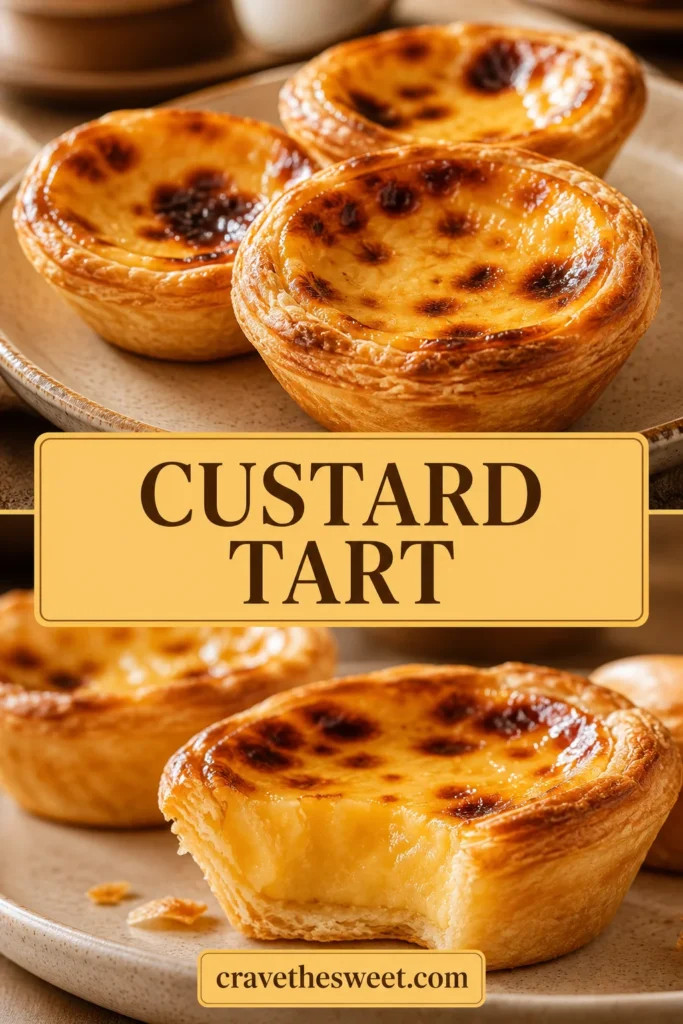
The first time I made a custard tart at home, I was surprised by how elegant it looked when it came out of the oven. The pastry was golden and crisp, while the center had a smooth, creamy filling with a gentle vanilla flavor. It looked like something reserved for a special bakery window, but the ingredients were actually quite simple.
I love making a custard tart when I want a dessert that feels classic and comforting. The buttery pastry and silky custard create a wonderful contrast, especially when the tart is served slightly chilled. It is also a lovely dessert for family dinners, afternoon tea, birthdays, or weekend baking.
This recipe keeps the process simple enough for beginners while giving you plenty of helpful tips for creating a beautiful tart at home. Once you learn how to prepare the pastry and cook the custard gently, you can make this dessert with confidence.
Why You’ll Love It
There are many reasons to love this homemade custard tart.
The texture is probably the best part. The filling is smooth, creamy, and delicate, while the pastry provides a crisp and buttery base.
The flavor is simple but delicious. Vanilla gives the custard a warm aroma, while a small amount of nutmeg adds a traditional touch.
This recipe also looks impressive without requiring complicated decoration. Once the custard has set, you can simply dust the top with a little nutmeg or powdered sugar.
A custard tart is also easy to prepare ahead of time. Since it needs time to cool and set, you can make it earlier in the day and serve it when your guests arrive.
You can enjoy it cold, slightly chilled, or close to room temperature. Each serving has a lovely combination of creamy filling and crisp pastry.
What Is It?
A custard tart is a baked pastry dessert filled with a smooth mixture of eggs, milk, cream, sugar, and vanilla.
The pastry creates a buttery shell that holds the creamy filling while it bakes.
The custard is gently cooked in the oven until it becomes set around the edges while remaining soft and creamy in the center.
The top is often finished with a light sprinkle of nutmeg, which adds fragrance and a subtle warm spice flavor.
A good custard tart should have a pastry crust that is golden and crisp without being hard. The filling should be smooth rather than rubbery or watery.
The combination of textures is what makes this dessert so enjoyable.
Common Mistakes
Making a custard tart is fairly simple, but a few mistakes can affect the result.
Overworking the pastry: Mixing the dough too much can make the crust tough. Handle it gently and stop once it comes together.
Using warm butter: Cold butter helps create a flaky, tender pastry. Keep it chilled until you are ready to use it.
Skipping the chilling time: Chilling the pastry helps prevent excessive shrinking during baking.
Overbaking the custard: A custard that is baked too long can become rubbery or develop cracks.
Using very high heat: Gentle baking helps the filling cook evenly and remain smooth.
Pouring hot custard into pastry: Allow the custard mixture to cool slightly before filling the pastry shell.
Cutting the tart too soon: The filling needs time to cool and set. Cutting while it is hot can cause the custard to spread.
How to Know It’s Done
Knowing when the custard tart is ready can feel tricky at first, but there are a few easy signs.
The pastry should be golden brown around the edges and feel firm.
The custard should be set around the outside while the center still has a gentle wobble when you carefully move the pan.
The center should not look liquid.
Avoid waiting until the filling is completely firm in the oven. Custard continues to set as it cools, and overbaking can create a firm or cracked texture.
You can also insert a thin knife near the edge of the filling. It should come out mostly clean.
After baking, let the tart cool gradually. Once it reaches room temperature, refrigerate it until fully set.
What to Serve With It
A custard tart is delicious by itself, but a few simple additions can make it even more special.
Fresh berries provide a bright contrast to the creamy filling. Strawberries, raspberries, and blueberries are all excellent choices.
You can also serve each slice with a spoonful of whipped cream.
For a warmer dessert, serve a slice with a light drizzle of caramel sauce.
Fresh fruit such as peaches, pears, or sliced strawberries also works beautifully.
A cup of tea or coffee is a natural pairing. The warm drink balances the cool, creamy texture of the tart.
For a simple finish, dust the top with powdered sugar just before serving.
Storage Tips
Because the filling contains eggs and dairy, the finished custard tart should be refrigerated.
Allow the tart to cool completely before covering it.
Place it in an airtight container or cover the tart pan securely with plastic wrap.
Keep it refrigerated and enjoy it within about three days for the best quality.
Do not leave the tart at room temperature for an extended period.
You can make the pastry shell ahead of time and store it separately before filling.
Freezing the fully assembled tart is generally not ideal because the custard can change texture after thawing. For the best results, make it fresh and refrigerate leftovers.
When serving chilled leftovers, allow the tart to sit at room temperature for about 10 minutes. This can make the pastry and filling slightly softer and more enjoyable.
Estimated Nutrition
The nutritional value depends on the size of each slice and the ingredients used.
One slice of custard tart may contain approximately:
- Calories: 320–380
- Carbohydrates: 38–45g
- Protein: 6–8g
- Fat: 16–20g
- Saturated Fat: 9–12g
- Sugar: 18–23g
- Sodium: 180–250mg
These values are estimates and can vary depending on the exact ingredients and portion size.
Recipe Overview
- Prep Time: 30 minutes
- Chill Time: 30 minutes
- Cook Time: 45–50 minutes
- Cooling Time: 1 hour
- Total Time: About 2½ hours
- Difficulty: Easy to Intermediate
- Servings: 8–10 slices
Ingredients
For the Pastry
- 1½ cups all-purpose flour
- ½ cup cold unsalted butter, cut into small cubes
- ¼ cup granulated sugar
- 1 large egg yolk
- 2–3 tablespoons cold water
- ¼ teaspoon salt
For the Custard Filling
- 2 cups whole milk
- ½ cup heavy cream
- ½ cup granulated sugar
- 4 large eggs
- 2 teaspoons vanilla extract
- ¼ teaspoon ground nutmeg
- Pinch of salt
The cold butter helps create a tender pastry shell, while the egg yolk adds richness.
Whole milk and heavy cream provide the creamy base for the filling. Eggs help the custard set during baking, while vanilla gives it a warm and familiar flavor.
Nutmeg is optional but adds a lovely traditional finish.
Step-by-Step Instructions
1. Prepare the Pastry
Add the flour, sugar, and salt to a large mixing bowl.
Add the cold cubed butter.
Use your fingertips or a pastry cutter to rub the butter into the flour until the mixture resembles coarse crumbs.
Work quickly so the butter stays cold.
2. Add the Egg Yolk
Add the egg yolk to the flour mixture.
Mix gently.
Add cold water one tablespoon at a time until the dough begins to come together.
You do not want the dough to become wet or sticky.
3. Form and Chill the Dough
Turn the dough onto a lightly floured surface.
Gently bring it together into a disk.
Do not knead it like bread dough.
Wrap the dough and refrigerate it for about 30 minutes.
Chilling makes the pastry easier to roll and helps reduce shrinking during baking.
4. Roll the Pastry
Preheat the oven to 375°F (190°C).
Lightly flour your work surface.
Roll the chilled pastry into a circle slightly larger than your tart pan.
Aim for an even thickness.
5. Place the Pastry in the Pan
Carefully transfer the pastry into a 9-inch tart pan.
Gently press it into the bottom and sides.
Do not stretch the pastry because stretched dough is more likely to shrink during baking.
Trim away excess pastry around the edges.
Prick the bottom lightly with a fork.
6. Blind Bake the Shell
Place parchment paper over the pastry.
Fill it with pie weights or dry beans.
Bake for approximately 15 minutes.
Remove the parchment and weights.
Return the pastry to the oven for another 5–8 minutes, or until the surface looks lightly golden.
Allow it to cool slightly while preparing the filling.
7. Prepare the Milk Mixture
Pour the milk and heavy cream into a saucepan.
Warm the mixture over medium-low heat until it is hot and steaming.
Do not bring it to a full boil.
Remove it from the heat.
8. Whisk the Eggs
In a large bowl, whisk the eggs and sugar together.
Add the vanilla and a small pinch of salt.
Whisk until smooth.
9. Combine the Custard
Slowly pour the warm milk mixture into the eggs while whisking continuously.
Adding the milk gradually helps prevent the eggs from cooking too quickly.
Once combined, strain the mixture through a fine-mesh strainer.
This creates a smoother filling and removes any small bits of cooked egg.
10. Fill the Pastry
Place the partially baked pastry shell on a baking sheet.
Carefully pour the custard into the shell.
Leave a little space at the top to prevent spills.
Sprinkle the surface lightly with ground nutmeg.
11. Bake the Tart
Reduce the oven temperature to 325°F (165°C).
Carefully place the tart in the oven.
Bake for approximately 35–45 minutes.
The pastry should be golden and the custard should be set around the edges.
The center should still have a gentle wobble.
12. Cool the Tart
Remove the custard tart from the oven.
Place it on a cooling rack.
Let it cool at room temperature for about one hour.
Do not cut it while it is still hot because the filling needs time to set.
13. Chill
Once the tart has cooled, cover it and place it in the refrigerator.
Chill for at least one hour before serving.
For an even firmer texture, refrigerate it for several hours.
14. Slice and Serve
Remove the chilled custard tart from the refrigerator.
Carefully remove it from the tart pan if desired.
Use a sharp knife to cut clean slices.
Wipe the knife between cuts for neat edges.
Serve the tart plain or with fresh berries, whipped cream, or a light dusting of powdered sugar.
Helpful Tips for the Best Results
Keep your pastry ingredients cold. Cold butter is especially important for creating a tender crust.
When making the dough, avoid adding too much water. Start with a small amount and add more only when needed.
Chilling the pastry before rolling makes it easier to handle.
If the edges of the pastry begin to brown too quickly, cover them loosely with foil during the final part of baking.
For the smoothest custard, strain the filling before pouring it into the pastry shell.
Bake the filling gently. High temperatures can cause the eggs to overcook and create an unpleasant texture.
Do not worry if the center has a slight wobble when you remove the tart from the oven. It will continue to set as it cools.
For a beautiful presentation, add fresh berries just before serving. You can also sprinkle a small amount of powdered sugar over the top.
If you want a stronger vanilla flavor, add a little extra vanilla extract. For a warmer flavor, increase the nutmeg slightly, but keep it subtle so it does not overpower the creamy filling.
You can also make mini custard tarts using smaller tart pans. Reduce the baking time and watch them carefully because smaller tarts cook more quickly.
A custard tart is one of those desserts that proves simple ingredients can create something truly special. The crisp pastry, creamy vanilla filling, and delicate nutmeg topping come together beautifully.
Whether you are preparing dessert for a family meal or simply want to enjoy a quiet afternoon treat, this recipe is a wonderful choice. With gentle baking, proper chilling, and a little patience, you can create a homemade custard tart with a golden crust and silky filling that looks beautiful and tastes even better.